
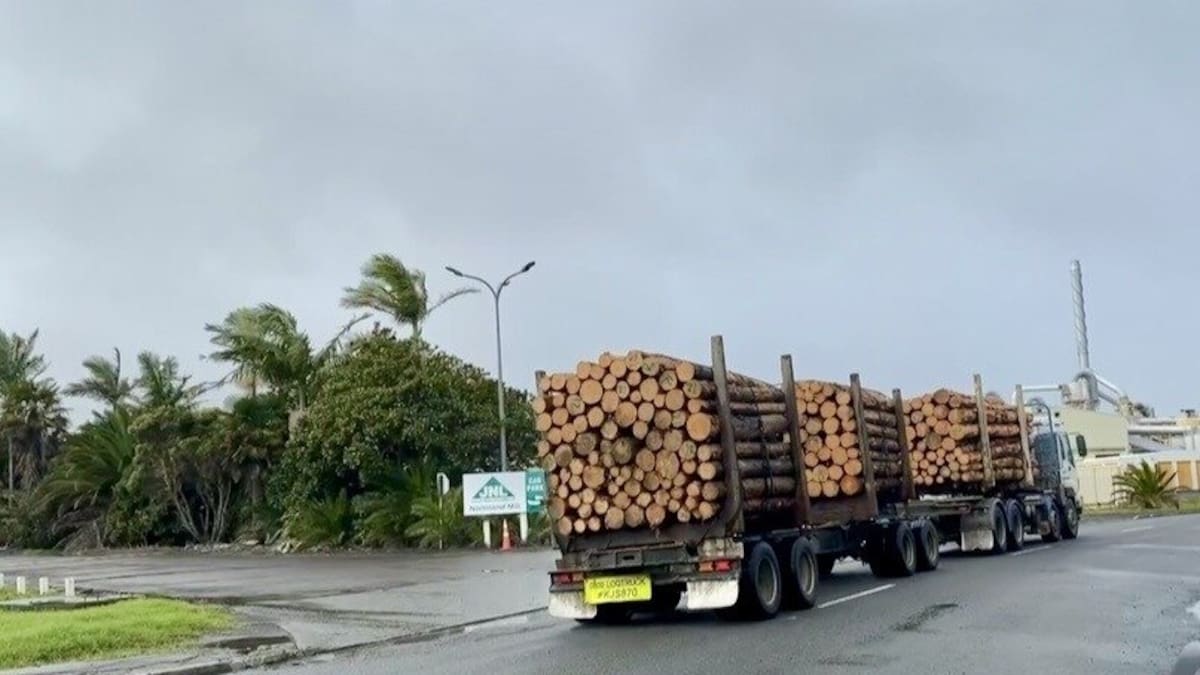
JNL pointed to tough trading conditions, including falling demand, rising costs and insufficient work to keep the mill running sustainably.
Forestry and wood product manufacturing GDP has softened regionally from its 2019 peak, according to Northland Regional Council’s March economics outlook.
The forestry cycle has also weakened, with national harvest volumes falling from 36.5 million cubic metres in 2019 to 33.1 million in 2024 as export demand and domestic processing eased. These trends are visible locally through lower cut levels and tighter margins.
Late 2025 brought some stability, with domestic activity and export volumes improving but margins remain under pressure and prices subdued.
Kaitāia residents were bracing for the possible closure, with some saying the loss of about 60 jobs would add pressure to the town and job market.
Jobs aren’t easy to come by in the Far North, where the unemployment rate sits at 7.4%, higher than the national average of 5.3%.
Kaitāia social service worker Don Thomas knew some workers who had been at the mill for more than 20 years.
“I’ve heard a few from them saying that it’s going to be hard for this town, especially since it’s the main source of work up here,” he said.
Don Thomas and Percy Walker. Photo / Yolisa Tswanya
Thomas described how those mill workers had families and were stressed-out, not knowing what was coming.
He said the idea the mill might close was scary for the town as other issues, such as methamphetamine, were already embedded.
His organisation, which supports people dealing with mental health challenges, homelessness, housing struggles or food insecurity, was already experiencing increased demand for its services, he said.
Thomas wanted greater Government investment in the Far North to would create more job opportunities.
Kaitāia resident Shane McGregor said the closure of the mill would be devastating.
“That’s where most of the younger people work and there’s not much other employment around, especially for people that are unskilled. So yeah, it’s going to kill it [the town].”
Shane McGregor said finding work was hard enough as it is, and the mill closure would add to the strain on employment. Photo / Yolisa Tswanya
McGregor was familiar with the job market, saying it was slim pickings.
“I have got a bit of driving experience, and I work in the hospitality industry and even I couldn’t find a job and it’s getting harder,” he said.
“Things are getting tighter and everyone is watching what they spend and I think it’s going to get a lot worse.”
Another resident, Sarah Simon, was concerned for the whānau of the mill workers.
“Where are those families going to go when it closes down?” she said.
Kaitāia resident Sarah Simon said the proposed closure would be devastating for the town. Photo / Yolisa Tswanya
“Some people have been there for years and years and it’s going to really affect them because they’re going to need tickets to get into other jobs and they’re quite old.
“It’s going to really take its toll in the job situation because it’s already a bad situation.”
Simon, like other residents, said she was disappointed the Government was not intervening, given the envisioned impacts the closure could have.
Kaitāia resident Wendy Crombie noted the mental toll the closure may take on staff and the area in general.
“We are losing something important for this town,” she said.
Another local, Crystal Lambert, has friends working at the mill and said they were worried about their future.
“They actually had a pay rise and adjusted their lives to that, and the economic impact is going to be huge and finding jobs is quite tricky for people.”
Workers First Union has called for intervention and temporary public ownership of the Northland Mill, while criticising the Government for abandoning Northland’s workers with empty words and a blame game.
The Triboard operation is not affected and efforts to sell it are continuing. Photo / Yolisa Tswanya
Workers First general secretary Dennis Maga criticised the Government responses to the potential closure.
Regional Development Minister Shane Jones has previously described the situation as “enormously disappointing”, saying Juken had not approached the Government for support. Meanwhile, Prime Minister Christopher Luxon blamed the former Government’s “failed” energy policy for the closure.
Maga said: “What’s enormously disappointing is this lack of interest and lack of intervention by a Government that appears to have given up on New Zealand manufacturing altogether.”
Workers First is calling on the Government to intervene before a decision is made on July 16, and to consider temporary public ownership of the Northland Mill while a viable buyer is found.
Should it close, the mill is likely to become the seventh major wood processing site to close, with more than 800 jobs lost in the industry since late 2023.