
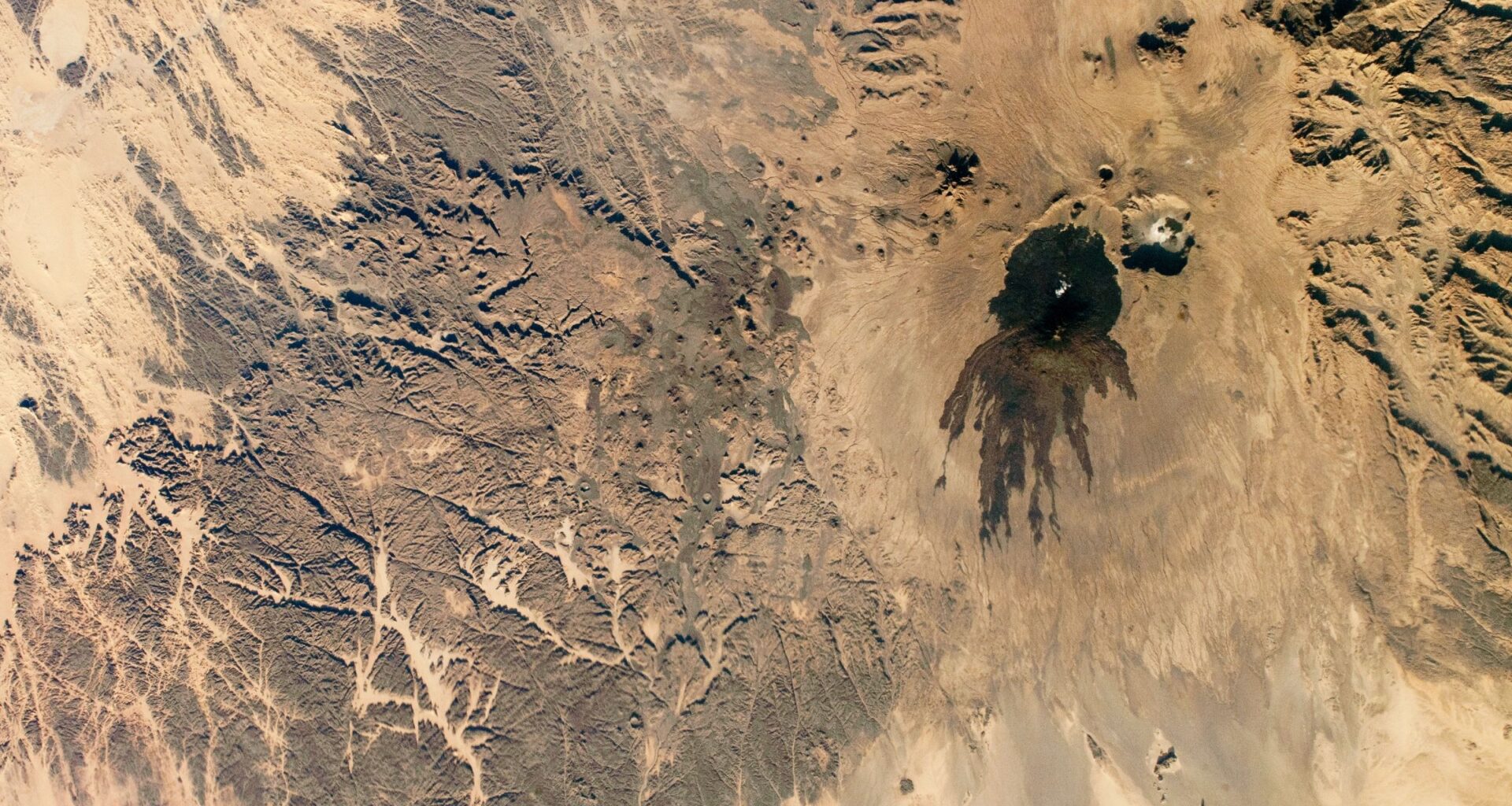
QUICK FACTS
Where is it? Toussidé volcano, Chad [21.03731548, 16.47357325]
What’s in the photo? The petrified remains of ancient lava and a skull-like caldera
Who took the photo? An unnamed astronaut on board the International Space Station
When was it taken? Sept. 23, 2019
You may like
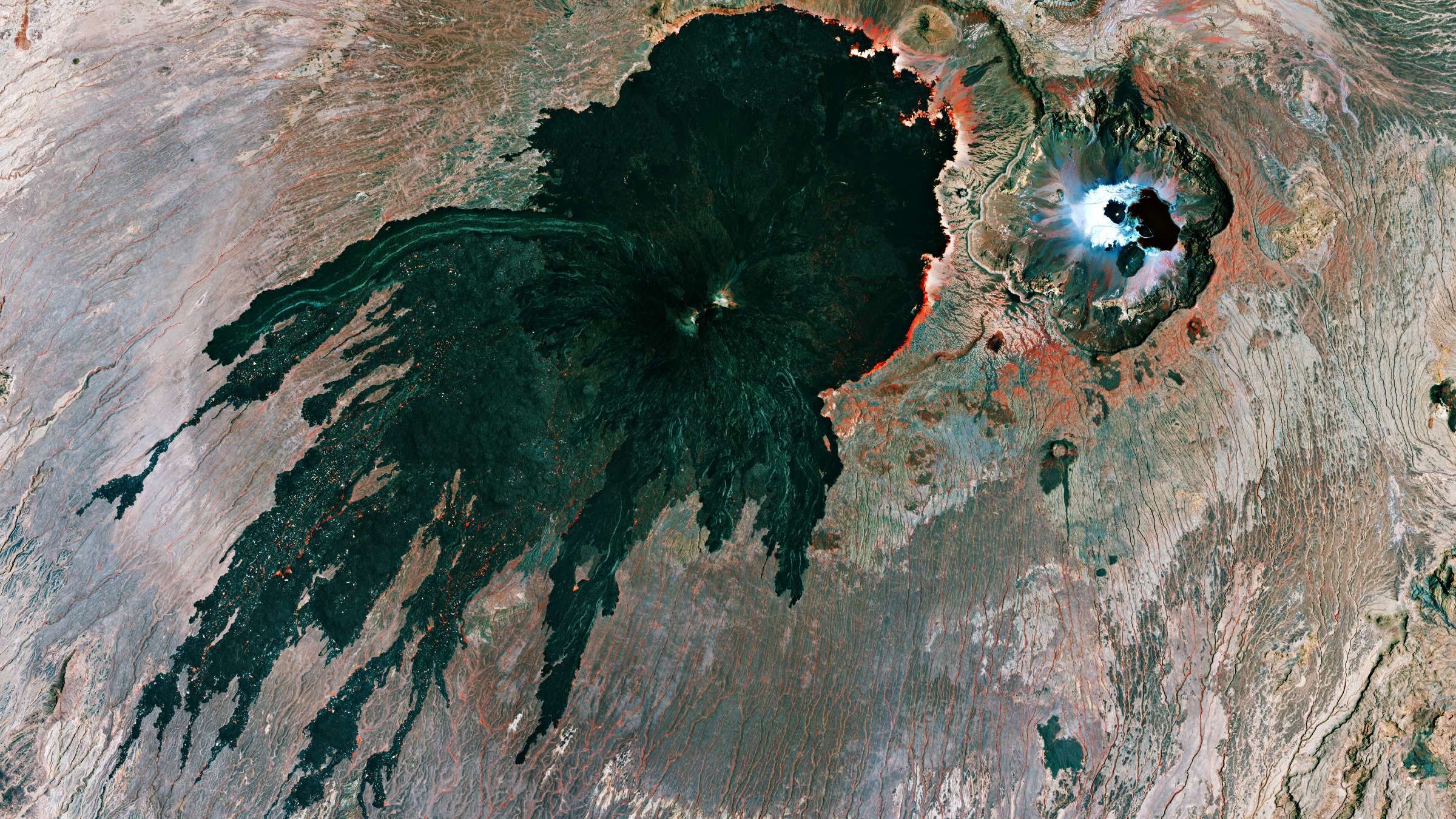
The massif surrounding Toussidé is made of overlapping lava flows. If you look closely at this image, you can see how they criss-cross over one another. The Trou au Natron caldera is also more clearly visible in this photo, which was captured by the European Space Agency’s Copernicus satellite in September 2021.
(Image credit: ESA/Copernicus)
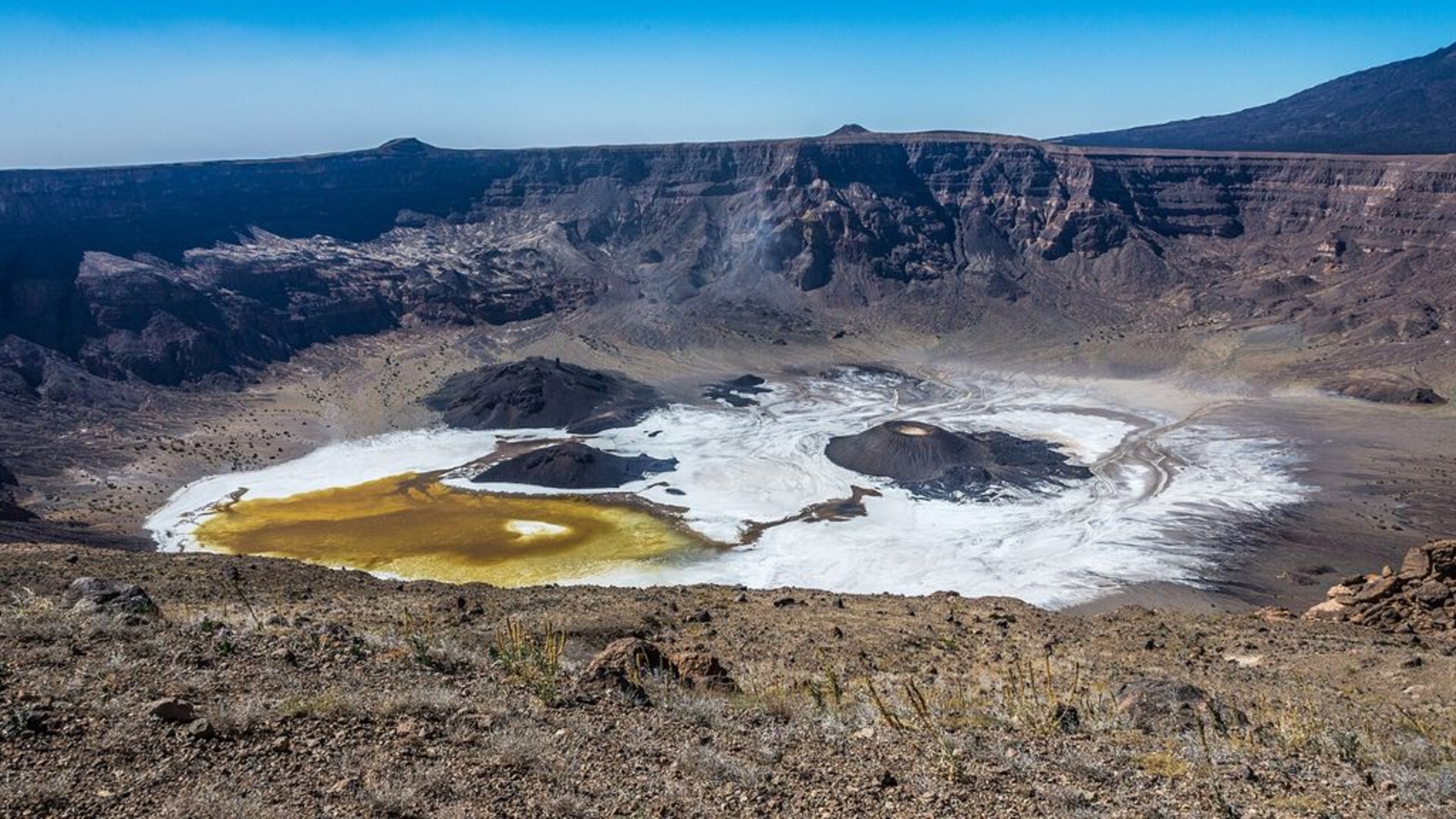
Trou au Natron’s salty white floor and volcanic cones make it look eerily like a skull when viewed from above. The dark slopes of Toussidé can also be seen in the background of this image.
(Image credit: Gerhard Holub/Wikimedia)
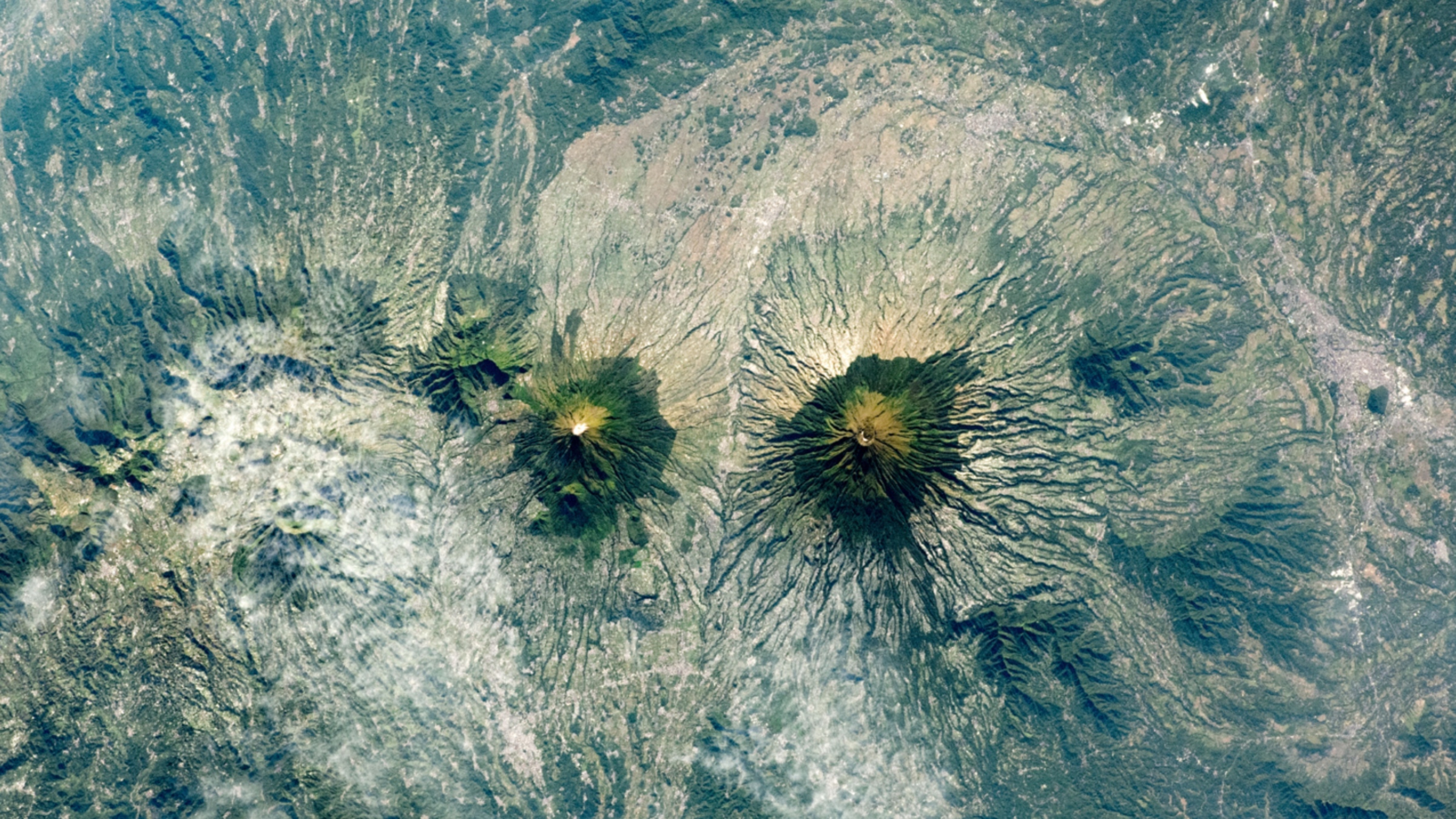
Indonesia’s ‘Twin Peaks’ volcanoes
A 2021 astronaut photo shows the surprising similarities between Mount Sundoro and Mount Sumbing, which lie at the heart of Java, Indonesia.
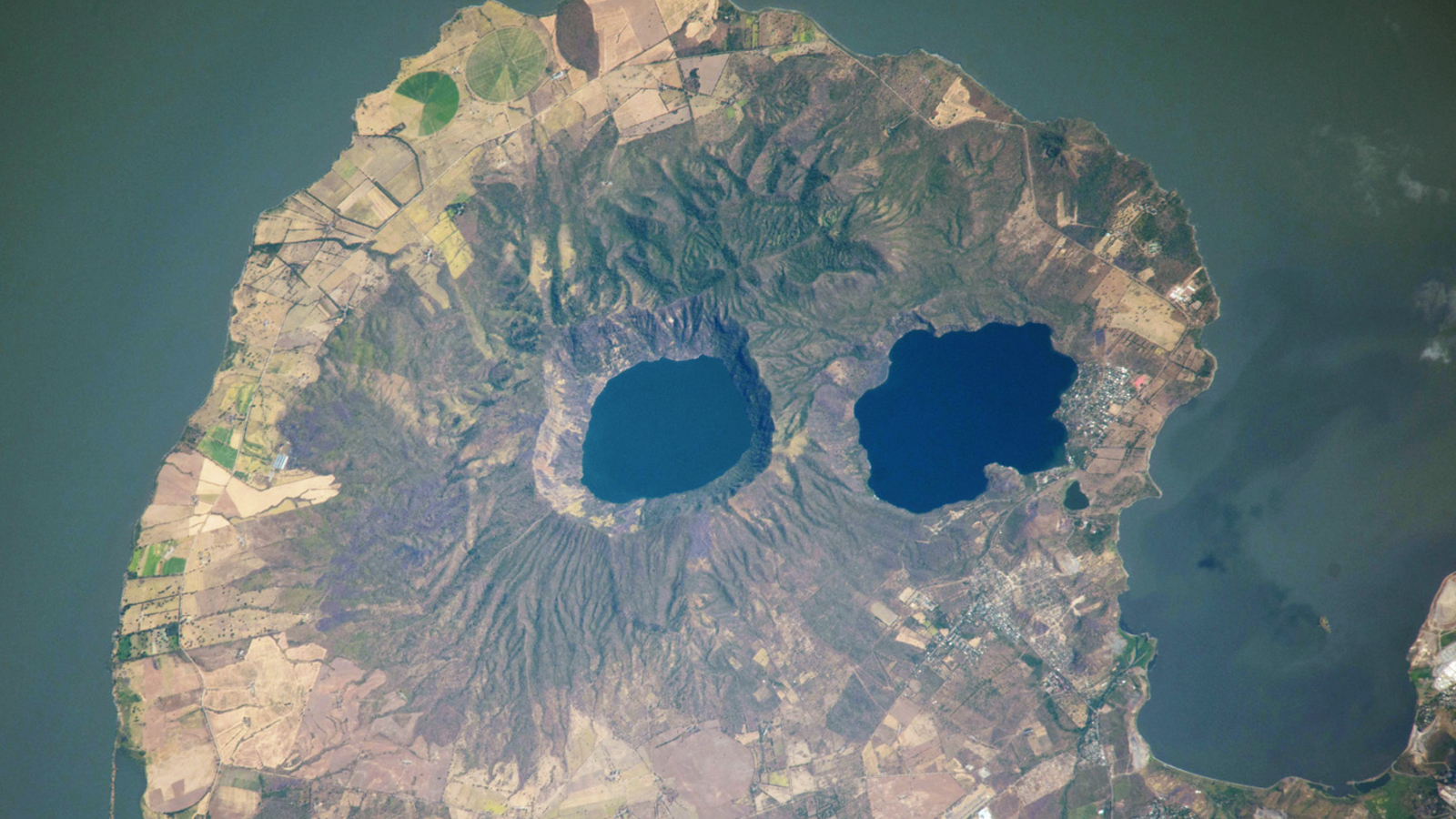
Volcanic ‘googly eyes’ stare into space
A 2014 astronaut photo shows a pair of volcanic lakes appearing to stare up into space from the Chiltepe Peninsula of Nicaragua’s Lake Managua. These “eyes” and “skull” were created by violent eruptions thousands of years ago.
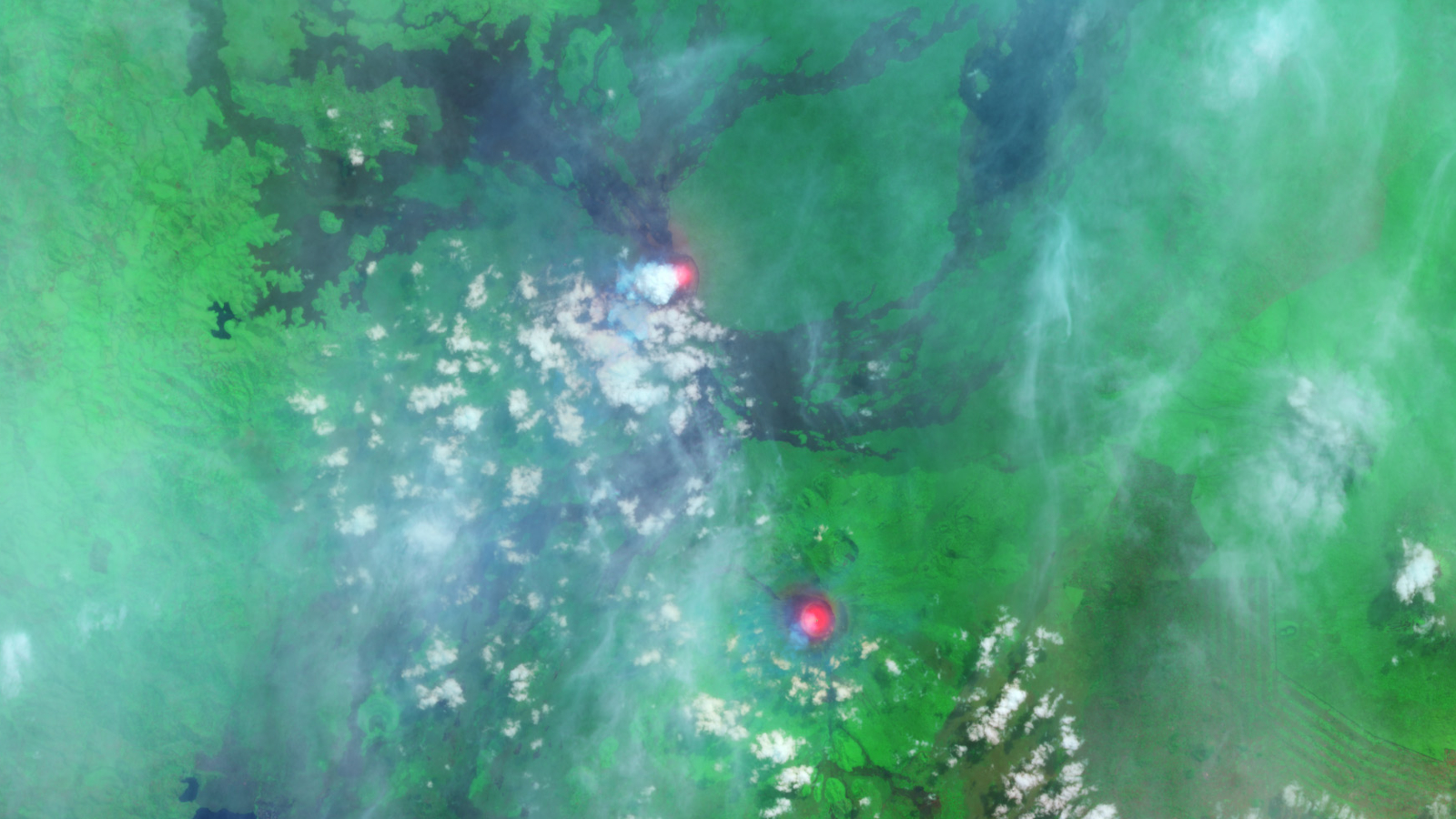
Pair of ‘glowing’ lava lakes in Africa
This false-color satellite photo from 2014 shows the immense heat emanating from lava lakes at the summits of a pair of simultaneously erupting volcanoes in Congo.