
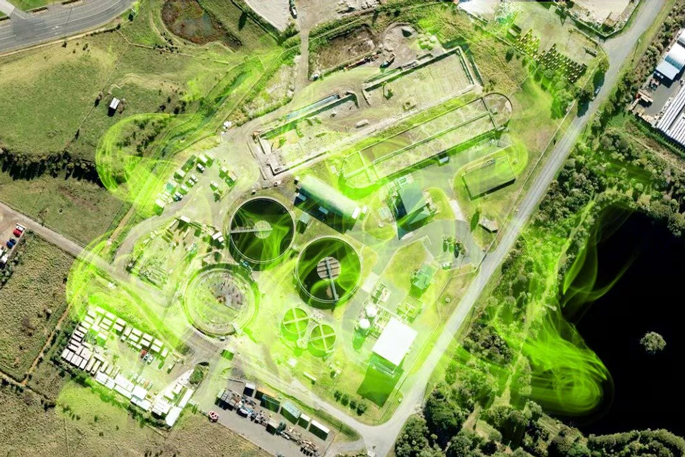
The exact cause of the foul odours that lingered across Pāpāmoa and Arataki remains unknown and may never be identified, according to Tauranga City Council.
The Te Maunga Wastewater Treatment Plant is continuing to recover after “a discharge into the sewer network that has disrupted the biological processes used to treat wastewater”, triggering strong smells across surrounding suburbs.
In a statement to NZME, Tauranga City Council environmental programme leader Jim Summers said investigations into the discharge were continuing, but the source had not been identified.
“At this stage it’s unlikely council will find out the exact cause, however investigations remain ongoing.”
He said the plant’s treatment processes were recovering well and continuing to stabilise.
“As the biological treatment system returns to its normal operating rhythm, intermittent odour issues may persist over the coming weeks.”
Summers thanked residents for their patience and said further updates would be provided as more information became available.
He said planned upgrades to the wastewater treatment plant had not been affected by the incident and were continuing as scheduled.
In statement to the Bay of Plenty Times last week, the council confirmed the unpleasant smell reported by residents was linked to operational issues at the plant.
The council said the discharge had temporarily disrupted the biological processes used to treat wastewater, increasing odour emissions while the plant recovered.
Last week residents took to social media and described the odour as “super disgusting”. Some said it smelled like sewage and had seeped into their homes.
Built in 1996, the Te Maunga Wastewater Treatment Plant’s average daily flow is 20,000 cu m.
Treated wastewater is discharged into the ocean via a 950m long pipe buried offshore from Pāpāmoa.
It is one of two wastewater treatment plants serving the city.
The council said upgrades happening at the plant were designed to improve its resilience to these types of events.
Treated wastewater continued to be safely discharged to the ocean in compliance with consent and regulatory standards, it said.