
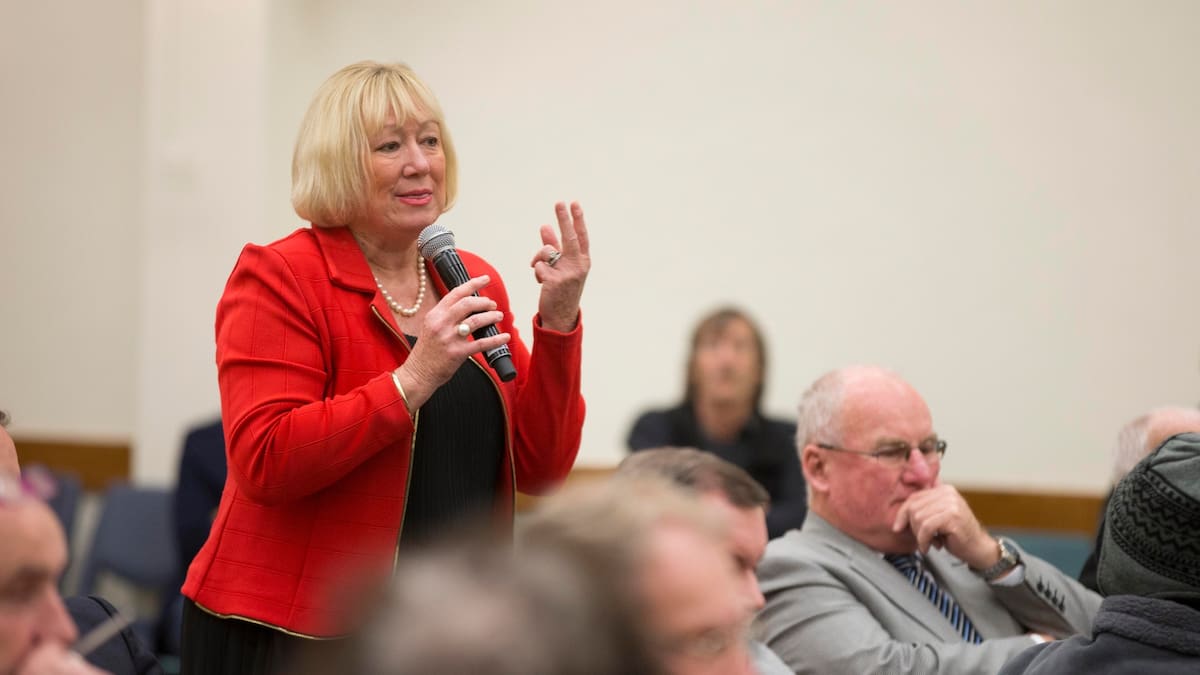
“Well, that elected member may have a point in that I probably could and should lose a few kilos, but the question is – is this conduct appropriate?”
Her comments followed Bo Burns voicing similar concerns, with the Howick Ward councillor issuing a rebuke of her colleagues in her own social media post last month.
Howick Ward councillor Bo Burns recently criticised the culture at Auckland Council.
Burns claimed she had walked out of several meetings because of the unacceptable behaviour of her colleagues, alleging a toxic culture at the council involving bullying, intimidation, hostility and fear.
Fletcher wrote that good democracy required robust debate, “but it also requires the right framework and leadership to ensure this occurs respectfully, without the need for personal threats or abuse”.
“When one of my colleagues reflected on their experience recently, I saw some in the media suggest they should not have chosen politics, commenting along the lines of, ‘If you can’t take the heat then get out of the kitchen’.”
Fletcher said she was with friends recently discussing an upcoming surgical procedure she had scheduled.
“I joked about which could be more unpleasant, having my elbow restructured or facing another torrent of abuse designed to distract me from representing the people of my electorate.
“When armchair warriors talk about toughening up, I suggest they consider stepping up to the plate, and see how they would deal with this sort [of] behaviour and foul language that some, though I stress not all, seem happy to use.”
‘Personal threats and abuse’
Fletcher’s post said this week’s death of former Auckland mayor Les Mills had prompted her to reflect on leadership “and how I have found Auckland Council to be an increasingly uncivil place to work”.
Ex-Auckland mayor and former Olympic athlete Les Mills died last month aged 91.
She said Mills had displayed “statesmanship” by ensuring respectful debate “without resorting to personal attacks”.
“When some behaviour at Auckland recently became public it was suggested that this behaviour was isolated and only triggered by the current heated debate on rate increases.
“Unfortunately, my experience is that this problem started well before the commencement of this term and was clear during the sale of the Downtown Car Park, Plan Change 120 and the stadia debate, although I would accept that this unacceptable behaviour has … become more common.”
Fletcher said effective governance of Auckland was critically important to New Zealand. Parliament had recognised this by designing the Auckland legislation differently to other councils, with the Auckland mayor having “sole responsibility and power” to set the governance structure and appoint committee chairs.
“This power needs to be used wisely if we are to be ambitious for Auckland. The role is a challenging one, but true leadership demands that the office sets the tone, doesn’t play favourites, indulge in divide and conquer tactics and leads by example.”
Fletcher said she believed people were inherently good and most elected members had the best interests of their electors front of mind.
“It is natural, and appropriate, that passions sometimes run high, however, in my view, this does not excuse the sort of bullying and name calling normally associated with a school playground. I am hoping for better leadership moving forward or perhaps there should be consideration of a Government observer being brought in.”
She ended the post saying she was at home recovering from surgery to repair nerve damage to her arm and would not be at council “for a little while”.
Bullying culture?
Division and bullying claims spilled out publicly among Auckland councillors after Burns’ post last month, with claims and counter-claims about a bullying culture and foul language.
Some of those criticisms were levelled against Mayor Wayne Brown, with councillors Mike Lee and John Watson critical of his leadership and behaviour.
In response, Brown told the Herald councillors were elected to make challenging decisions for Auckland, which involved “pretty robust debate and arguments”.
“It would be silly to think that was avoidable. However, if we remain focused on what is best for Auckland, we can always find a sensible way through things.”
Lane Nichols is Auckland Desk Editor for the New Zealand Herald with more than 20 years’ experience in the industry.
Sign up to The Daily H, a free newsletter curated by our editors and delivered straight to your inbox every weekday.