
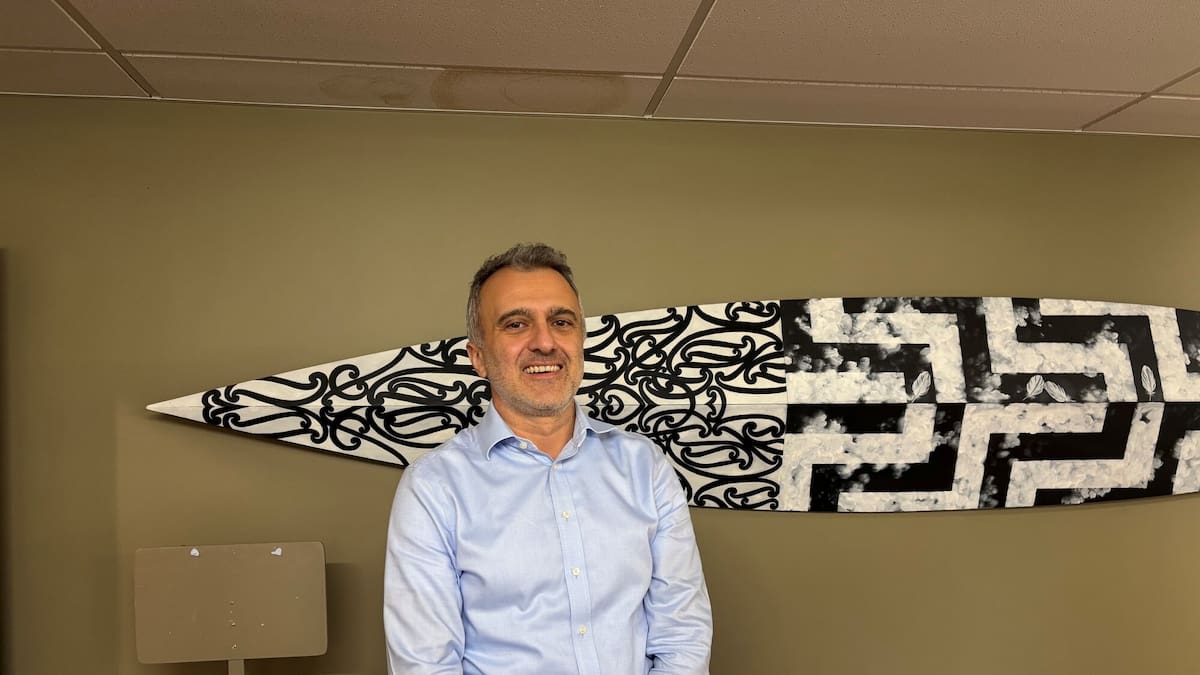
Gisborne Hospital has 57 fulltime equivalent (FTE) permanent and fixed-term senior medical officers (senior doctors) and a 28% vacancy rate, meaning 22 positions are vacant.
Dr Zeyneloglu said this did not mean “28% of the work is not being done”.
The vacancy rate did not reflect the quality of care patients received. All hospital departments were operating despite ongoing shortages, he said.
“Last year before I joined we had a significant [senior doctors] vacancy rate and it did have an impact on the operations of the hospital. I do recognise that, but we are far away from that position right now.”
The Gisborne Herald recently reported Health Minister Simeon Brown as saying the vacancy rate would be down to 10% by the end of the year.
Zeyneloglu acknowledged that but said it “is absolutely not in our control”.
Like many hospitals around the country, Gisborne has a mix of permanent staff and fixed-term locum doctors.
“Most of our workforce is international just like myself – I moved from the US – [and] we get a lot of doctors from the United States, UK, Europe, Africa, Asia.”
Overseas staff could be delayed because of issues such as paperwork, visas and registration, or family issues, he said.
The rate could also depend on whether current senior medical staff stayed until the new staff arrived.
“I can’t really control those and if things like that happen, life issues, you know, that will also have an impact on our rate as well.”
Twelve new staff were expected to start before the end of the year.
While choosing to work as a locum could often be a lifestyle choice for some doctors, he said some fixed-term arrangements had led to permanent positions.
Zeyneloglu said locums brought excellent skills from their home countries and it would be difficult for smaller communities like Gisborne to create that kind of workforce.
“It kind of gives us this very diverse community and medicine is medicine … [it] doesn’t matter where you practise.”
Zeyneloglu said the hospital was working to have a closer partnership with iwi and primary care practices.
Drawing on his experience in the US, he said one of the biggest differences between the two healthcare systems was not having to worry about whether patients had health insurance.
“In the US, healthcare is basically a business. It’s not whānau-focused, it’s money-focused.
“I don’t have to worry about ‘does this patient have health insurance’ when they’re in front of me, when I’m ordering tests or writing prescriptions, I know they will get it.”
Zeyneloglu earned his medical degree from Ege University School of Medicine in Izmir, Turkey, and completed his residency in internal medicine and paediatrics at Yale University/Bridgeport Hospital in Bridgeport, Connecticut.