
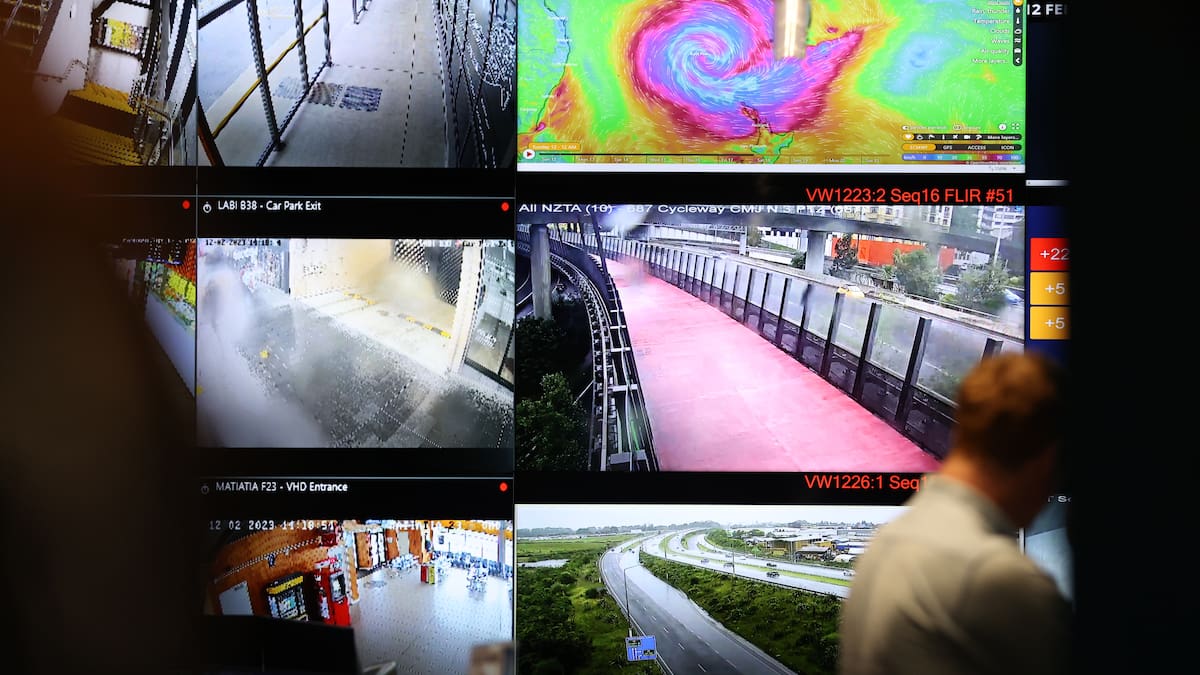
But New Zealand sits thousands of kilometres away from the high-impact zone in the tropical Pacific, and so El Nino’s effects are weaker and less predictable here than somewhere like Indonesia, which almost always suffers through wildfire and drought.
Melia likens El Nino to Zeus, with other climate drivers acting as minor and demi-gods in a “pantheon” of influences on New Zealand’s weather.
Past El Nino events have brought cooler temperatures, droughts, and economic impacts, especially in eastern regions.
“We rely on El Nino’s effects being translated down through these other sorts of atmospheric phenomena and oscillations … and even those can sit a bit away from us. They send these messages to us through these whispers.”
University of Waikato climate scientist Luke Harrington says New Zealanders “like to get pretty excited any time an El Nino event is declared”.
That’s often misplaced, he says. “We’ve actually got a quite weak relationship [with it].”
Modern observations show there are certain trends that are more likely, though, when a strong El Nino is in force.
The coming El Nino is likely to rival or exceed previous strong El Nino events – here’s how the big ones have played out here.
1982-1983
Back in 1982, James Renwick was a young MetService researcher when the agency issued its first-ever press release about a coming El Nino that spring and summer.
Now a professor of physical geography at Victoria University and former climate commissioner, Renwick was part of the group that produced the climate outlook, based on new research.
“It turned out to be almost exactly right, which was pleasing. I can’t say that’s worked every time since, but it did then.”
What New Zealand experienced over the summer of 1982 and 1983 were “textbook” El Nino conditions, he said: drier than normal conditions in the east, wetter than normal conditions in the west, and a westerly flow that generally kept temperatures cool.
“It was a big deal,” Renwick says.
“I remember the farming community were struggling. It even featured in Footrot Flats.”
Droughts were declared in Hawke’s Bay and Gisborne, and El Nino loomed large in the media and public mind for months.
1991-1994
Contrary to popular belief that El Nino means a hot summer, it actually often brings cooler temperatures with it thanks to prevailing sou’westers, Renwick says.
The El Nino events of the early 1990s weren’t especially strong, but they came back to back and also coincided with the 1991 eruption of Mount Pinatubo in the Philippines, creating a “canopy” of volcanic debris in the atmosphere.
“That cooled the whole planet for a couple of years – 1992, 93,” Renwisk says.
“That added up to 1992 having the coldest winter for 40-odd years or so.”
When temperatures are lower, there’s less moisture in the air, so less rain falls – putting pressure on farming, water supplies, and the hydro lakes. As well as being freezing, the winter of 1992 therefore also coincided with a power crisis in New Zealand, as El Nino exacerbated the prolonged drought.
Reduced rainfall during prolonged dry periods can lower hydro lake levels, increasing pressure on electricity generation and water resources. Photo / Estelle Sarney
Two years later, in winter 1994, a third El Nino event in a row was blamed for the Auckland water crisis.
Earth Sciences New Zealand principal scientist Chris Brandolino says El Nino can still bring “spiky” temperatures with it.
The hottest temperature ever recorded in New Zealand was 42.4°C at Rangiora on February 7, 1973, in the middle of another major El Nino event.
It’s a record that’s stood for more than 50 years – with the twin influences of climate change and El Nino, could it fall this summer?
1997-1998
Like 1982-83, the way El Nino played out over the summer of 1997-98 was “textbook” for New Zealand, Renwick says.
A government report published in mid-1998 noted that eastern regions were “badly affected” by drought.
“The most extreme conditions [were] evident in Marlborough, North Canterbury and parts of the Wairarapa and Hawke’s Bay.”
Apple growers found their burgeoning crops got sunburnt and overheated, leading some orchardists to leave nearly half the fruit unpicked.
The report estimated the costs to agriculture alone were $425 million (about double that in today’s money).
Atypical hot temperatures towards the end of the summer put pressure on city populations, too.
“Higher air temperatures, by as much as 3°C above average, have led to a heavier demand for urban air-conditioning and hence for electricity,” the report noted.
However, there was no repetition of the 1992 electricity crisis that occurred during the 1991-94 El Nino.
Globally, the 1997-98 El Nino hit hard, it said.
“Reported impacts include drought-induced food shortages, massive forest fires, thousands of deaths from starvation, flooding and diseases, and reductions in economic growth forecasts.”
2015-2016
The most recent strong El Nino was forecast to be much more severe than what eventually transpired, Luke Harrington says.
“That was also supposed to be a super El Nino. It was pretty warm, and there probably were some regional impacts in some places, but it wasn’t very widespread or significant.”
Earth Sciences New Zealand says typical southwesterly patterns developed at first, in December 2015.
“[But] a change to more northerly-quarter winds than usual for January and February brought more rain and alleviated fears of El Nino-associated drought in many parts of the country.”
University of Waikato climate scientist Luke Harrington says the worst drought that New Zealand has reliable observations for occurred during 1914-15, which also coincided with an El Nino.
Not every El Nino brings drought to New Zealand, but strong events increase the risk significantly. Photo / George Heard
However, he says it’s important to note that not every El Nino brings drought to New Zealand – and not every drought happens in an El Nino year.
“Some of our largest [drought] events of the recent past haven’t occurred during El Nino events. I’m thinking particularly 2012-13, the 2007-08 Waikato droughts, the same with 1988-89 as well.”
Earth Sciences, in its summary of the 2015-16 El Nino, noted that drought on the east coast “is not a certainty during every El Nino”.
‘[However], the risk of El Nino-driven drought during a strong event is enough to warrant risk-management actions by farmers and others whose livelihoods are likely to be adversely affected by prolonged dry conditions.”
– RNZ