
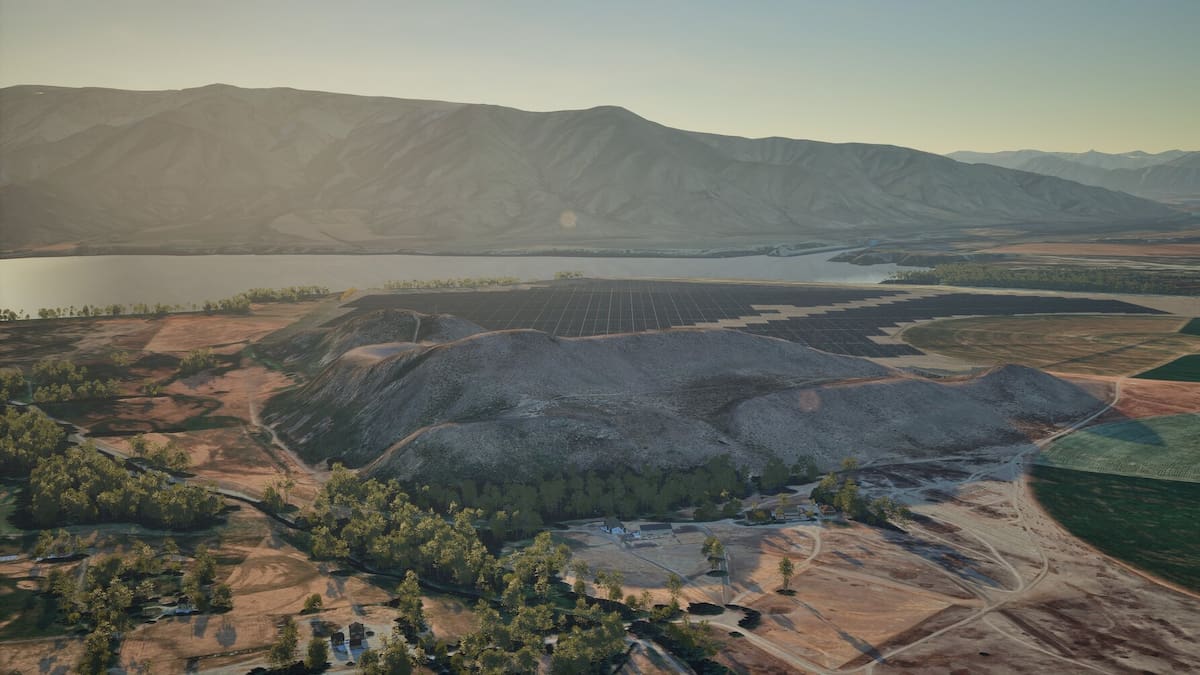
“The positive draft decision recognises that renewable energy development and environmental stewardship can be delivered together,” Lodestone managing director Gary Holden said.
Located near the Benmore high-voltage direct current (HVDC) connection, the farm would be well-positioned to deliver renewable electricity into the South and North Island electricity systems, Holden said.
Lodestone said the farm will generate about 370 gigawatt hours of renewable electricity each year, enough to power 45,000 households.
It would also complement New Zealand’s hydro generation during daylight hours and help preserve long-term hydro storage during dry years.
The project would include a package of conservation initiatives proposed by Lodestone and the Haldon Station management team.
Holden said he expected the project to set the new standard for how landowners, generation companies and regulators can deliver outcomes.
The project is expected to make a significant contribution to New Zealand’s future electricity supply, Holden said.
“Our vision is to develop a solar farm in every community where we can add value and bring generation closer to customers,” he said.
Adding Haldon Solar Farm to Lodestone’s fleet would strengthen the wholesale electricity market and accelerate the reduction of carbon and fossil fuel costs.
“This combination will enhance our ability to provide competitive alternatives for all consumer segments,” he said.
Planned upgrades to the HVDC link would further strengthen the ability for renewable generation from the South Island to supply demand in the North Island.
The draft decision is now subject to the final stages of the Fast-track Approvals Act process before a final decision is issued.
Established in 2019, Lodestone is an independent utility-scale solar developer and an integrated electricity generator and retailer.
Since 2023, the company has commissioned four solar farms and another is expected to get the same treatment soon.
Construction is underway on its sixth in Central Hawke’s Bay.
Lodestone is developing a nationwide pipeline of projects to support New Zealand’s transition to a more resilient, low-carbon electricity system.
Meridian approval for Lake Pūkaki
Separately, power generator and retailer Meridian Energy said the fast-track panel had confirmed the easing of access restrictions on Lake Pūkaki hydro storage for a three-year period.
Chief executive Mike Roan said easing restrictions would reduce dry-year risk and related price impacts through to winter 2028, providing extra insurance for the system while more new generation capacity is built.
Hydro generation provides about 60% of the country’s electricity and offers storage that can play a key role when alternative sources such as solar and wind are not available.
Its challenge is that only 23% of that capacity can be stored in lakes, and Meridian’s own lake storage equates to 15 weeks of average generation.
“Today’s announcement gives us a buffer if a dry year puts pressure on that storage,” he said.
Jamie Gray is an Auckland-based journalist, covering the financial markets, the primary sector and energy. He joined the Herald in 2011.
Stay ahead with the latest market moves, corporate updates, and economic insights by subscribing to our Business newsletter – your essential weekly round-up of all the business news you need.