
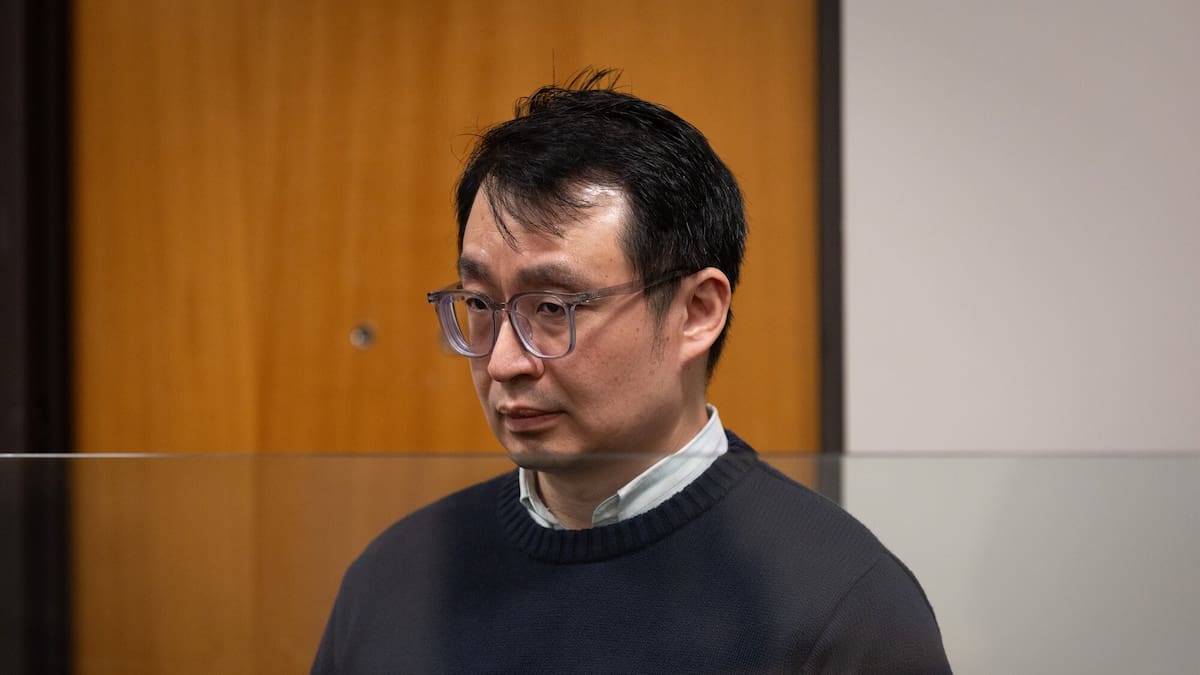
Chartered Accountants ANZ confirmed it has an open investigation into Khoo, which would continue now that he had been sentenced.
The offending occurred in the men’s changing room at the Olympic Pools & Fitness Centre on Broadway.
Police earlier told the Herald they had not tried to identify the victims, but encouraged those with concerns they might have been affected to come forward.
Recordings made without ‘knowledge or consent’
According to an agreed summary of facts, on June 22 last year another man was using the changing room when he noticed Khoo’s phone camera was facing him from inside a mesh bag pocket.
The man found it suspicious and moved showers, but shortly after saw the same phone had been propped up against Khoo’s toiletry bag, facing another man.
“[He] confronted Mr Khoo about filming people in the changing room. Mr Khoo initially did not respond, then said it was in case of an emergency and ran out of the changing room when [the man] kept asking to see his phone,” the summary said.
The Olympic Pools & Fitness Centre on Broadway, Newmarket. Photo / Jason Dorday
About three weeks later, police executed a search warrant at Khoo’s home, and four electronic items were seized.
“Mr Khoo co-operated fully with police, voluntarily providing access to all devices and assisting in the execution of the search warrant.”
Police found just under 400 videos of either naked or partially naked men in the fitness centre’s changing rooms.
In total, 398 men’s genitals were filmed.
Seven children were captured, and three young people aged between 14 and 17 were videoed.
Khoo used a range of methods to capture men in the changing room. These included putting his phone in his shirt pocket with the camera facing out and in the pocket of his gym bag.
“At times he held the phone to his ear as though making a call,” the police summary noted.
All of the footage was made without the knowledge or consent of those filmed.
The offending spanned about six years, beginning in 2019 and ending in mid-2025.
In total, he pleaded guilty to 13 charges for making intimate visual recordings, one charge for possessing an intimate visual recording and another for making an objectionable publication.
Each charge was representative, meaning the offending occurred on more than one occasion.
The charges carried maximum prison terms of three years, one year and 14 years respectively.
‘High expectation of privacy’
Prosecutor Fiona Culliney said there was a silent contract between people in the changing rooms, and this type of offending carried “particular concern” for the public.
People had a high expectation of privacy, she submitted.
Judge Retzlaff agreed, saying there was a belief that “people would not do this to you”.
Culliney submitted that the starting point for Khoo’s offending should be four years’ imprisonment due to the “sheer scale” of the offending.
Crown prosecutor Fiona Culliney. Photo / Brett Phibbs
She said Khoo did not appear to be interested in young people and children, and seemed to be targeting males.
Therefore, the Crown did not request Khoo be placed on the child sex offender register.
Defence lawyer Scott Brickell said the offending was a “very serious invasion of privacy in a vulnerable setting”, but did not warrant a jail term.
He submitted that a lower starting point would be appropriate and said his client was deeply remorseful and had undertaken 35 hours of offence-focused therapy.
Brickell told the court his client had not distributed the material and those filmed could be assured the content stayed on his devices.
Judge Hermann Retzlaff during the sentencing at the Auckland District Court. Photo / Sylvie Whinray
Judge Retzlaff said aggravating features included the breach of trust and that all the victims were vulnerable because they were recorded while naked.
There was also a level of premeditation, hundreds of videos and victims, and the offending spanned years.
Judge Retzlaff said one of the victims wrote in a statement that he had considered himself a resilient person, but that did not mean he was unaffected by the offending.
His sleep had been disrupted, and now entering the pool facility carried a “weight it never did previously”.
In public changing spaces, he found himself constantly alert for mobile phones.
“Clearly the offending has caused harm to these victims and those who have not been heard,” the judge said.
Judge Retzlaff set a starting point of three years and six months in detention.
After imposing discounts for remorse, early guilty plea, lack of prior offending and rehabilitation, it brought him to a sentence of 24 months in prison, which meant the judge could impose a home-based sentence.
Khoo was ultimately ordered to serve 12 months’ home detention, and six months of post-detention conditions.
Judge Retzlaff did not place Khoo on the child sex offender register, which would have been automatic if he were given a custodial sentence.
Katie Harris is an Auckland-based journalist who covers issues including sexual assault, workplace misconduct, media, crime and justice. She joined the Herald in 2020.
Sign up to The Daily H, a free newsletter curated by our editors and delivered straight to your inbox every weekday.