
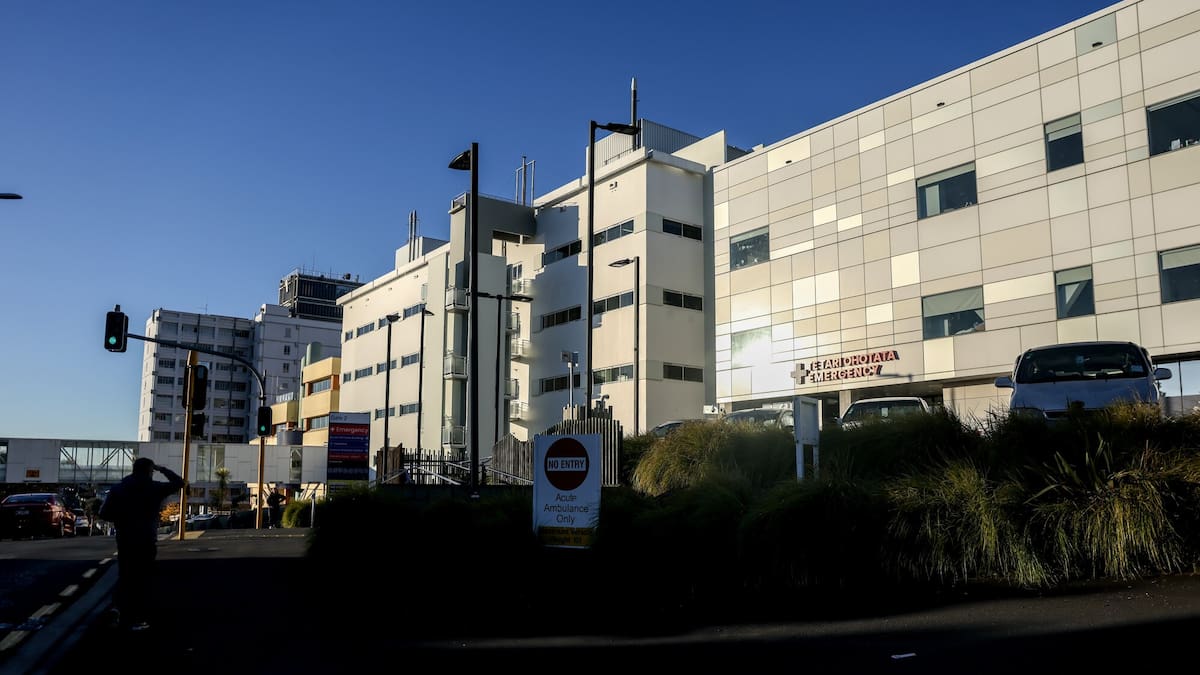
Board member Dr Mataroria Lyndon told the Waikato Herald the tragedy had left a profound impact not only on the family but also on those who witnessed the incident and the staff involved.
“I just wanted to acknowledge the trauma and the impact on the whānau, those who were around them, but also the staff,” Lyndon said.
“I trained as a doctor myself, and I understand the moral injury that can happen when these events are beyond their control while they’re doing their best under some really difficult circumstances.”
Lyndon said Te Tiratū felt compelled to speak publicly because the board had a statutory responsibility to represent whānau voices and monitor the performance of the health system.
He said the incident should not be viewed as an isolated event.
“This isn’t about one bad day.
“It’s been a gradually worsening problem, and it’s a hospital-wide problem.”
Dr Mataroria Lyndon, Te Tiratū Iwi Māori Partnership Board member.
Te Tiratū co-chairman Glen Tupuhi said no family should experience the trauma of losing a loved one while waiting for emergency care.
“Our first thoughts are with the whānau, who have suffered an unimaginable loss.
“We respect their privacy at what will be an incredibly difficult time.”
Tupuhi said the board expected Health New Zealand’s review to examine the death and broader issues like “access block”, staffing, inpatient capacity, ambulance delays and patient flow.
He said access block occurred when patients could not move out of the emergency department because inpatient beds were unavailable, creating bottlenecks throughout the hospital.
“It must be about more than one tragic event,” Tupuhi said.
“We know many of our rurally based whānau across the region have the added stress of travel to Kirikiriroa and wait times.
“Our community deserves confidence that emergency departments are safe, adequately resourced and able to provide timely care when people need it most.”
The board cited Health New Zealand data showing only 66.4% of Waikato Hospital patients met the Government’s target that 95% of patients spend less than six hours waiting.
Lyndon said overcrowding in emergency departments was only one symptom of pressure across the wider hospital system.
He said patients could not leave the emergency department until senior clinicians had assessed them, inpatient beds became available and diagnostic services had been completed.
“It’s a system-wide issue,” Lyndon said.
“Putting more staff into the emergency department doesn’t really solve the problem when you have nowhere to move patients.”
Lyndon said meaningful change would require investment across the health system, including community-based services, workforce development, hospital infrastructure and prevention.
“I hope out of this event we understand clinically what happened, understand more around the system issues, and that the recommendations are ultimately made and addressed, so that we don’t see this happen to another whānau,” Lyndon said.
Glen Tupuhi, Te Tiratū Iwi Māori Partnership Board co-chairman.
Waikato Hospital group director of operations, Stephanie Doe, said Health New Zealand had launched an immediate clinical review as well as a Serious Adverse Event Review after the patient’s death.
Doe said the immediate review would be completed this week to identify any immediate actions for improvement, while the Serious Adverse Event Review, expected to be completed within two months, would examine wider learnings for staff.
She said Health New Zealand had reached out to the patient’s family and continued to offer support.
Doe said emergency departments were dynamic environments where demand fluctuated daily, influenced by staffing levels, patient complexity and hospital occupancy.
“Improving patient flow and reducing delays requires a whole-of-hospital and whole-of-system response,” she said.
Doe said Waikato Hospital had kaitiaki available in the emergency department during business hours, with on-call support outside those hours, as well as kaitakawaenga to support patients experiencing mental distress.
She said initiatives under Health New Zealand’s Waikato Winter Plan included hiring additional clinical staff, increasing bed capacity and improving discharge processes to strengthen hospital flow.
Doe said Health New Zealand continued to work with iwi, hapū, iwi Māori partnership boards and Māori health partners, including Te Tiratū, to identify where services could be improved.
Tom Eley is a multimedia journalist at the Waikato Herald. Before he joined the Hamilton-based team, he worked for the Weekend Sun and Sunlive. He previously worked as a journalist at Black Press Media in Canada and won a fellowship with the Vancouver Sun.