
One increasingly popular strategy is partnering with platforms such as First Table, which let diners receive 50 per cent off their food bill by booking during quieter periods. Booking numbers have grown more than 40 per cent across Aotearoa in the past financial year, and the pool of eateries continues to widen, from tiny neighbourhood cafes to large fine-dining establishments.
CEO Alex Cappy says the First Table team see first-hand how rising fuel costs impact eateries and customers.
“People’s household budget contracts because of that, and dining out can be one of the first things that gets cut, and that knock-on effect comes to the hospitality side, which you know, in turn itself, employs thousands and thousands of Kiwis.”
First Table CEO Alex Cappy. Photo / Julian Behal
Cappy and her team have seen many restaurants register with First Table to fill empty seats over the past year, which she sees as a win-win.
“Diners get 50 per cent off – because they still want to live their lives in the midst of a really difficult economic situation – and restaurants, they can put tables on the platform that might otherwise be underutilised. That could be the first table of the night, the last table; it could just be because it’s Tuesday and, you know, for restaurants at those slower times, they’re already paying the overheads.”
Platforms like this also expose customers to places they might not have tried before and could return to if the experience is positive. That is the ultimate aim of any eatery, regardless of the economic climate, according to Vanessa Zhao, content creator and one half of the popular Instagram account foodiesstablenz.
“We recently checked out a place called Victoria Sushi because they were doing Sushi Pops – which have been a huge viral trend in the US, but we discovered that all their other food was good too, so I will probably go back there. It’s a new place for me, I didn’t know about before.”
Anthony Gray and Vanessa Zhao at Caviar at HI-SO in June. Photo / Norrie Montgomery.
Agile menus
Some restaurateurs have entirely altered their offerings to make things work, such as Sulie Rattanong, who owns Greenland Gastro Pub and The Garden Spot Eatery in Auckland.
“We opened The Garden Spot in 2025 and thought it would be really successful as there was nothing really grab-and-go in that area. We got it open, and nothing happened; it was dead. We had done social media and all the right things, but it just didn’t take off.”
Eventually, he tried to sell the business but there were no takers, and he faced a choice: lose $300,000 or try a new approach.
Rattanong knew people were struggling, so he developed a $10 small-plate menu.
“I’ve been a chef for 20-something years, so I thought we must be able to make it work,” he said, adding that the menu was a hit with customers.
“It takes a bit of creativity – I shop around for ingredients, I get my butter from Costco because it’s cheaper, I get creative with ingredients, but we went from almost nothing to nearly 2000 plates a day, and it’s been busy ever since,” Rattanong said.
Sulie Rattanong, who owns Greenland Gastro Pub and The Garden Spot Eatery. Photo / Supplied
A look at the menu shows he’s having fun with it too, with everything from avocado toast to Wagyu beef tortellini to chilli crab scrambled eggs (and a “Big Plates” menu if you’re not a sharer).
The main event
According to Nicola Chan, a popular food and beverage content creator (@chan_can_eat), eateries have also started exploring how one-off events can prompt diners to visit.
“I’ve had a front-row seat to how operators are responding to the current situation, and many are succeeding by giving customers a reason to return more often, rather than just on special occasions,” says Chan, who eats out four to six times a week for work.
Nicola Chan, a popular food and beverage content creator (@chan_can_eat). Photo / Nicola Chan
“Paris Butter is a great example. Traditionally, many people would think of it as a restaurant reserved for birthdays and anniversaries, but by doing collaborations with international Michelin-starred chefs and special dining events, they’re creating additional occasions that encourage repeat visits.”
She says venues like Esther, in QT Hotel, regularly partner with wine and food producers to create dining experiences that go beyond serving food. “They understand that people are looking for something memorable and are constantly finding new reasons to bring guests back.”
Head chef Sean Connolly at his restaurant, Esther, in the QT Hotel Auckland. Photo / Nic Chan
Zhao agrees and says she and her partner Anthony see it in both casual and fine dining. One recent example was an Irish Chinese pop-up at Ellerslie pub O’Dowds. The catch? It was only every Sunday of June.
At first, the quiet streets made the area seem dead. “But when we got in, it was a bit like ‘what economic crisis?’. It was buzzing, so they were definitely doing something right in times like these. People like us wanted to know what it was all about, and Irish people wanted that Chinese takeaway menu that they would have gotten back at home.”
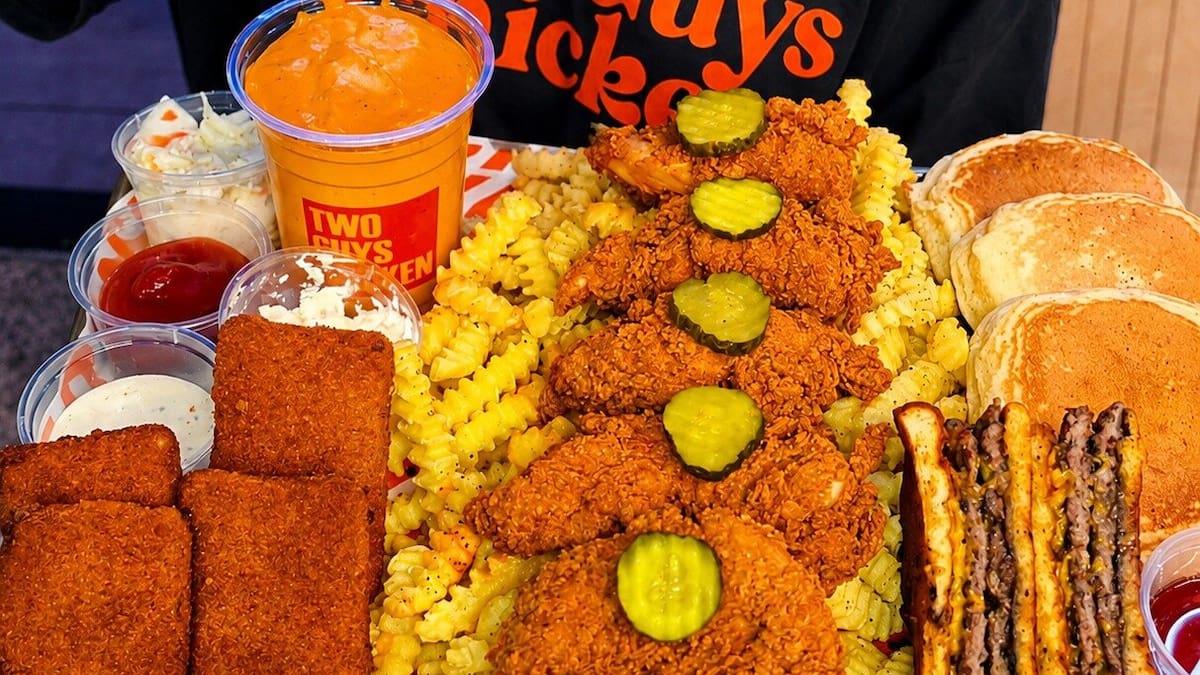
David Lee, from Two Guys Chicken, and Isaac Yu, from The Breakfast Club cafe, also recently hosted a creative temporary offer and weren’t prepared for how popular it would be.
“We love what they do at Two Guys and know them well, so we chatted with David, and he came up with the idea of us both putting items that sell well together on an American-style platter,” said Yu.
The Breakfast Club NZ and Two Guys Chicken collaboration. Photo / Supplied
The platters were sold at both Breakfast Club locations, and queues were regularly out the door. “On the last day, we had to send half the people back, and we actually couldn’t have done it any longer than we did, because we physically didn’t have the capacity,” he added. Both Lee and Yu were delighted to see so many people enjoying the collab.
Customers are clearly thinking more carefully about where they spend their hospitality dollars. Some stick to places they love rather than risk spending on something mediocre; others look for novelty, experience and good food. What’s clear is that restaurants weathering the storm aren’t waiting for things to improve. They’re adapting, experimenting and finding new ways to connect with customers. And while creativity may not solve every problem, for some operators, it’s proving one of the most valuable ingredients on the menu.