
Chinese goldsmiths during Ming Dynasty produced fine jewelry found in Hubei province tombs. A recent study in NPJ Heritage Science examined earrings from Prince Zhu Zairong tomb, died 1545. Researchers studied a lost method named Jin zhe si. The method creates filigree appearance without using wire.
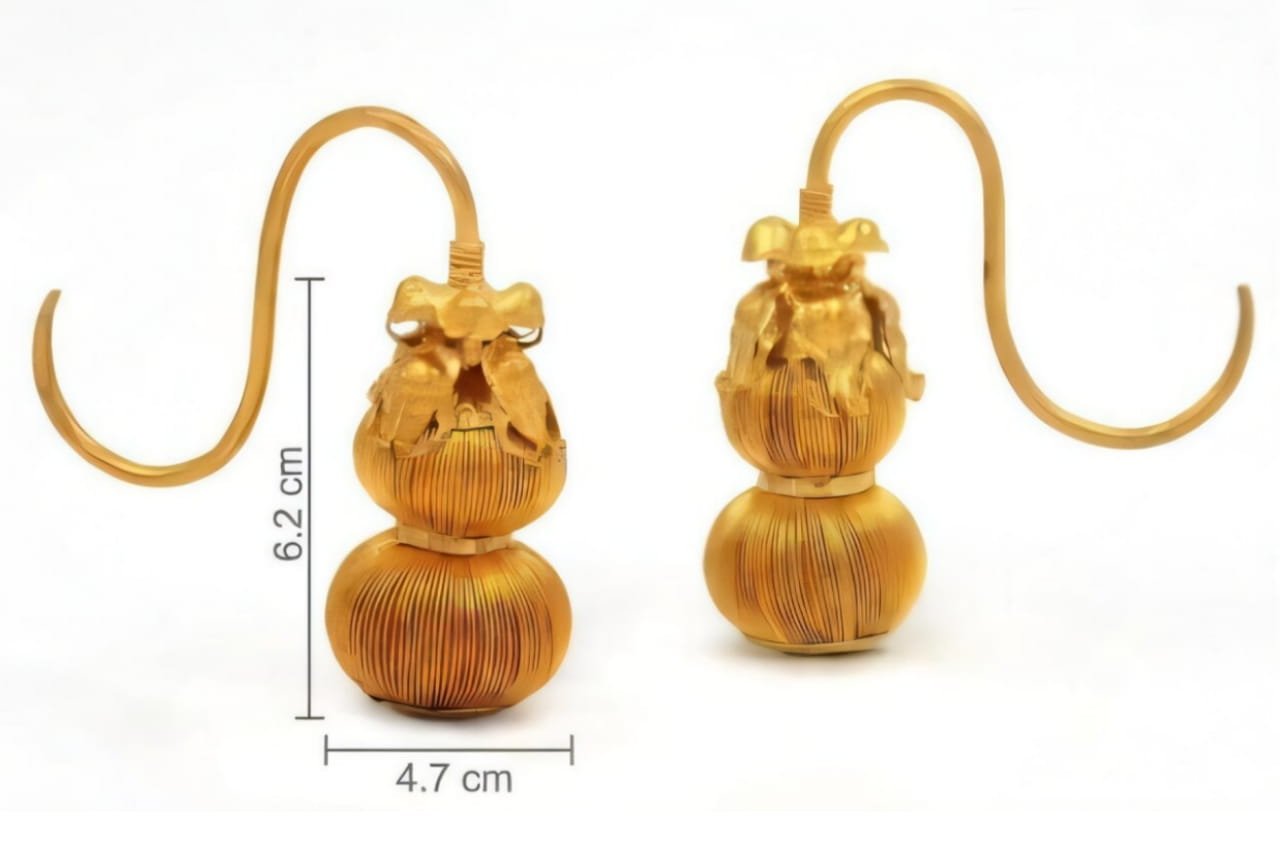 Restored Jin zhe si gourd earrings produced through experimental reconstruction. Credit: Tian, Z., Ren, K., & Jiang, Z., NPJ Heritage Science (2026)
Traditional filigree relies on thin wires twisted and soldered into lace patterns. Jin zhe si follows another path using folded gold sheets. Extremely thin gold foil gets pressed into tight parallel folds. These folds form a light hollow structure with a satin surface.
The studied earrings show a double gourd shape with hanging leaves. Microscopy revealed regular corrugated texture across the surface. No wire or inner filler appeared inside the structure. Every visible detail comes from folded gold foil work.
Researchers produced drawings and rebuilt steps through reverse engineering. They created a replica matching shape, texture, and weight closely. Difference between replica and original stayed near one gram. Historical records guided each production stage.
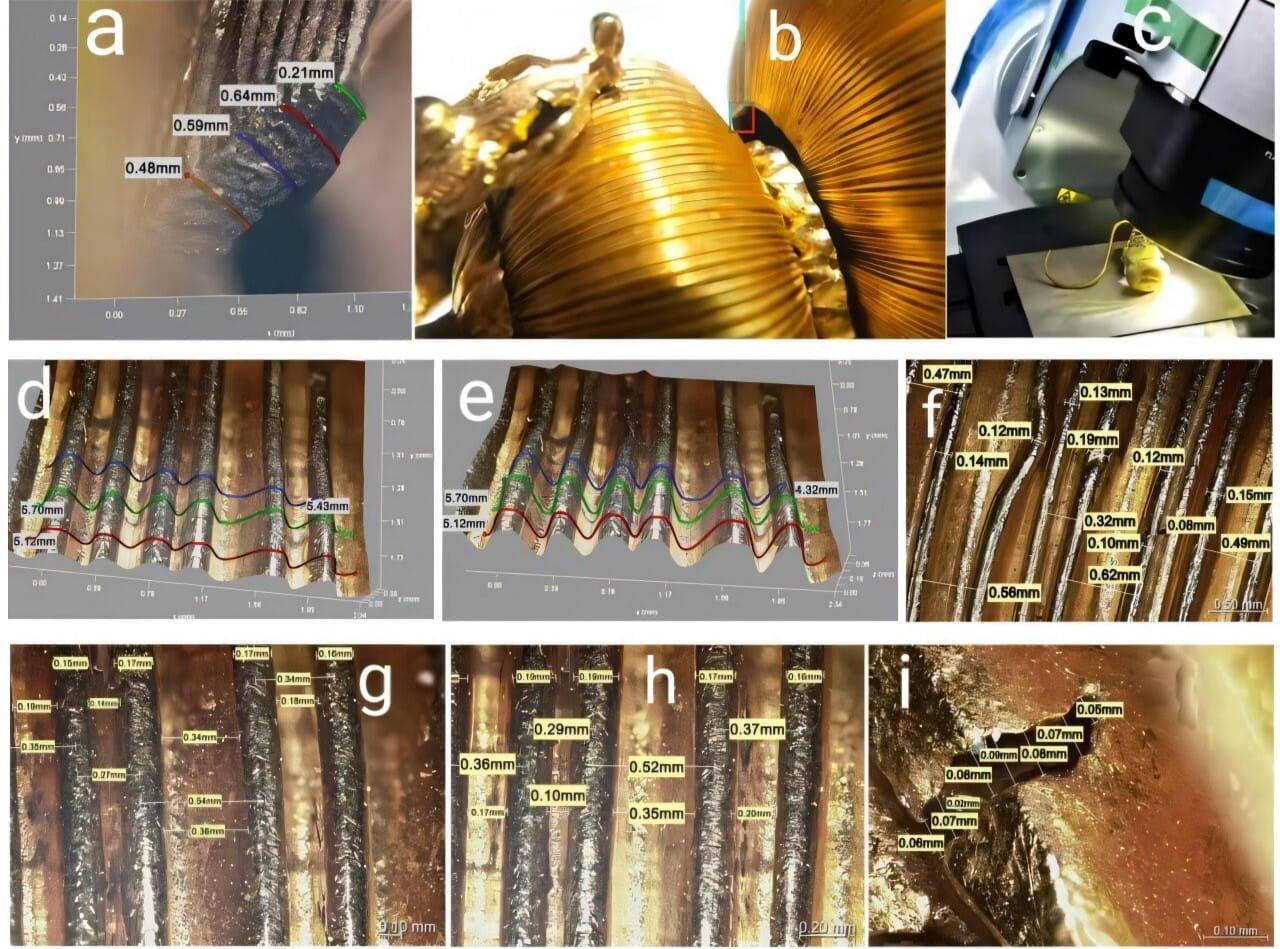 Microscopic observations of folds and fractures on a Ming-dynasty Jin zhe si gold gourd earring. Credit: Tian, Z., Ren, K., & Jiang, Z., NPJ Heritage Science (2026)
Experiments tested gold, silver, and aluminum foils under same folding process. Silver and aluminum tore or failed during repeated folding. High purity gold kept folds without cracking or breaking. Gold softness allowed stable pleats during shaping.
Results show material choice controlled success of technique. Only gold supported repeated folding into fine ridges. Researchers link gold purity to survival of method across history. Jade or agate tools likely shaped folds in original workshops.
Reconstruction suggests artisans used smooth hard tools for pressing foil. Similar tools appear in other Ming metalworking practices. Process likely took skilled worker about one day per earring. Method required steady control and careful handling.
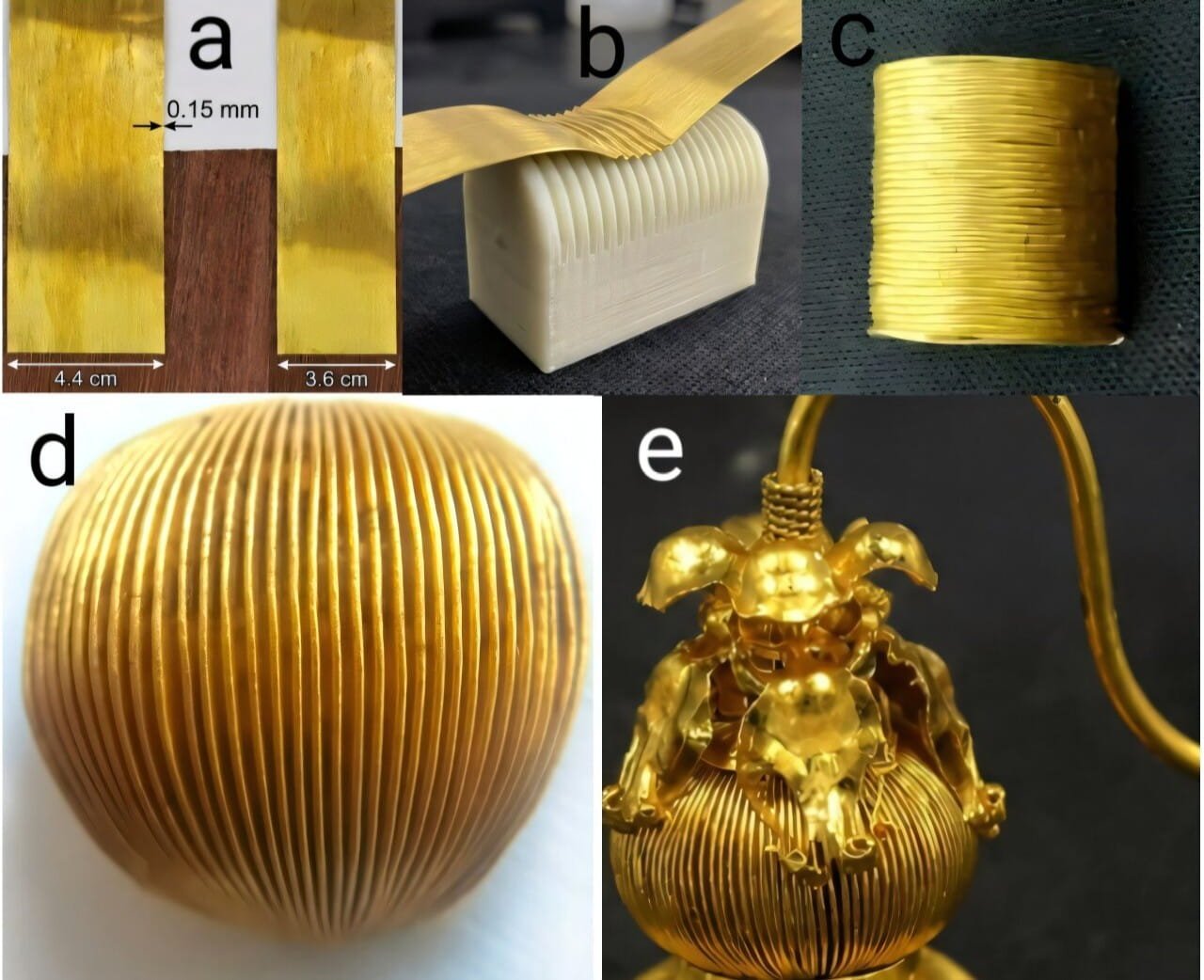 Experimental reconstruction process for producing a Jin zhe si gold gourd earring. Credit: Tian, Z., Ren, K., & Jiang, Z., NPJ Heritage Science (2026)
Study separates Jin zhe si from standard filigree classification. Both share visual style yet differ in production process. Researchers warn against labeling objects without physical proof. New findings help museums reassess some gold artifacts.
Work links written records with physical evidence from tombs. Results support clearer understanding of Ming metal craft. Findings highlight skill of artisans working with limited tools. Study restores knowledge lost for centuries.
Archaeological finds across Hubei continue to show rich gold objects from royal burials. These objects help confirm advanced metal skills among Ming workshops. New replication tests support continued study of ancient jewelry methods.
Publication: Tian, Z., Ren, K., & Jiang, Z. (2026). Restoration of Ming dynasty Jin zhe si: a lost Chinese goldsmithing technique. NPJ Heritage Science. doi:10.1038/s40494-026-02757-4