
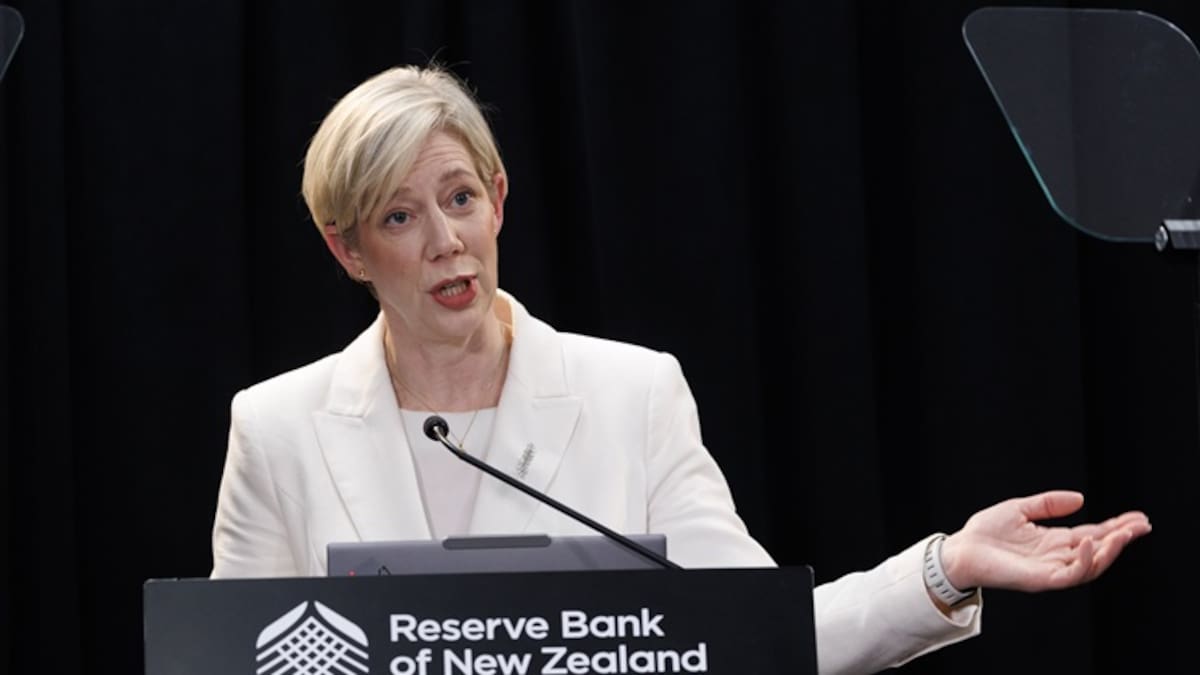
Governor Anna Breman cast a deciding vote to keep the rate on hold.
The division between economists is stark.
BNZ head of research Stephen Toplis said a hike was needed.
“We are strongly of the view the cash rate needs to get back to neutral relatively quickly to ensure stimulatory monetary policy does not add to inflation,” he said.
“When the cash rate hits neutral, then the RBNZ can ponder the nature of the inflationary pressure and determine what needs to be done next.”
The RBNZ has indicated it currently sees the neutral cash rate at 3%.
But Kiwibank chief economist Jarrod Kerr was every bit as convinced that the OCR should stay on hold for the foreseeable future.
“We’re not likely to see a wage-price spiral or demand-driven inflation. It’s simply a supply shock. It’s something that should simply be looked through,” he said.
Of course, views on what the RBNZ should and what it will do are very different things.
Given the RBNZ’s May forecasts suggested three rate hikes this year, even Kerr believes the OCR will rise, although perhaps not until September.
Markets currently have retained strong odds on a hike, pricing in a 75% chance.
But two major banks, ASB and Westpac, have shifted their views to reflect the relatively rapid fall in fuel prices in the past few weeks.
“In what is looming as a close call, we now expect the RBNZ to hold the OCR at 2.25% in the July 8 decision,” said ASB senior economist Mark Smith.
“We do not expect the decision to be unanimous, with a split vote highly likely again.”
Smith said the change in OCR call had been motivated by two key factors.
“First, recent US-Iran developments, while fragile and uncertain, appear to be consequential,” he said.
“They look to have reduced upside risks to New Zealand medium-term inflation by lowering the risk of sustained cost shocks filtering through into wider price and wage settings.
“Second, and as a consequence, the hurdle for the internal Monetary Policy Committee members (who hold the balance of power) to switch to vote for an OCR increase does not look to have been cleared,” he said.
These members would want to wait for more confirmation of potential medium-term inflation impacts before deciding to move the OCR, he said.
“We think this hurdle, at its earliest, can be cleared by the September MPS.”
Westpac chief economist Kelly Eckhold argued that “no further evidence on second-round inflation impacts, rising wages pressures or increasing inflation expectations” had emerged since the May meeting.
“Indeed, short-term inflation expectations appear to have reduced in business and consumer surveys as energy prices have fallen and will likely continue to decline if current energy price levels are sustained,” he said.
“The most prominent argument we have heard among market participants expecting a July hike is that this was more or less promised in the May statement,” he said.
But, in fact, no such promise was made, Eckhold said.
“The governor described OCR increases ‘in coming meetings’, which was deliberately and appropriately vague given the uncertain nature of the environment,“ he said.
“The governor explicitly noted in a radio interview after the May meeting that ‘if we see oil prices falling really much more than expected, if we see much, much weaker growth, then we may not hike’.”
Liam Dann is business editor-at-large for the New Zealand Herald. He is a senior writer and columnist, and also presents and produces videos and podcasts. He joined the Herald in 2003.
Stay ahead with the latest market moves, corporate updates, and economic insights by subscribing to our Business newsletter – your essential weekly round-up of all the business news you need.