
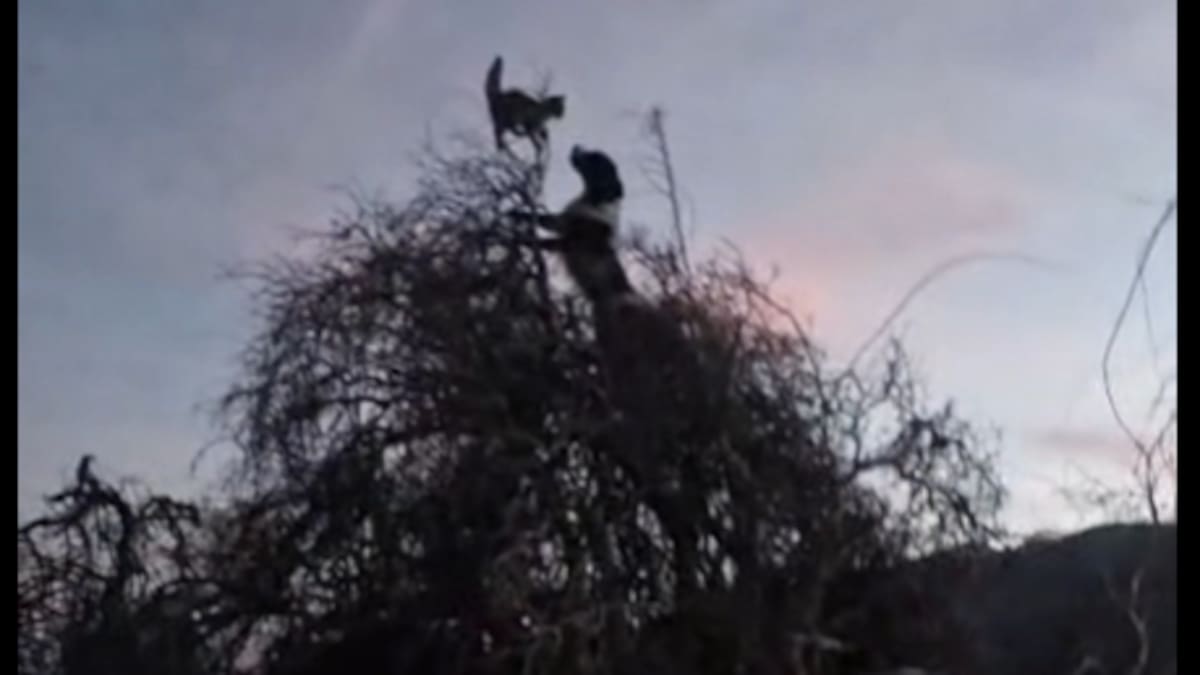
“We know from watching videos of previous hunts that people pay little attention to checking the cat for a microchip.”
She claimed footage from previous events showed animals were not always properly identified before being killed.
“One video of a dog about to catch a cat cuts out just as the dog is about to tear the cat apart. Not only do they have no idea if the cat is a pet, but there are serious Animal Welfare Act breaches, and we want it stopped.”
Competition organiser Mat Bailey rejected the concerns, saying strict rules were already in place to prevent domestic cats from being targeted.
“Our rules are on our website,” Bailey said.
“They need to be 10km away from any residential or lifestyle areas. Hunting using box traps, box traps need to be checked daily. Kids need to be hunting with adults and firearms licence holders.”
The group also says the school fundraising hunts may conflict with New Zealand’s obligations under the United Nations Convention on the Rights of the Child (Uncroc), arguing children should not be exposed to violence against animals.
A letter from an international law firm, signed by several animal and child protection organisations, states the events are “inconsistent with the Government’s international law obligations under Uncroc”.
The letter has received support from groups including the Humane Education Trust, Flora and Fauna Aotearoa, and overseas organisations including Network for Animals and Fondation Brigitte Bardot.
Bailey dismissed concerns about children participating in the event.
“These are farming kids, hunting kids anyway. They’ve been brought up with it. It’s nothing new to us,” he said.
“They’ve seen Dad kill a sheep every month … it’s farming. It’s rural New Zealand, and that’s the thing that [detractors] don’t get because they live in their little Auckland world thinking everything’s lovey-dovey. Well, sorry, it’s not how it works.”
The advocates have also challenged claims the cat hunt contributes to conservation, arguing targeting feral cats could worsen pest problems.
White cited a forensic audit of the Department of Conservation’s pest control programme, which she said highlighted concerns about the ecological impacts of large-scale culling campaigns.
Nationwide, it is estimated that feral cats kill up to 100 million birds each year while also predating vulnerable native lizards and spreading disease among livestock. Photo / 123RF
“The audit shows that mass culling campaigns actually trigger aggressive ‘rat surges’ due to ecological vacuum effects,” she said.
“As a wild cat’s preferred diet is rats [81% on average], including feral cats in any hunting competition is highly likely to create a bigger environmental problem such as rat or rabbit plagues.”
Bailey said the underlying issue was irresponsible cat ownership rather than the competition itself.
“There actually needs to be legislation put in place to make the cats desexed, microchipped and registered to stop this overflow of cats,” he said.
“Why is someone catching 80 cats off their farm in the Hurunui? It’s because they’re getting dumped out there … It’s irresponsible ownership.”
He said protecting native wildlife remained the competition’s priority.
“We’ve got to look after our native species … they come first, not the feral cats.”
The coalition is calling on the North Canterbury Hunting Committee to remove the feline category and is urging councils to support humane alternatives, including Trap-Neuter-Return programmes and organisations working to rehabilitate and rehome feral cats.