
You can choose to invest ethically if you wish – in companies that contribute positively to the world.
Many of us do.
But thousands of Norfolk council staff – past and present public servants who have provided vital services from social care to transport in our county – have no such luxury.
Investment decisions for their retirement are made through a council pension committee who don’t necessarily reflect their choice.
Pension savings have often been invested in industries that many members regard as unethical, whether tobacco, arms manufacturing or environmentally damaging activities – hence the many divestment campaigns that have emerged over the years.
However, this year new rules have further weakened disclosure.
Now pension assets have to be managed through “asset pools” which take investment choices even further from those whose money it actually is.
Whilst local pension committees retain responsibility for broad brush investment strategy, day-to-day investment decisions are delegated to the pool.
This pooling arrangement allows investment of our money into some of the world’s most climate-damaging fossil fuel infrastructure without our direct knowledge or meaningful consent.
Last week, the Banking on Climate Chaos report identified JP Morgan as the world’s leading fossil fuel financier at $58 billion.
This follows recent reporting that existing Norfolk pension funds have been exposed to US liquefied natural gas (LNG) expansion, gas storage, and oil and gas assets through vehicles associated with JP Morgan’s Infrastructure Investments Fund.
Since April 2026, Norfolk has changed its pool, and its pension assets are now being transferred into the Local Government Pension Scheme (LGPS) Central pool.
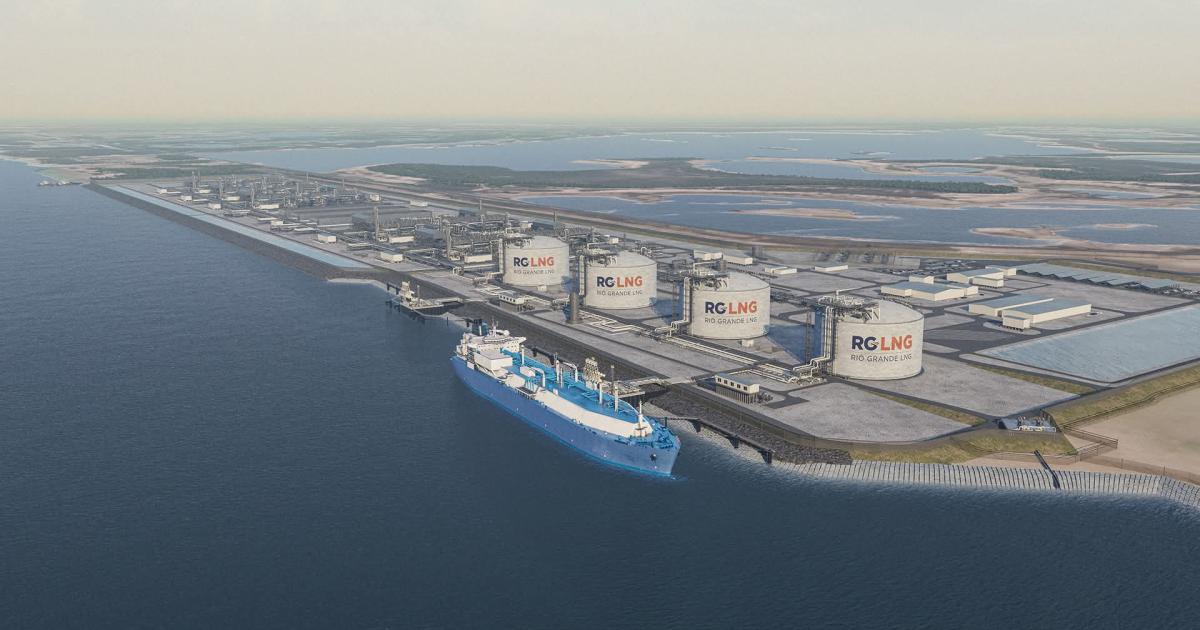
LGPS Central’s own investment disclosures show a substantial commitment to GIP V (Blackrock’s Global Infrastructure Partners Fund V), which in turn is a major investor in the Rio Grande LNG project in Texas.
This is a vast Texas export terminal for fracked US gas; campaigners and analysts have estimated its full lifecycle emissions at a scale comparable to dozens of coal-fired power stations each year.
Norfolk County Council’s workforce has already expressed deep concern about the new Reform administration’s decision to roll back the council’s climate commitments (EDP, June 12th).
Many of those same workers are members of the Norfolk Pension Fund and UNISON.
Their concern must deepen in knowing that their retirement savings could be channelled into fossil fuel infrastructure on the other side of the world.
This is very much a Norfolk issue.
We are one of the parts of England most vulnerable to climate change.
Coastal communities such as Hemsby have become national symbols of erosion and rising sea levels.
Flood risks are increasing, agricultural land faces growing pressures, and local communities are already living with the consequences of a heating climate.
For many pension members, it is unacceptable that retirement savings may be invested in infrastructure whose purpose is to expand the production, storage and export of fossil fuels at a time when climate breakdown is accelerating globally and its consequences are increasingly visible here in Norfolk.
Texas and Louisiana may be far from Norfolk, but the LNG made from fracked gas in the southern US is one of the most polluting fuels directly driving near-term impacts to the climate.
This is because liquefaction and transport are energy-intensive, and methane leaks occur during extraction and all along the supply chain – and that methane causes rapid short-term heating.
That makes any investments linked to LNG expansion a matter of great concern for Norfolk pension members whose communities are already experiencing the impacts of climate change.
Addressing this is the pension committee’s responsibility.
The global economy is steadily electrifying, and governments, including our own, are pursuing policies designed to reduce dependence on fossil fuels.
These trends create a growing risk that assets such as LNG terminals and gas infrastructure will not deliver the returns originally expected.
Norfolk pension members therefore have a very real interest not only in the climate impacts of these investments, but also in whether their retirement savings are being directed towards sectors aligned with the future economy or towards fossil-fuel assets that risk becoming stranded and losing value as the world transitions away from carbon-intensive industries.
The pension committee must now commit to urgent divestment from fossil fuel infrastructure.
Whilst pooling constrains it, it still sets the investment strategy – and with it, the power to exclude fossil fuel assets.
As an immediate first step, it should commission and publish a full audit of Norfolk’s fossil fuel exposure across LGPS Central and all underlying holdings.
The public, and particularly Norfolk’s own public sector workers, have a right to know – and critically to change – where their retirement savings are going.
Scientist Dr Andrew Boswell is co-founder of Carbon Reckoning, a science-based group committed to alignment of UK climate policy with the latest science and international obligations.