
Neanderthals and modern humans appear to have shared far more than the same landscape. A new study from a cave in southern Türkiye suggests both groups lived in strikingly similar ways and even shared symbolic traditions over thousands of years.
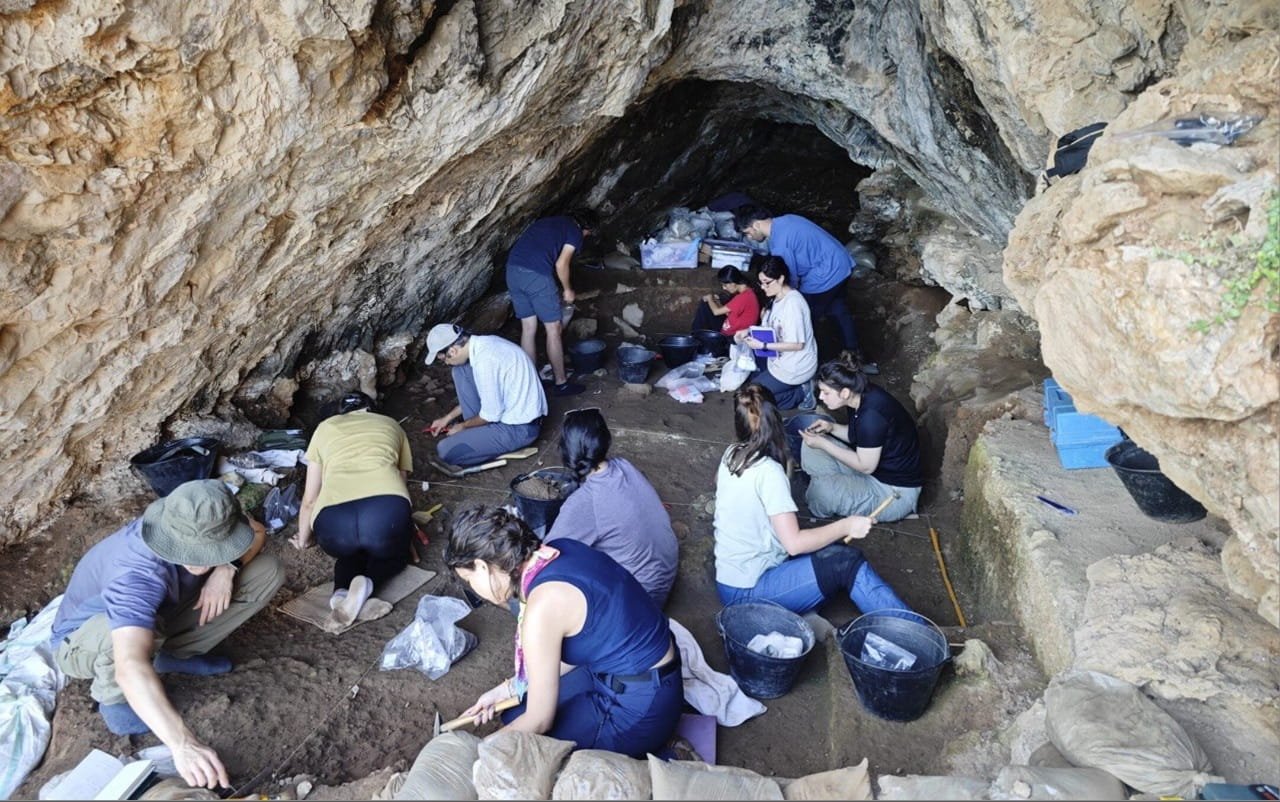 The research team performing excavations at the cave site in 2024. Credit: KyotoU / Naoki Morimoto
The findings come from Üçağızlı II Cave on Türkiye’s Mediterranean coast, a key route between Africa and Eurasia during the Late Pleistocene. The study, published in PNAS, adds new evidence to a long-running debate about how Neanderthals and Homo sapiens interacted as modern humans spread out of Africa.
An international team spent five years digging through the cave layer by layer with millimeter-level care. They uncovered fossils, stone tools, animal bones, and seashells left behind by both human groups. Neanderthals and modern humans lived in the cave at different times, yet their traces looked strikingly alike.
The team identified the fossils by studying the inner structure of fossilized teeth. Dating tests showed Neanderthals used the cave between about 77,000 and 59,000 years ago. Homo sapiens lived there from roughly 59,000 to 47,000 years ago.
 A distant view of the Üçağızlı II Cave in southern Türkiye. Credit: KyotoU / Naoki Morimoto
The change in population did not bring a major change in daily life. Both groups made the same types of stone tools from local flint. They hunted wild goats, fallow deer, roe deer, and wild boar. Their food choices and hunting methods stayed much the same across thousands of years.
One find stood out. Archaeologists recovered 29 shells from the sea snail Columbella rustica. These shells had almost no food value, which points to another purpose.
Several shells had small holes, suggesting people wore them as ornaments. One shell from the Neanderthal layers had been heated on purpose, changing its color before use. Similar shell ornaments were once viewed as a sign linked only to modern humans. This study shows Neanderthals used them as well.
The researchers think these shared habits point to cultural contact between the two groups. Even though Neanderthals and Homo sapiens did not live in Üçağızlı II Cave at the same time, they shared the same region during overlapping periods. The team believes ideas and traditions likely passed between them.
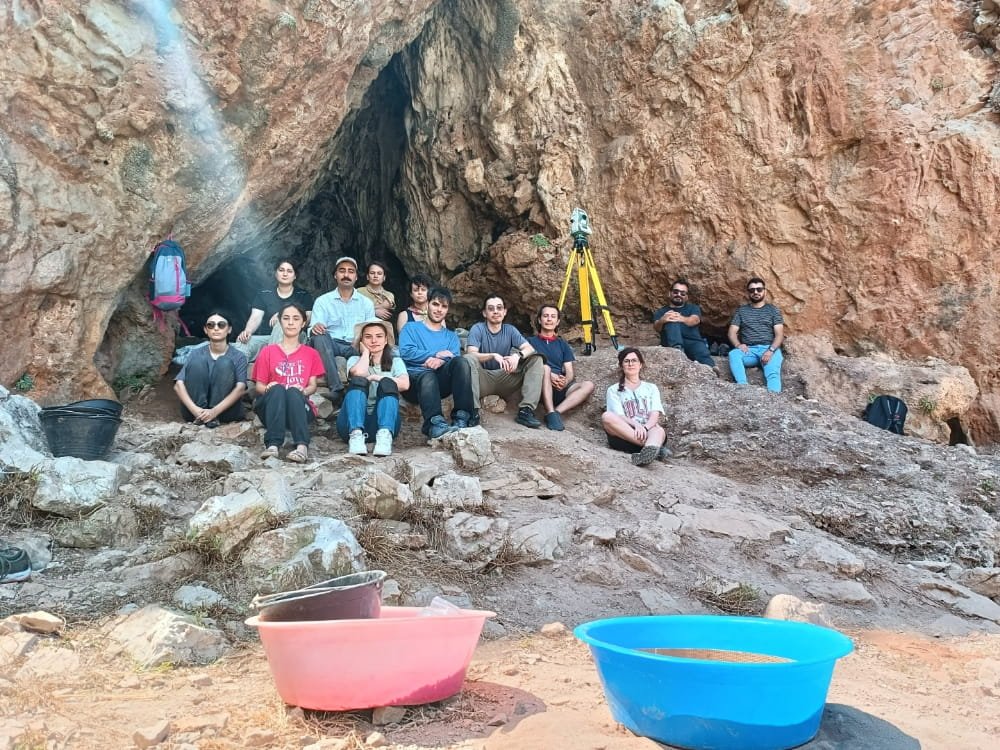 The research team at the excavation site in 2024. Credit: KyotoU / Naoki Morimoto
The human fossils also fill an important gap in the story of early migration. The Homo sapiens remains date to about 50,000 to 60,000 years ago, matching the period when modern humans spread from Africa into Eurasia. These people could belong to the population that later gave rise to today’s non-African people. They could also represent survivors from an earlier wave of migration.
The results fit with growing evidence from other sites in the Middle East. Research at Tinshemet Cave in Israel found similar signs of shared behavior between Neanderthals and modern humans. A site in France, Mandrin Cave, tells a different story. There, the two groups occupied the same place at different times without leaving the same pattern of shared culture.
Many questions still need answers. Scientists are trying to learn where these shared traditions began and how they spread across the region. They are also studying whether cultural exchange was linked to interbreeding, which genetic studies have already shown took place.
As work continues at Üçağızlı II Cave, the site is giving archaeologists a clearer view of life before Neanderthals disappeared about 40,000 years ago. The evidence points to two closely related human groups whose daily lives and traditions were far more alike than once thought.
Publication: Baykara, İ., Turan, D., Eren Kural, E., Silibolatlaz, D., Agras, M. K., Şahiner, E., … Morimoto, N. (2026). Long-term cultural continuity across the Neanderthal–modern human sequence at Üçağızlı II Cave, northern Levant. Proceedings of the National Academy of Sciences of the United States of America, 123(29). doi:10.1073/pnas.2609061123