
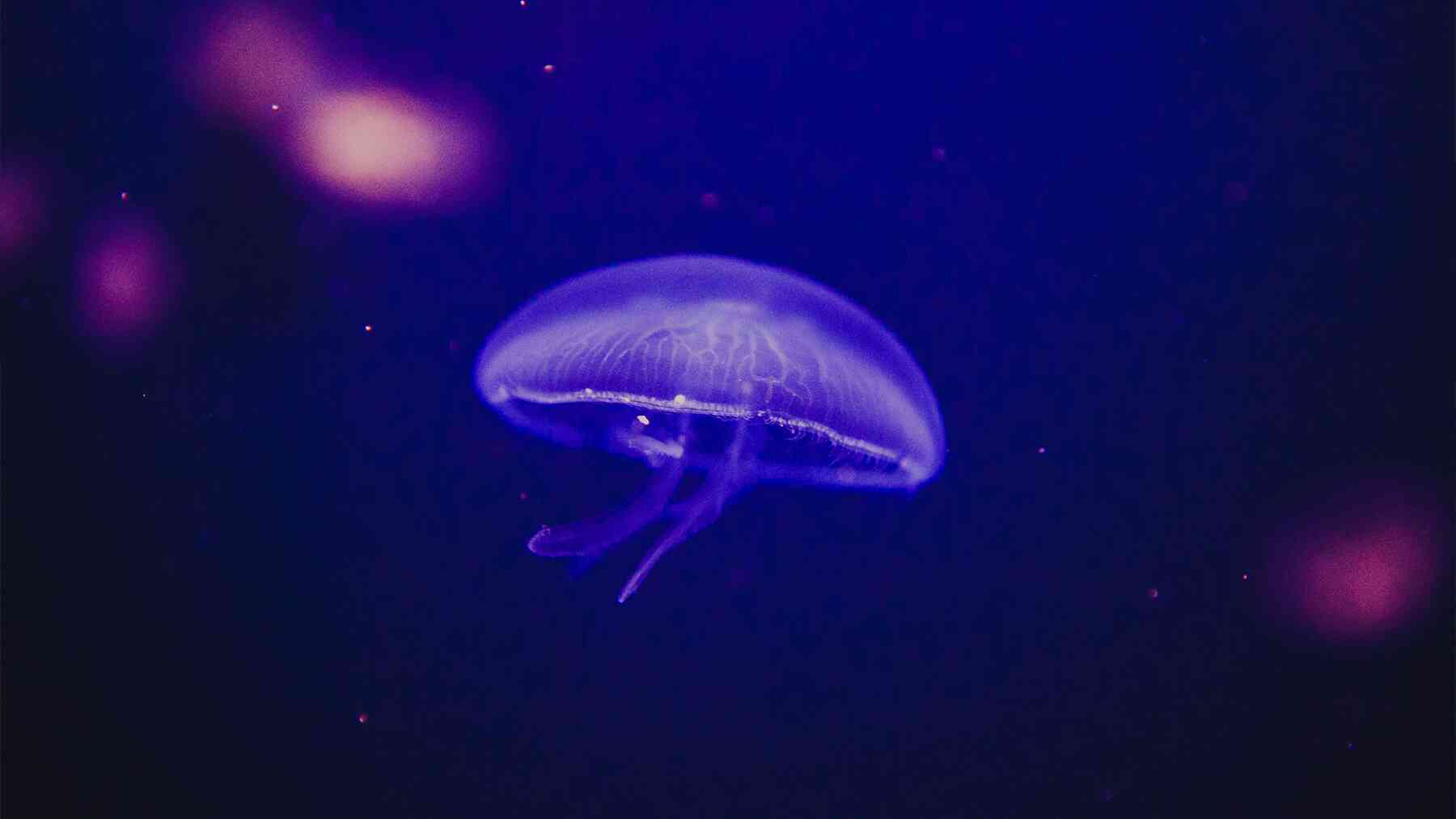
Some of the creatures had the appearance of being assembled rather than formed by growth. Other creatures were transparent and very thin.
Descriptions similar to “Frankenstein-creatures” and “Crystal Supercells” emerged when the organisms were described.
Most of the scientists who participated in the research trip were unable to identify some organisms right away.
How then do we know what these 31 new species of marine life are?
How advanced imaging unlocks the mid-water zone
The main focus of the expedition was to explore a section of the world’s oceans called the Mid-Water Zone. This region includes all of the space between the sunlight-rich upper portion of the ocean and the lower portions of the deep ocean.
Although it is believed to be the largest living space on Earth, it has remained underexplored.
Many of the organisms that inhabit this zone are fragile.
Because of this, scientists have historically found it difficult to collect data about these creatures using standard techniques.
In order to avoid killing or damaging delicate specimens, they employed advanced imaging technologies. These allowed them to study each organism in detail without removing it.
Consequently, fewer organisms needed to be removed from their natural habitats during the expedition.
The hidden challenges of documenting fragile ecosystems
Historically, the difficulties associated with exploring this region have limited scientific understanding of its ecosystems.
Scientists are generally unable to study the behavior of these organisms directly while they are alive. As a result, many behaviors remain a mystery.
Because of this lack of knowledge, many aspects of marine biodiversity remain undocumented.
Groundbreaking expeditions led by the Schmidt Ocean Institute are successfully overcoming these barriers by deploying cutting-edge observation tools.
New technologies are now allowing scientists to make discoveries more quickly.
They also allow them to document interactions among species in greater detail.
Further insights into these fragile marine environments and the technology used to document them can be found in recent reports from DIVE Magazine.
Uncovering life forms that defy traditional classification
Over a period of two weeks during this expedition, 31 new species of marine organisms were identified. For example, one organism found was a type of amphipod, a crustacean related to crabs and lobsters.
Another species found was a gossamer worm, capable of moving through water with great speed.
Seven types of siphonophores were collected, which function as colonies rather than individuals.
Comb jellies that produce shimmering movements were also identified, with nine different types collected. Four different species of larvaceans were documented, which build mucus houses around themselves.
Together, these groups represented the newly documented species during the expedition.
The rapid identification of new marine species
The variety of features shown by organisms in the deep-water zone did not resemble anything scientists had seen in previously studied species.
Some showed their internal structures, while others appeared so complex that scientists struggled to fit them into existing classification categories.
These characteristics gave rise to terms like “Frankenstein Organisms.”
The discoveries show much remains unknown about conditions in the deep-water zone and that many species remain undiscovered.
Advances in imaging technologies enabled scientists to identify and classify them onboard. Before these advancements, samples were collected and then studied for years in the lab.
This represents a shift in how oceanic exploration can take place.
Although initially seeming unusual, these findings have provided insight into a little-explored ecosystem.
A great deal remains unknown about the Mid-Water Zone and what might inhabit it. Research continues to study how these organisms adapt to extreme conditions.
As technology improves, researchers expect to discover additional species.
Each discovery provides an opportunity to better understand how life develops under extreme conditions.