
But there’s a big catch – they currently can’t be used in New Zealand.
Worksafe has prohibited the use of a particular inverter found in plug-in solar systems, which means the systems are currently unable to be used here.
That’s because plugging a solar panel or inverter directly into a standard three-pin plug is considered illegal and a serious safety risk.
Labour admits that’ll be a hold-up, particularly as it’s promising to have major parts of its package rolled out within 12 months of being elected.
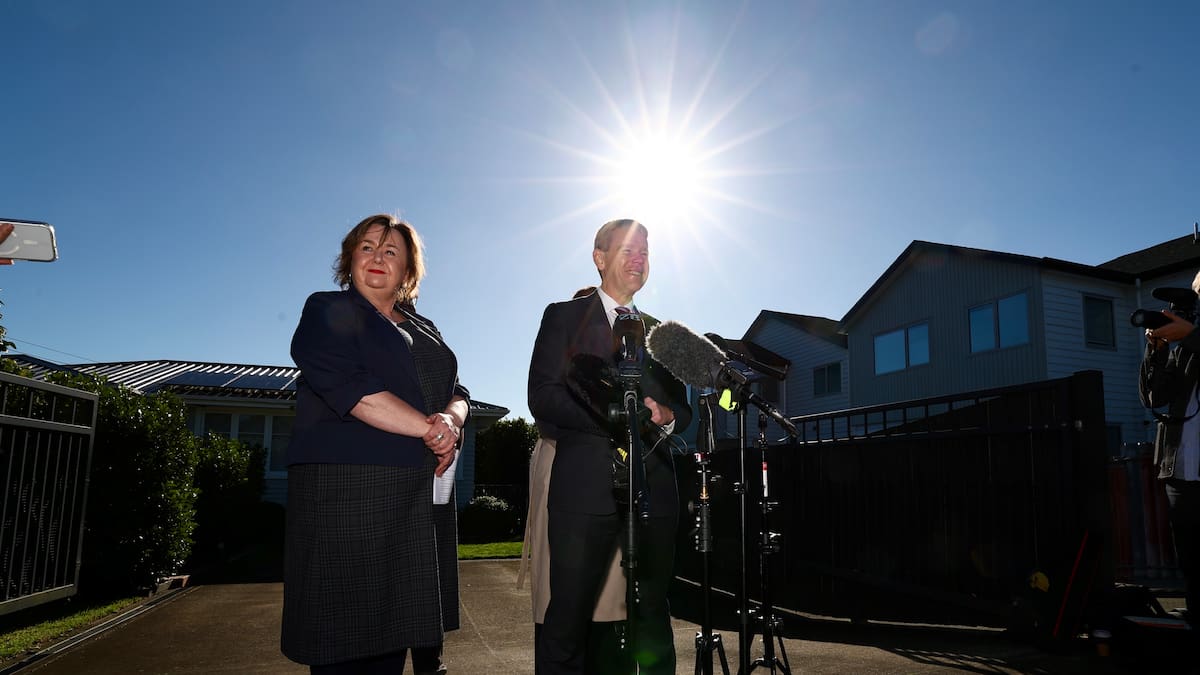
“The first order of business is making them legal, but there are a number of retailers who do want to start bringing them in,” Labour’s energy spokeswoman Megan Woods told media.
“We’re already seeing portable batteries become very standard pieces of equipment around the place and now we need to change the settings so people can start selling them.”
National, too, has realised this will hold up its hopes to boost solar use.
Energy Minister Simeon Brown says he’s asked officials to explore what standards need to be changed to legalise plug-in solar units.
“The principle is simple. In a country with the sunshine hours we have, Kiwi households and businesses should be able to generate their own power straight off the shelf, rather than being locked out by rules that haven’t kept pace with the technology,” Brown told the Herald.
Woods told media National has had two and a half years to make that happen, and had failed to do so.
But Brown says he started work a couple of months ago on new standards.
“It’s a great opportunity for people who are renting, but we do need to put a standard in place to enable it. It’s currently illegal in New Zealand. I think that’s nuts,” he told media.
“Just like in Germany, you can go down to the local, you know, trade store, buy a solar kit, put on your balcony, plug it in, and straightaway get the free power from the sun.
“So it’s power to the people. It’s a really exciting initiative.”
Brown thinks it will take about 12 months to get those standards changed and he’s vowing to make it a priority.
Another catch in Labour’s policy is the workforce.
Labour is committing $4 million for workforce development.
But Master Electricians says New Zealand is already short around 6000 electricians and another 2200-2500 are needed to meet demand.
Public data indicates only around 1315 electrician-track Level 4 qualifications were awarded in 2025.
Master Electricians chief executive Alexandra Vranyac-Wheeler says any major household electrification policy must include a workforce and quality assurance plan from day one.
“The opportunity is real, but so is the delivery risk. Solar panels, batteries, EV [electric vehicle] chargers, heat-pump water heaters and switchboard upgrades all require competent electrical workers. If policy stimulates demand without backing the workforce, New Zealand will create bottlenecks, delays and safety risks.”
Labour admitted the workforce could be the biggest hold-up in trying to meet demand for the policy.
“Supply chains for solar panels, that is something we’ve been talking to the industry about, but what we really need to do is gear up both in terms of the workforce but also the supply chains,” Woods said.
“But there’s nothing like demand and a secure pipeline of work to make sure we’ve got what we need.”
Rewiring Aotearoa has labelled it the “electric election”, with parties battling over home upgrades.
CEO Mike Casey says Labour has “one-upped National” on solar policies.
“When National announced its support for long-term, low-interest loans through the Ratepayer Assistance Scheme (RAS) a couple of weeks ago, I said it was one of the best days of my life because we had been advocating for it for so long,” Casey said in a statement.
“Well, today’s topped it, because Labour’s policy is even more comprehensive and will help even more New Zealanders go electric.
Casey said the gap between the two ends of the spectrum – all-electric homes and cars versus fossil fuelled equivalents – “has doubled since 2024 and our research shows that an all-electric home is now around $3000 net better off per year, including upfront costs and interest, and a net $45,000 better off over 15 years”.
“SolarSaver” will cost $160 million over four years, Labour says, with the party saying it will repurpose the Government’s Gas Security Fund.
Energy Minister Simeon Brown. Photo / Anna Heath
Brown says Labour is copying National with its policies – making it a “good day for solar”.
“The way they intend to pay for it is to raid the gas Security Response Fund, which is critically important to make sure we keep our lights on, and keep businesses, operating in New Zealand,” Brown said.
“It’s the same Labour Party, which has been going up and down the country complaining about the fact that many major industrial businesses have been shutting their doors due to energy security issues, but now it’s going to raid that very fund, in order to pay.”
A solar and battery system costs around $20,000.
Labour wants to introduce a new Government-backed, long-term, low-interest loan for some households.
Woods, the party’s energy spokeswoman. said: “Lines companies will be able to offer low-cost loans where solar installations benefit the local network, while a new property-linked finance scheme will allow households to repay costs gradually through their rates bill.”
The package also includes:
A $30m community battery fundHelp to find the best option through the Energy Efficiency and Conservation Authority (EECA)More support for secure, well-paid careers installing solar
Labour says the kickstart subsidy will cover a plug-in system in full.
National has also promised to increase the uptake of solar, with a “home energy fund”.
If elected, National would establish the fund by amending the Local Government Act and committing a one-off $7m equity investment to secure a 20% shareholding in the new entity, with the balance funded by participating councils.
“Labour’s SolarSaver will help more Kiwis cut the cost of their household bills by removing the upfront cost that prevents many families from accessing solar,” leader Chris Hipkins said.
“Renewable energy is the cheapest form of electricity available, but too many households are locked out by the initial cost. SolarSaver creates a simple one-stop shop, provides affordable finance, helps renters access solar for the first time, and offers targeted grants for families who need extra support.”
Rewiring Aotearoa chief executive Mike Casey.
Rewiring Aotearoa said “tightly defined subsidies” are a good idea.
“We can achieve a lot without subsidies, but low-income homes spend around five times more on energy as a proportion of their income than the highest income homes, so they can benefit more from these electric savings. Grants ensure the most vulnerable aren’t left behind. This is a logical extension of the successful – and bipartisan – Warmer Kiwi Homes programme,” Casey said.
The cost of the policy includes $77m in household subsidies, $30m for the community battery scheme, $22m to the EECA, a $20m Crown underwrite for lines company loans, $7m to establish the Ratepayer Assistance Scheme and $4m for workforce development.
The party is also promising the move will create jobs.
“The solar rollout will create local jobs for electricians, installers, and roofers. Alongside our expanded Apprenticeship Boost scheme, Labour will support thousands of young tradies to build careers in a growing industry,” Woods said.
The EECA will become a one-stop shop to help people pick the right system, an accredited installer and ensure users get the best deal.
Master Electricians says finance doesn’t install solar – electricians do.
The organisation is calling for practical employer support, faster upskilling pathways in solar and electrification technologies, better recognition of industry-led training, and quality assurance settings that protect consumers without locking out qualified sole traders and small businesses.
“The energy transition must not become a closed shop. If an electrician is qualified, competent, insured and accountable, they should be able to participate,” Vranyac-Wheeler said.
Katie Bradford is a Senior Correspondent at the Herald. She has been a broadcast journalist for over 20 years and was based in the press gallery for 10 years. She specialises in politics, business and Auckland issues.