
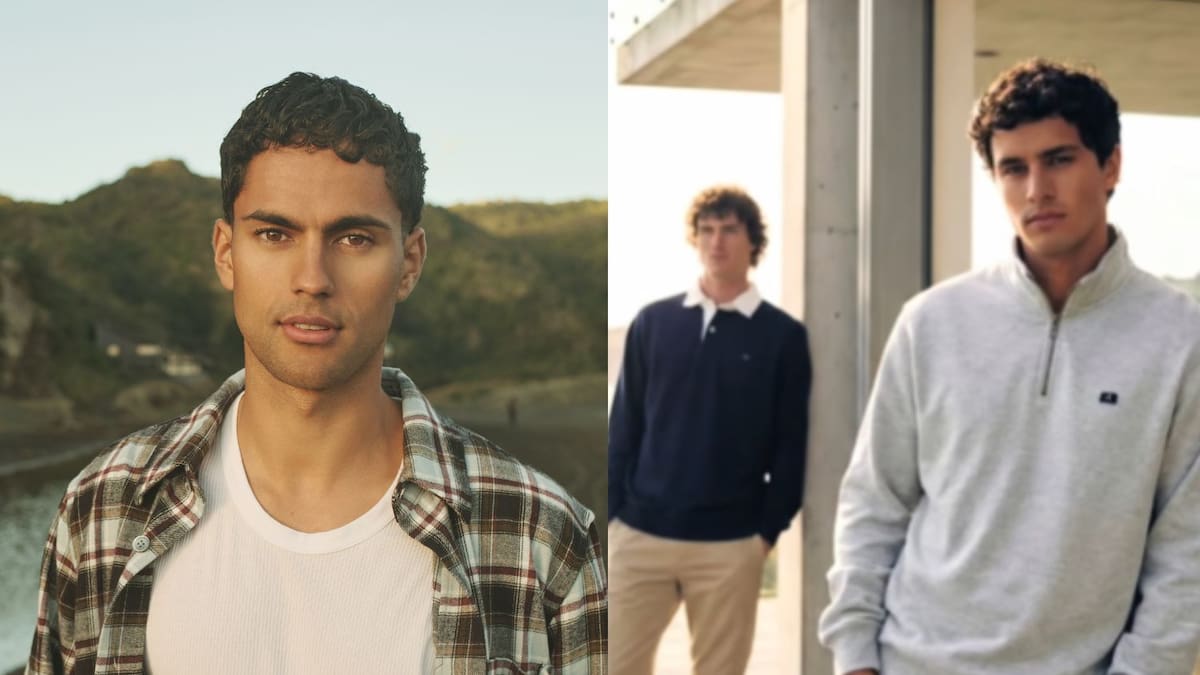
The social media allegations quickly led to legal threats and rising media attention.
Since then, in a statement posted to social media, Huffer confirmed it had used AI to create the image but denied it had been modelled on any specific person.
The company said it was “genuinely sorry” to hear how upsetting the incident had been for those involved.
Huffer said it had removed the image from circulation.
Review findings
The independent investigation was conducted by forensic technology and cyber security expert Campbell McKenzie, who is the managing director of Incident Response Solutions (IRS).
IRS worked to determine whether any images of the individuals who raised concerns had been used, copied, referenced, adapted, or relied upon to create the campaign imagery.
“The investigation established that no facial images of any of the individuals whose likenesses were alleged to have been used were ever provided to, uploaded into, or used by the AI image-generation process.”
Huffer launched an independent review into its AI use for marketing material.
As part of the review, IRS examined the agency’s workflow and prompt history and found the prompts used to generate the images did not reference any specific model, individual, or previous Huffer modelling work.
“Aside from identifying a subject’s gender, the prompts contained no instructions relating to the generation of a particular face or facial features,” the report said.
The investigation also confirmed product images supplied for use in the AI workflow had model faces “deliberately redacted” before being uploaded to image-generation tools.
It also discovered that while clothing, poses and other non-facial attributes from product imagery could influence aspects of a generated image, there was “no evidence” that facial likenesses were sourced from or derived from identifiable individuals.
“While the system accurately reproduces Huffer’s garments from supplied product photography, the forensic evidence did not support a finding that any model’s facial image had been copied.”
The report concluded the findings were supported by evidence to a standard capable of standing up in court.
‘Cherry-pick truths’
In response, Timmins-Scanlon told the Herald he thought the investigation needed to be conducted by a specialist AI forensic team, which New Zealand did not have.
“I feel disappointed that they’ve gone to these lengths to get a forensic team to cherry-pick truths, because what they’ve said are truthful on a technicality, and I think it stresses my concerns even more,” Timmins-Scanlon said.
Red Eleven model Elijah Timmins-Scanlon still has concerns about how Huffer developed its adverts.
He said because there were still no regulations or laws for the use of AI, it was easy for a brand to deny a “fair and reasonable claim”.
Timmins-Scanlon said the report stressed the importance that no facial images of any individuals were used.
“This is worded carefully and does not deny the use of the body as a form of likeness.”
Elijah Timmins-Scanlon (left) and the image he claims is AI-generated.
He said the part in the report that said Huffer did not reference any specific model, individual or previous Huffer modelling work was another example of “cherry picking”.
“It’s only talking about the prompts; what’s to say they didn’t just put an image in and prompt it saying ‘duplicate model’.
“There are ways around prompting by not referencing any specific model that would be able to generate a model. Which again is the reason I’ve stressed my concerns for this situation,” Timmins-Scanlon said.