
Vincent said a single unitary council made the most sense “if there is to be any possibility of improvement over the status quo”.
The proposed model would combine Whangārei, Kaipara and Far North district councils with Northland Regional Council.
He said Northland’s Local Government Reform Elected Member Steering Group would decide how many councillors a unitary authority would have and how they would be distributed across the region.
Vincent supported using the Single Transferable Vote (STV) system for elections.
“It would enable more representative results if the STV voting system is employed.”
He said this would avoid situations such as Kaipara’s 2025 mayoral election under First Past the Post (FPP), where three of the four candidates each received about 30% of the vote.
“And who knows, it may have changed the outcome of the 2025 local election’s Otamatea Ward voting where there were three people each within three votes of each other.”
Northland currently has 43 elected councillors, mayors and a regional council chair across its four councils. Far North District Council also has 19 community board members, bringing the total number of elected local government representatives in the region to 62.
That equates to one elected representative for every 3245 residents, about 45% higher than the national average.
Vincent said a new Northland unitary authority should have seven or eight wards, each represented by one or more councillors.
However, he warned against stopping there, saying Northland risked losing local representation under the current system.
He said another layer of representation was needed through ward councils or local boards.
“The number of wards and elected ward representatives should be related to population and ward land area to reflect communities of interest and provide the most practical coverage.”
Vincent said local boards should have delegated functions, plans, budgets and resources, with responsibilities clearly divided between the unitary council and local boards.
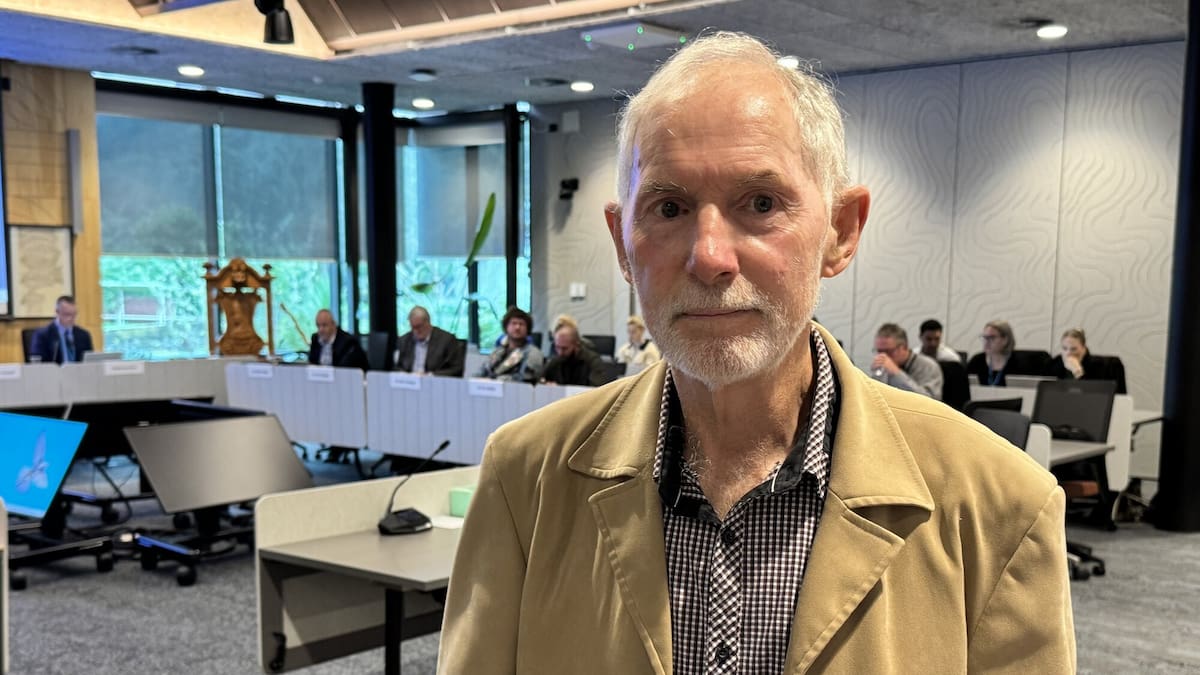
Mark Vincent during his time as Kaipara District councillor. Photo / Susan Botting
Allowing boards to make decisions would ensure those most affected by issues have a direct role in determining outcomes, he said.
Vincent said each local board should include the area’s elected unitary councillor, though that person should not serve as board chair, helping facilitate two-way communication between the unitary council and local communities.
He said boards must be given genuine powers rather than only an advisory role.
WDC Whangārei Māori Ward councillor Deborah Harding asked how Māori representation could fit within the model.
Vincent said it could include a Māori ward if the steering group decided on one, or iwi representation on local boards.
“I don’t see it counted in or counted out by what I’m proposing,” Vincent said.
■ LDR is local body journalism co-funded by RNZ and NZ On Air.