
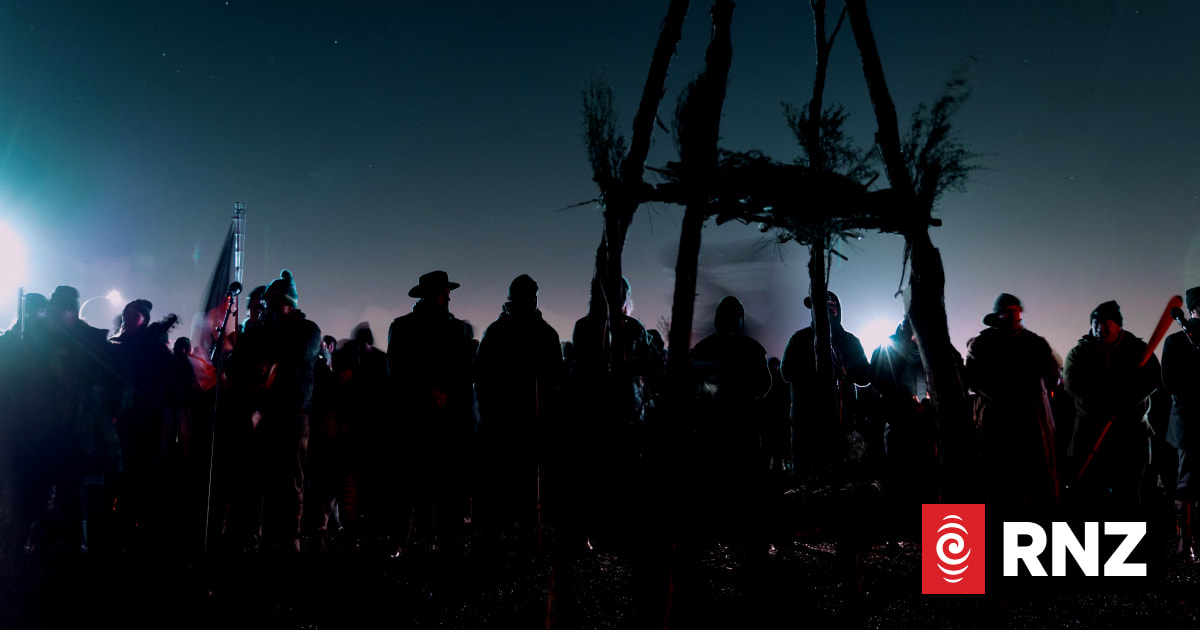
Tucked away in the central Auckland suburb of Ōrākei, a tranquil promontory featuring green space and Michael Joseph Savage Memorial Park is a symbol for Māori land issues.
In the late 1970s, Takaparawhau (Bastion Point) was occupied for 506 days by Māori protesting against forced land alienation by the Crown.
This year, the national celebration of Matariki, which marks the start of the Māori New Year, will be hosted at Takaparawhau by local hapū Ngāti Whātua Ōrākei.
Marama Royal, chairperson at Ngāti Whātua Ōrākei Trust, said the hapū felt proud to host the event, where thousands are expected to gather on Friday morning.
A brief history
Royal said there was no better place than Takaparawhau to welcome people from across Auckland and the whole country.
“The site overlooks the Waitematā Harbour and offers clear views of the eastern horizon, where the Matariki star cluster appears before sunrise.”
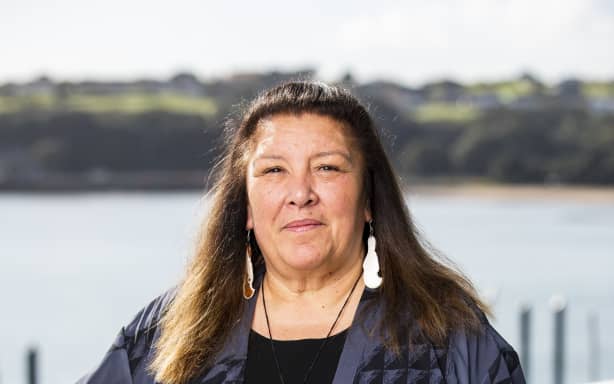
Marama Royal, chairperson at Ngāti Whātua Ōrākei Trust
Supplied / Alisha Lovrich
Royal said the coastal headland held deep historical and cultural significance for Ngāti Whātua Ōrākei.
The land was originally part of a large tribal estate, but much of it was gifted to the Crown in 1885 for defence purposes, Royal said.
That was during the Russian scare, according to the government’s New Zealand History website.
“When the land was not returned, and further Crown acquisitions reduced Ngāti Whātua Ōrākei’s holdings over time, Takaparawhau became a powerful symbol of land loss,” Royal said.
In 1977, after the government announced plans to sell the land for luxury housing, the Ōrākei Māori Action Committee, led by Joe Hawke, began a peaceful occupation.
The occupation lasted 506 days and ended in 1978 when police and military evicted protestors, making 222 arrests, she said.
The New Zealand History website also said protestors’ temporary meeting house, buildings and gardens were demolished during the eviction.
“The occupation became one of Aotearoa New Zealand’s most defining land rights protests,” Royal said.
Ten years later, the Waitangi Tribunal found the Crown had breached Te Tiriti o Waitangi, and the land was formally returned to Ngāti Whātua Ōrākei, Royal said.
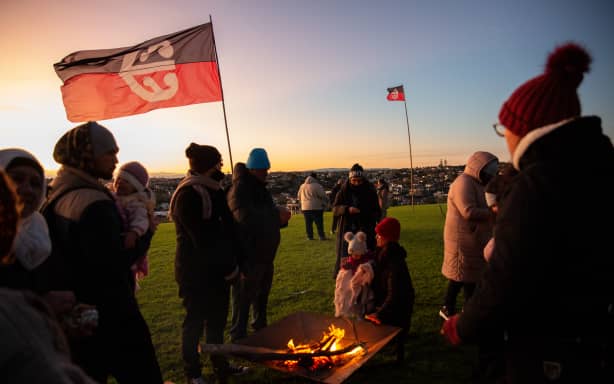
Marama Royal, chairperson at Ngāti Whātua Ōrākei Trust, said the hapū felt proud to host the event, where thousands are expected to gather on Friday morning.
Supplied
Sharing history
Royal said the hapū was open to sharing its history.
“It was a defining piece of land and moment in Aotearoa’s history,” she said. “It’s a place we naturally invite people to share with us.”
Royal said they felt privileged to welcome people to Takaparawhau to share in the celebration of Matariki, and welcome the Māori New Year together.
Every year in midwinter, when Matariki appears on the eastern horizon in the morning, the Matariki ceremony takes place.
The ceremony was commonly known as “whāngai i te hautapu”, or “hautapu” for short, meaning to offer food to the stars, Royal said.
Traditionally, food was gathered from different parts of the environment, cooked in an earth oven and uncovered when Matariki was seen.
“The steam would rise into the sky, feeding Matariki and opening the Māori New Year,” she said.
The national celebration started in 2022 when Matariki became an official public holiday, with this year’s theme being “Matariki Herenga Waka – For Everyone”.
The national celebration travels to a different region and host iwi each year, and the host is selected by the government and Ministry for Culture and Heritage, she said.
“Matariki is a time for people to gather, to remember those who have passed, to celebrate the present and look to plan for the future,” Royal said.
Professor Rangi Mātāmua, the Ministry for Culture and Heritage’s chief advisor on Matariki, said the nationally broadcast hautapu had been held in Te Whanganui-a-Tara Wellington, Rotorua, Wānaka and Ohakune since 2022.
“Each hosting iwi brings its own traditions to the national celebration. Last year, Ngāti Rangi hosted the hautapu ā-motu, centring on Puanga (Rigel), another whetū (star), which they and neighbouring iwi use to mark the Māori New Year,” Mātāmua said.
“For the past five years, Ngāti Whātua Ōrākei have welcomed Tāmaki Makaurau to Takaparawhau in our largest, most diverse city and we are deeply grateful that they are now opening their celebration and traditions to all of Aotearoa.”
Gates open for the dawn celebration at Bastion Point from 5.30am on Friday, 10 July.