
“Opening up crisis recovery cafes, putting peer support workers in emergency departments, having peer-led acute alternatives for inpatient stays, it allows us to join that up and give them a choice, and ultimately faster access to support.”
Te Kupenga Net Trust was awarded the $1 million tender to run the cafe last September.
The tender was originally listed for 71 Lowe St, but is now operating from Gladstone Rd near Bright St.
Mental Health Minister Matt Doocey with Te Kupenga Net Trust CEO Hine Moeke-Murray. The trust was awarded $1m to run the cafe last year. Photo / Zoe Mills
Te Kāuta is one of eight cafes being rolled out across the country, including Whanganui, Whakatane and Invercargill.
The Crisis Recovery Cafe rollout is part of a $61.6m investment into mental health support services.
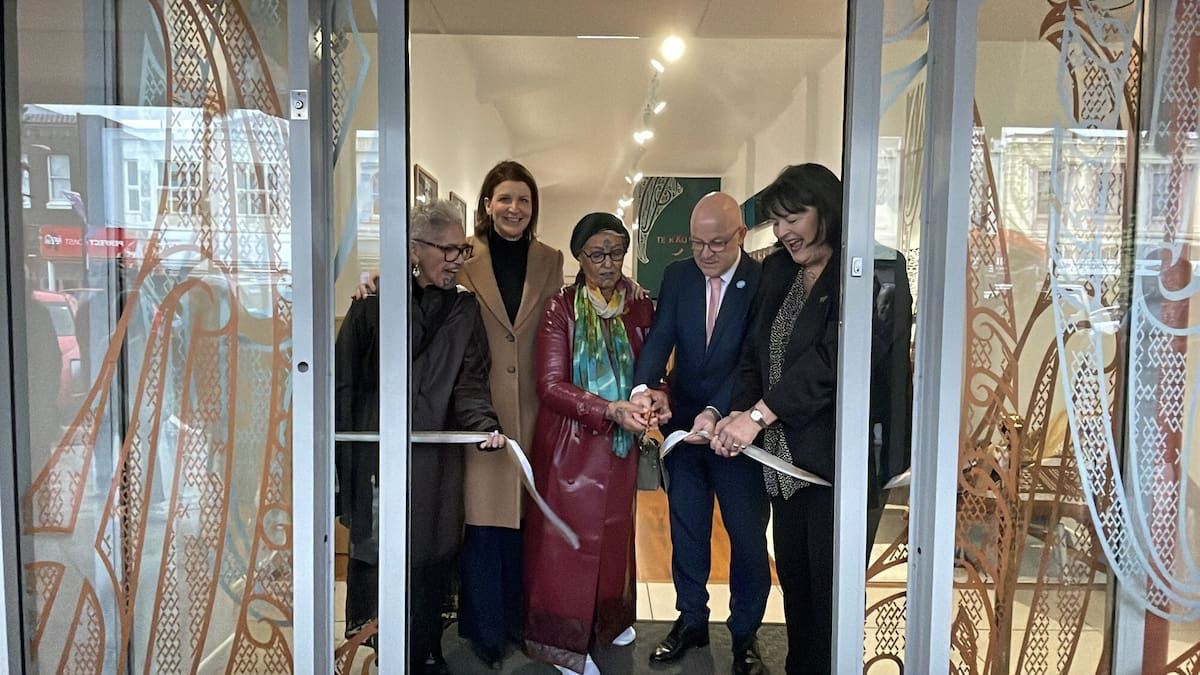
National MP Dana Kirkpatrick, Gisborne Mayor Rehette Stoltz, Ngāti Oneone chairwoman Charlotte Gibson and Te Kupenga Net Trust CEO Hine Moeke-Murray stood alongside Doocey as he cut the ribbon.
Te Kāuta cafe features local artwork and coffee from Adrian’s Espresso.
Doocey said the cafe “gives people a choice” to go to a non-clinical space.
“I think you’ll agree, when you look inside there it’s really amazing what the team has pulled together.”
Feedback from other cafes had so far been “really good”, and the cafes had been “really well received” in local communities, he said.
Attendee Ana Kere Marino, a Gisborne-born Hokianga resident, was in town visiting family when she walked past the opening. She was excited to see the cafe open its doors.
“Having a background in community service and people … seeing what our whānau are doing, it’s just really encouraging, really inspiring,” she said.
Doocey hoped to “join up the system across the country, [so] that every town, every city, people have access to a crisis recovery cafe”.
Te Kāuta Cafe will initially be open Monday-Friday, 7am to 3pm. Hours will be reviewed after three months.
Earlier this year, a Ministry of Health survey reported that about one in three Gisborne youth had experienced “moderate” psychological distress.