
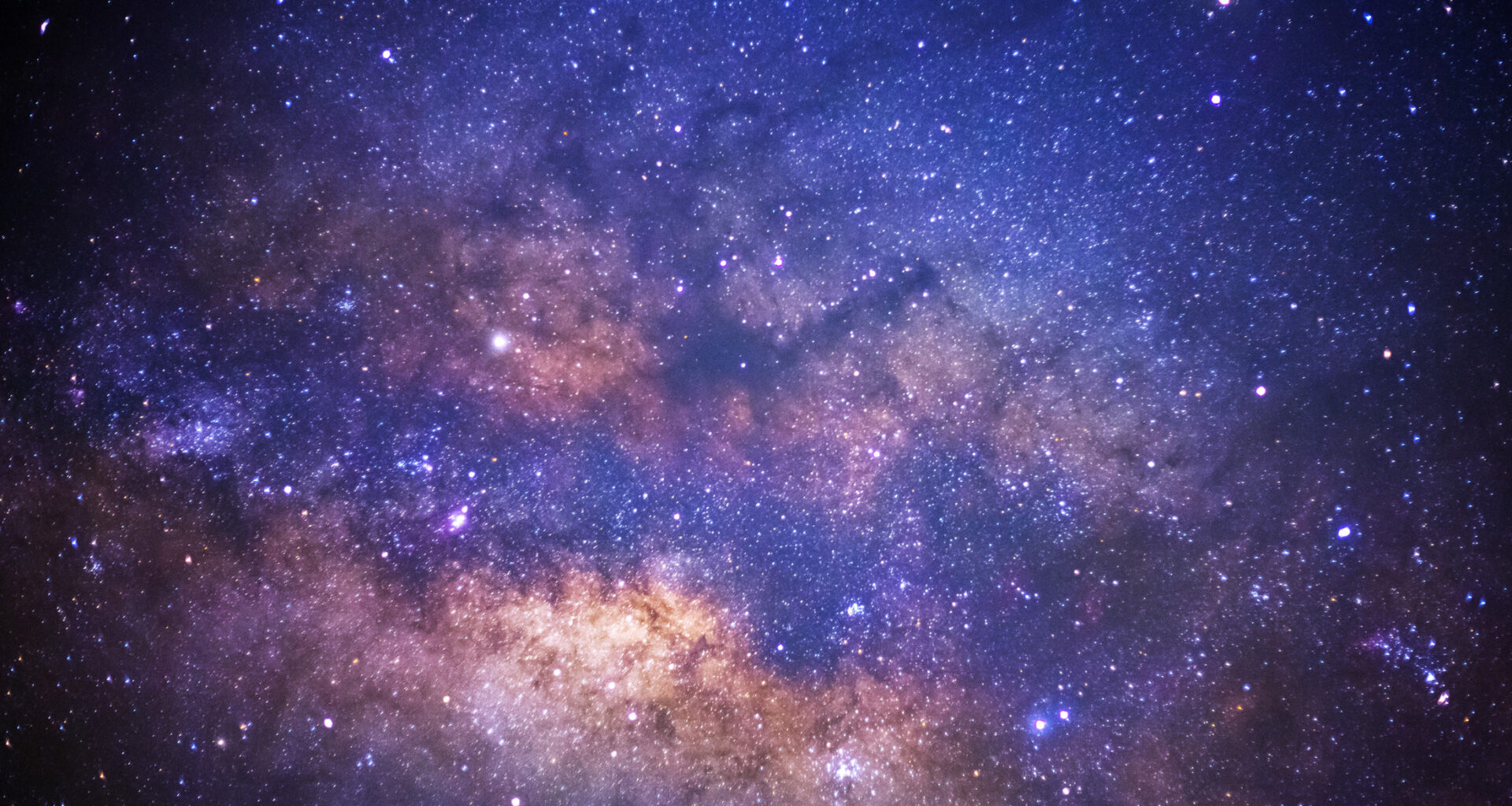
A telescope on a mountaintop in Chile has begun recording the most detailed time-lapse of the night sky ever attempted. It will scan the entire southern sky every few nights for the next ten years. The Vera C. Rubin Observatory started its decade-long survey on June 30, 2026, capturing a new image about every 40 seconds.
Over the decade, the telescope will revisit each patch of sky about 800 times. That record will be deep enough to catch exploding stars, trace the unseen matter that holds galaxies together, and count millions of asteroids.

Each night, it will issue up to seven million alerts, flagging anything that moves or flickers so astronomers can chase it within minutes.
Ten-year sky survey
The survey has been more than two decades in the making. It runs from the Vera C. Rubin Observatory, perched in the Chilean Andes at Cerro Pachón.
The Simonyi Survey Telescope pairs an unusually wide view with a camera holding 3.2 billion pixels – the largest ever built for astronomy.
A single guiding idea ran through the whole design. The original plan called for a telescope fast and sensitive enough to sweep the entire southern sky every few nights.
It would return to each point about 800 times over ten years so that faint, fleeting events could not slip past unseen. Every 40 seconds, the camera captures another frame.
Preparing for observations
Reaching this point took years of testing. The team fine-tuned the system and checked whether its software and images held up before officials could declare the survey underway.
Željko Ivezić, a professor of astronomy at the University of Washington (UW) and head of the survey, oversaw much of that work.
“The University of Washington Rubin team played a central role in optimizing the observatory and helping prepare it for the start of full survey operations,” said Ivezić.
The result is a patient machine, designed to notice the sky’s slow changes as much as its sudden ones.
Tracking a changing sky
What sets this survey apart from a single deep photograph is time. By imaging the same fields again and again, the telescope can spot anything that appears, vanishes, brightens, or drifts between visits.
That might be a supernova flaring in a far-off galaxy, an asteroid sliding across the frame, or a star pulsing on a steady beat.
Each night, the telescope pours out about 10 terabytes of data and as many as seven million alerts. Each alert is a note that something in the sky has changed.
Automated systems called brokers sort this alert stream in near real time. They separate the routine from the genuinely new, so researchers can react in minutes rather than months.
Testing the alert system
A pilot survey rehearsed the approach on a smaller scale first. That survey ran from a telescope in California over the past several years. It streamed up to a million alerts a night, piloting the same software that now runs at Rubin.
Eric Bellm, a research associate professor of astronomy at UW, led that earlier survey. He built the pipeline that now carries Rubin’s alerts to astronomers everywhere.
“Astronomers have already used Rubin’s public alerts to discover and follow up hundreds of transient phenomena during the early optimization period,” said Bellm.
Even before the official start, the survey showed what that speed can do. In about six weeks of test observations, it turned up more than 11,000 asteroids that no one had cataloged before.
Among them were 33 near-Earth objects on paths that bring them close to our planet. No earlier instrument had ever found so many so quickly.
Dark matter and energy
Four big goals shape the survey. It aims to map how galaxies spread across the Universe, take a census of the Milky Way’s stars, and inventory the small bodies of our solar system.
It will also probe two of the deepest puzzles in physics: the nature of dark energy and dark matter. Dark energy is the name physicists give to whatever is pushing the Universe to expand faster and faster. No one knows what it is.
By measuring the shapes and distances of billions of galaxies over ten years, the survey should track how that acceleration has behaved over the history of the Universe. That data will narrow the field of possible explanations.
The observatory carries the name of Vera C. Rubin, the American astronomer whose measurements in the 1970s and 1980s changed astronomy. She showed that spiral galaxies spin far too fast for the matter we can see to hold them together.
That something, now called dark matter, still has no confirmed identity. Rubin’s telescope is made to trace its grip on galaxies more sharply than any survey before it. This will be done by mapping how vast numbers of galaxies cluster and bend the light that passes nearby.
A record for everyone
When the survey is complete, its catalog will hold billions of objects and trillions of measurements.
All of it will be released to the public. Anyone with an internet connection will be able to explore the same sky the professionals do, a scale of open astronomical data without real precedent.
“Rubin Observatory is for everyone,” said Bob Blum, director of the Rubin Observatory. He added that the survey will change how astronomy is done, letting researchers anywhere take part in front-line science.
The same nightly scan that hunts distant galaxies also tracks nearer hazards, catching asteroids that pass close to Earth while there is still time to study them.
A few weeks ago, no such record existed. Now a continuous, decade-long portrait of the whole southern sky exists, refreshed every few nights and open to anyone who wants it.
Over the next ten years, that record will grow into the deepest time-lapse of the cosmos yet made, and much of what it captures has never been seen. Some of those discoveries will come from professional astronomers, and some, for the first time on this scale, could come from anyone watching the same data unfold.
—–
Like what you read? Subscribe to our newsletter for engaging articles, exclusive content, and the latest updates.
Check us out on EarthSnap, a free app brought to you by Eric Ralls and Earth.com.
—–