
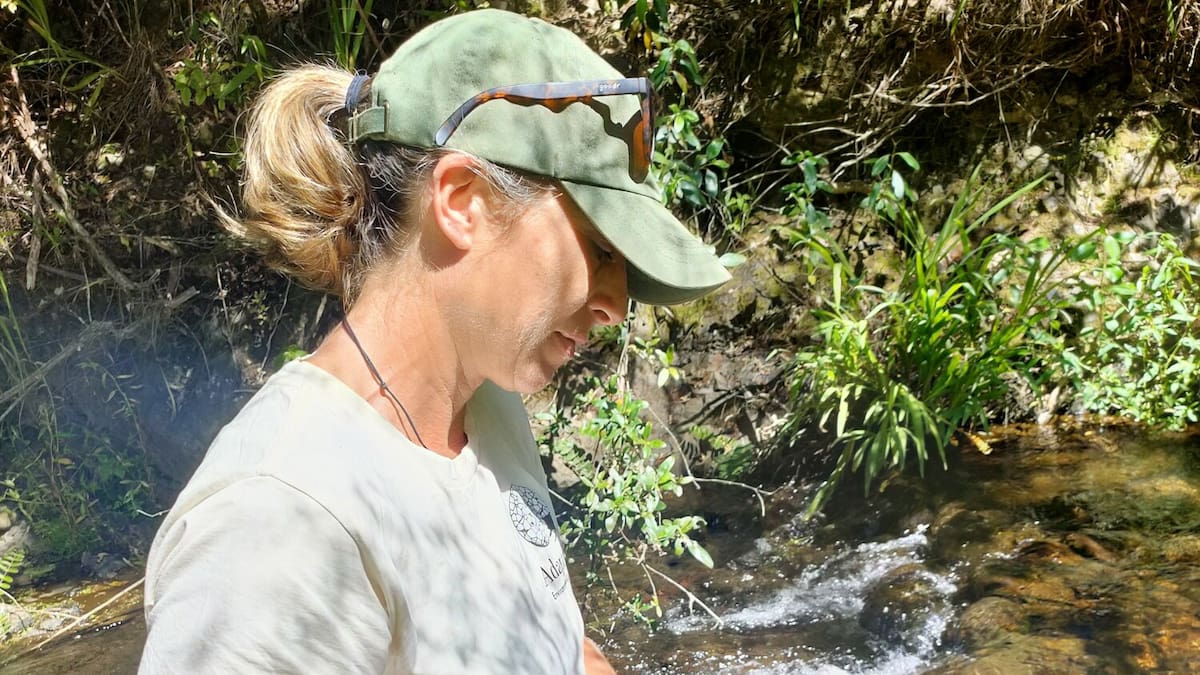
Over the past two years (2024 and 2025), eDNA results have been encouraging and informative.
In 2024, approximately 326 species were detected across the sites; this rose to 527 in 2025.
“These exciting results showcase rich biodiversity, including 233 insect species, 93 plants, 15 fish, 23 birds, 11 mammals, plus crustaceans, molluscs, spiders, amphibians, and microorganisms,” Murphy said.
Two rare and declining freshwater mussel species (kākahi) Echyridella menziesii and the much rarer Echyridella aucklandica have been detected.
E. menziesii were consistently detected at several sample locations in both years, while E. aucklandica were detected at one site in both years.
“Their presence signals areas of ecological value worth prioritising for protection and restoration,” Whatley said.
“What’s more, being filter feeders, protecting this population can contribute to increasing the overall health of our river.
“Kākahi have a complex life cycle which requires a healthy native freshwater fish community to complete.
“They are also sensitive to pests such as koi carp, catfish and rats and pollutants like sediment, excessive nutrients and pesticides.
“While eDNA testing allows us to detect the presence of these species, we don’t know anything about the population and whether they are reproducing.”
Detection of mammals increased from eight species in 2024 to 11 in 2025.
Common detections included rat (ship and Norway), possum, cattle, sheep, dog and mouse, with others such as cat, rabbit and stoat at single sample locations.
Mangatangi Maramarua Catchment Group chairman Will Murphy.
“Patterns varied by year and location, with more possum and cattle DNA in 2025, possibly influenced by the hot, dry autumn drawing animals to water. This provided valuable insights into pest and land-use pressures.”
Twenty-six bird species were detected, including 11 natives such as pūkeko, sacred kingfisher, kererū, tūī, fantail and silvereye.
Widespread detections of sacred kingfisher, silvereye, song thrush and mallard highlight a strong avian presence, with particularly high diversity at certain sample locations (up to 15 species at one site).
A very rare freshwater mussel species (kākahi) E. aucklandica (top); and a declining freshwater mussel species E. menziesii (bottom) have been detected in the Mangatangi and Maramarua catchment. Photo / Earth Sciences NZ – Michele Melchior
Rare fish species
Sixteen fish species were detected, with 10 natives, including threatened longfin eel, lamprey, īnanga, giant kōkopu and potentially, shortjaw kōkopu.
“These are all declining nationally due to habitat loss and water-quality issues.
“Shortfin and longfin eels and Cran’s bully were found at all sample sites.
“Introduced and pest species such as koi carp, goldfish, gambusia, catfish and rudd appeared at several locations, but were notably absent at two headwater sites.”
Giant kōkopu were detected at three locations in the catchment. Photo / Rod Morris
Biological indicators derived from eDNA of macroinvertebrates (MCI), Fish IBI (index of biotic integrity), and TICI (taxon independent community index), reveal some environmental impacts overall, but with brighter spots.
“The headwater and upper catchment sample locations showed the least impact, reflecting milder pollution and habitat impacts, supporting greater native biodiversity, compared to the downstream sites.
“Lower-scoring sites suggested nutrient/sediment stress in places, yet still supported diverse fish and important kākahi populations, which underscores restoration potential.”
This eDNA work, alongside broader monitoring, empowers the community to make informed decisions, track changes and better targeting of actions such as pest control and habitat enhancement.
The Mangatangi Maramarua Catchment group exemplifies how local collaboration, expert guidance from Dr Whatley, and innovative tools like eDNA are delivering significant benefits for waterway health and building resilience for future generations in the area.
The group will conduct further eDNA testing across the catchment in March 2027, thanks to its valuable insights.
Tags:
- 2024
- 527
- across
- amp
- and
- assemble
- catchment
- coast
- communitydriven
- comprehensive
- country
- dynamics
- efforts
- Energy
- environment
- FLOW
- found
- freshwater
- group
- Habitat
- health
- indicators
- kkahi
- last
- mangatangi
- maramarua
- MMC
- multiple
- New Zealand
- News
- NewZealand
- nutrient
- NZ
- picture
- proactive
- progressing
- quality
- rare
- reveals
- rivers
- Science
- species
- steadily
- testing
- their
- them
- visited
- water
- when
- Wildlife