
Key Points
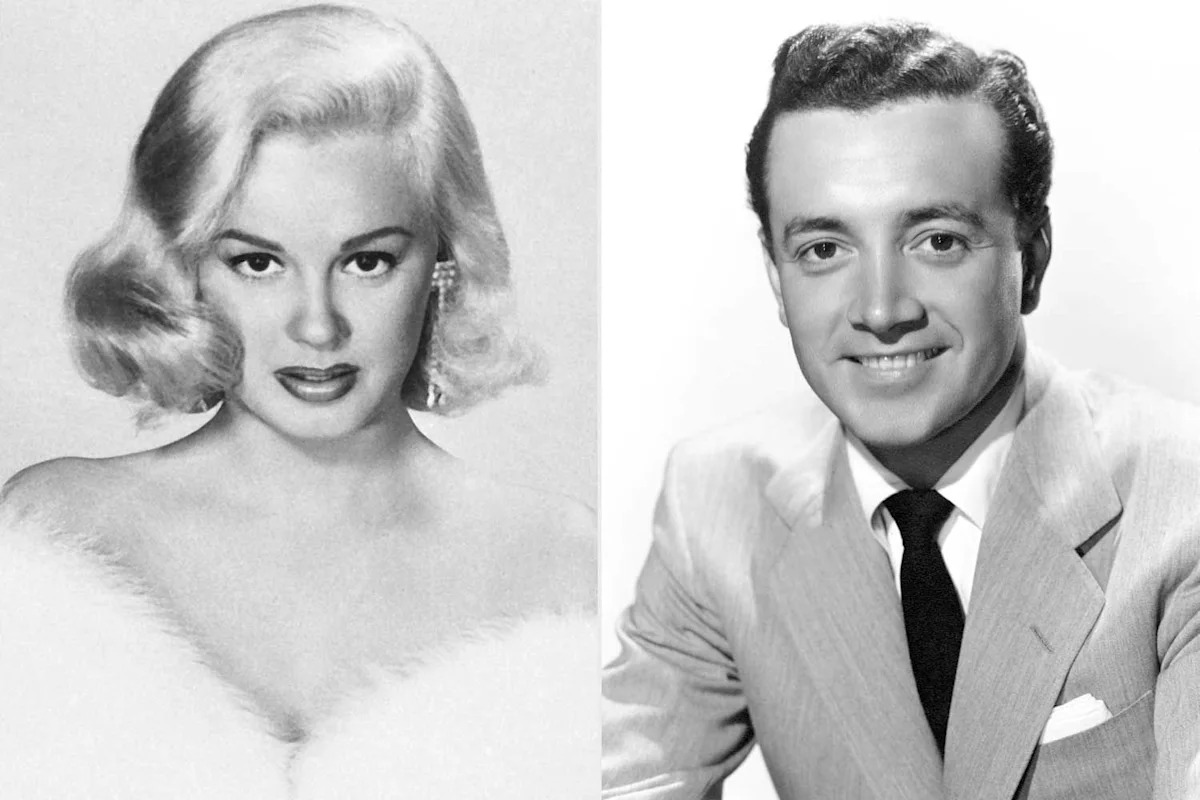
Mamie Van Doren looks back on a romantic night cut short by an A-list interruption in her new memoir, You Thought I Was Dead.
After a dreamy night out at an MGM party with big band legend Vic Damone, Van Doren says the pair were ready to get intimate when one of the studio’s big players barged in.
“The gods of Hollywood were smiling down on me tonight,” she recalls thinking.
Mamie Van Doren‘s road to stardom was paved by, well, a dozen or more other stars.
The old Hollywood legend, one of the last actresses sculpted in the image of Marilyn Monroe before the collapse of the studio system, tells the whole truth and nothing but the truth in her new memoir, You Thought I Was Dead, published May 12 by Post Hill Press.
Among the scintillating tales of true- crime slashing and revolutionary lovemaking is a charming glimpse into the average night of a contract star at Metro Goldwyn-Mayer, the imperial post for any aspiring star in Hollywood at the time.
Van Doren’s tale begins in 1947, when an innocent bit of tennis practice led to a gallant come-on from one of the rising stars in big band. Sparks instantly flew between Van Doren, who went then by her given name, Joan Lucille Olander, and the musician — but they wouldn’t quite catch fire thanks to an impudent interruption by one of the studio’s biggest stars.

Mamie Van Doren in 1960
Credit: Herbert Dorfman/Corbis via Getty
The “You’re Breaking My Heart” and “On the Street Where You Live” singer and some-time actor Vic Damone had invited Van Doren out for dinner at the legendary, now-defunct, Polynesian-style supper club Sugie’s Tropics. This was years before Van Doren had appeared in her first film, and it was on the cusp of Damone’s breakthrough as a true star. But that night at Sugie’s they were invited to the “Chinese Buddha Room” for a private party attended by some of MGM’s most famous faces. Van Doren got her turn talking to Ava Gardner, Lana Turner, Esther Williams, and Van Johnson, but it was Damone she was most interested in.
“If a meteor struck and ended the world right then, I would have perished at the happiest moment of my life. When we reached Vic’s apartment, I was still loopy and in love,” she wrote.
“Vic dimmed the lights and put on soft music. We sat close to each other on the sofa. As Vic slipped his arm around me and kissed me tenderly on the mouth, there was a loud knock at the front door. We both jumped,” she continued. “‘Vic? Hey, Vic!’ said a loud voice. ‘Lemme in, Vic, it’s me!’ ‘Damn!’ Vic exclaimed, getting off the sofa. ‘That sounds like Mickey.'”
As Van Doren tells it, Damone “opened the door and Mickey Rooney bounded into the hallway and made a beeline for the den.”
Van Doren and Damone may have been up-and-coming, but at only 27, Rooney was already a fully established star, having appeared in over 70 films by the time he barged in on the couple’s intimate evening.
“‘C’mon, man, we gotta play some music,'” Van Doren recalls Rooney demanding. “I just came from the Club Oasis, and I heard some hot stuff. Serious bebop! Dizzy and Charlie Parker jamming like crazy — Oh, sorry, I didn’t know you had company.”
Again, she was parted from Damone in a moment of great longing. But Van Doren goes to pains in the preceding chapters of You Thought I Was Dead to show how hard she worked to break through the scrum of Hollywood hopefuls in the 1940s. She wouldn’t make her first film until 1951, so she was still a ways off the night of the Damone-Rooney affair. But an interruption like that was most welcome.
“After tonight’s MGM party, suddenly meeting Mickey Rooney, one of MGM’s highest- paid stars, seemed like some sort of cosmic fluke. The gods of Hollywood were smiling down on me tonight,” she wrote.

Mickey Rooney in 1945
Credit: Hulton Archive/Getty
Van Doren recalled that Damone and Rooney launched into an “impromptu jam session” that she described as “surreal.”
Finally, “Mickey stood up and gave Vic a sheepish grin. ‘Hey, I’d better be going. Thanks for the jam.’ Under his breath he said, ‘Sorry to interrupt.'”
By 1947, Rooney’s days of making five, six, even seven films a year were long gone. But he’d still make more than 200 films by the time he died in 2014. Each of the players involved had long careers ahead of them, but for the time being, Damone “slipped his arm” back around Van Doren and had only one thing to say: “‘Now, where were we?'”
Read the original article on Entertainment Weekly