
Every product we create is small-batch, intentional and developed in collaboration with skin specialists to support skin prone to dryness, sensitivity or environmental stress.
What inspired you to start the business?
The main catalyst was our middle child, Charlie, who was born with severe eczema.
He had it on his cheeks and on his shoulders, and so I ended up being referred to a skin clinic. A specialist nurse said there was nothing they could do because of his age, but said the best thing I could do was to use breast milk or colostrum.
I got home really upset and it was Will, my dairy-farming husband and co-founder, who asked whether cows’ milk could be used instead. We’re sharemilkers so we had access to an entire farm of colostrum. The farm’s been in the family for 173 years, so we’re one of the oldest in New Zealand.
Naturally,I started researching and I could see that there was the odd colostrum product globally available on the market, but nothing locally available in New Zealand, and certainly not a colostrum-based skincare range. I could see there was a real opportunity to do something in the space and leverage New Zealand’s clean green story.
Elm Lab creates multi-award-winning, bioactive A2 colostrum skincare, designed to support skin prone to dryness, sensitivity or environmental stress.
What is colostrum, and how does it help?
Colostrum is the first milk that all mammals produce up to 72 hours post-birth. Obviously, the mammals that we’re dealing with is our herd of cows on our farm.
Colostrum is naturally rich in proteins, peptides, immunoglobulins (which are your antibodies), vitamins, and minerals.
It’s a naturally occurring substance, and colloquially it’s called liquid gold because it’s golden in colour.
The naturally occurring components that make up colostrum are all known components that can help the skin in terms of supporting the skin barrier, supporting the skin microbiome and offering deep hydration.
How do you plan to grow the business, and would you take outside investment?
Now that we’ve got really strong foundations in place we just want to grow. We’re launching into Australia by the end of this month, and we’ve got our two Australian retailers on board, but we’re really going to build our retail and get our partnerships humming.
In New Zealand, we’re already in store with Baby on the Move, which is New Zealand’s largest premium baby retailer, and we’re launching with Auckland Duty Free, which had been quite a hard, and good, one to get.
As for investment, I think it’s like a marriage/ We’re definitely open to it but it just depends on who and making sure we’re on the same page. What we don’t want to do is lose control of the brand because that brand piece and that brand story are really important for us to preserve.
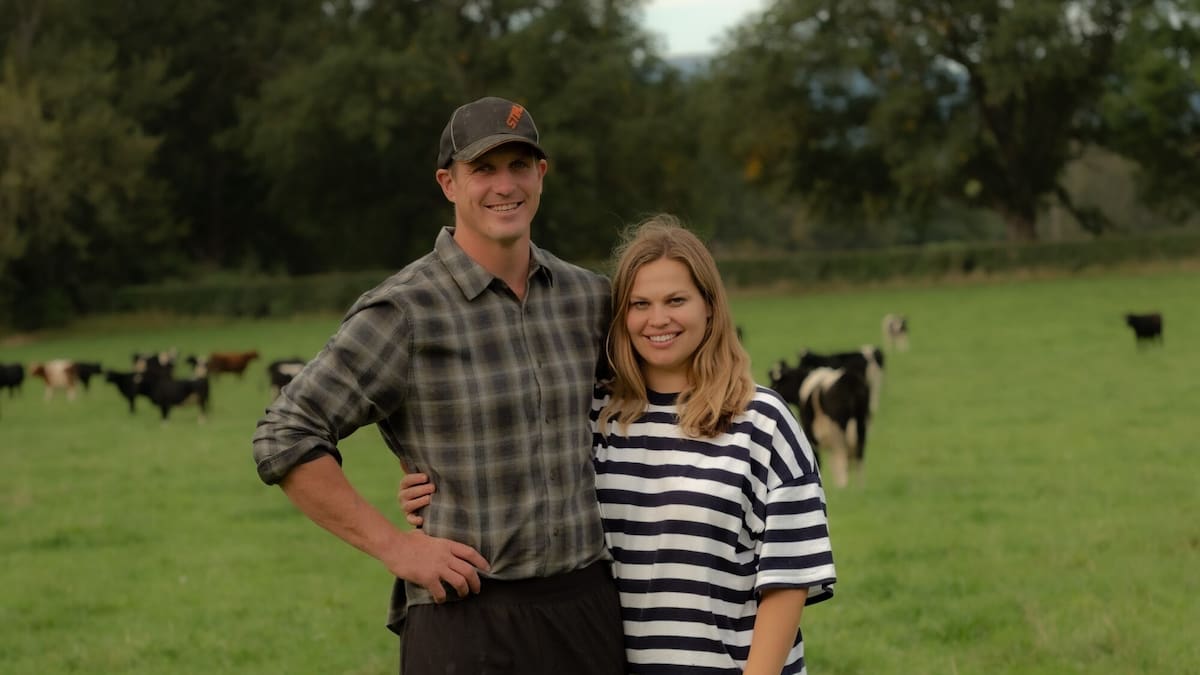
Sarah and Will Kirkland, and their three children, Sophie, Charlie and Jonty. The family are the current custodians of Elm Grove, a sixth-generation family farm in Otago.
How do you balance home life with work life?
Prioritising has easily been our biggest challenge. There are only so many hours in the day and it just doesn’t seem to matter. We do so many late nights, mainly when the kids go down as we’re busy parenting and farming during the day.
With the farm, the kids and Elm Lab, there’s been the need for us to ruthlessly prioritise, which has been good in the sense that it’s made us disciplined. We make decisions quite quickly, which so far has been a good thing. We’ve also learned early on about putting systems in place to be able to make it sustainable.
Will’s and my skill sets are complementary and we’re fundamentally on the same page. Nine months in it has certainly been a bit of a stress test, but we can see the potential in this business and we truly believe in colostrum, which keeps us going.
What would be your advice to a budding entrepreneur wanting to start a business?
Truly, just start. You take that first step and you learn as you go. You’ll make mistakes but you’ll learn quickly, and you don’t get clarity until things are moving.
We’re a different business now nine months in than I would have thought we would have been four years ago when we started thinking about it. So just start, and don’t underestimate how far resilience and hard work will take you.
Tom Raynel is a multimedia business journalist for the Herald, covering small business, retail and tourism.
Stay ahead with the latest market moves, corporate updates, and economic insights by subscribing to our Business newsletter – your essential weekly round-up of all the business news you need.