
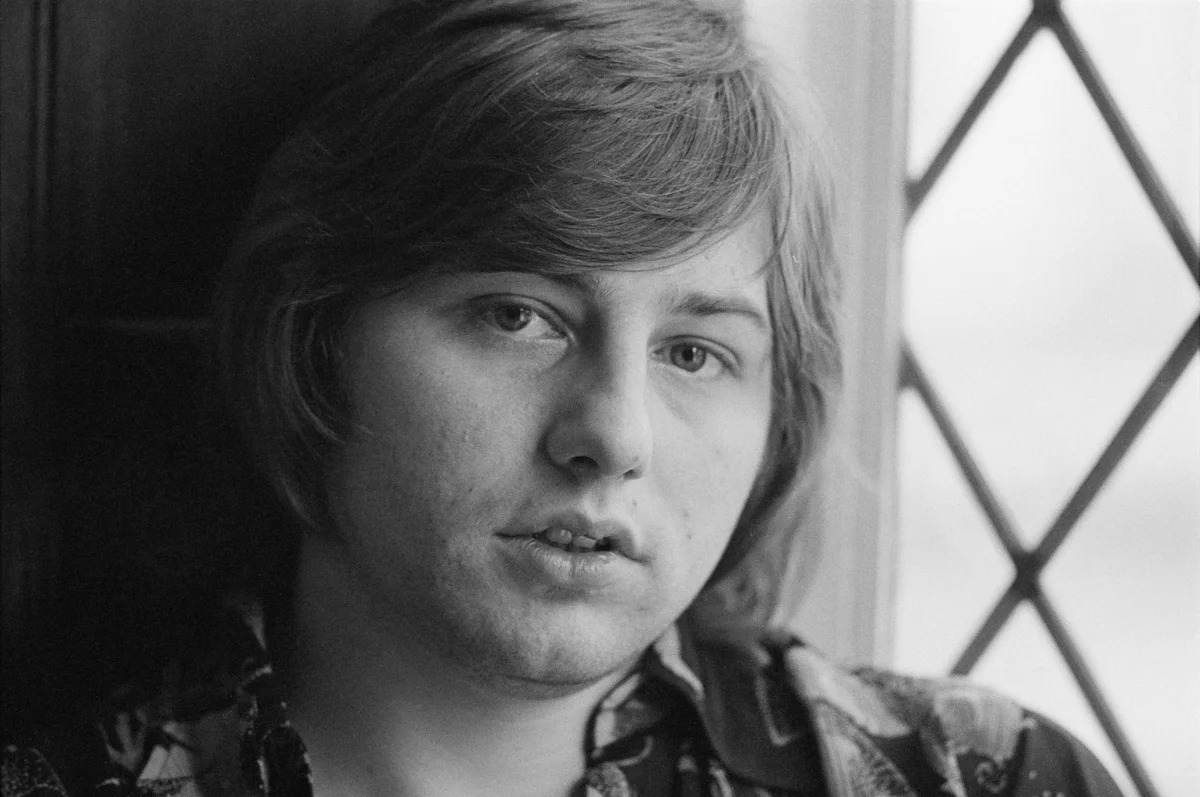
In 1970, Emerson, Lake & Palmer introduced the world to a ballad that had actually been written years earlier by a 12-year-old boy.
That song was “Lucky Man.” Penned by vocalist and bassist Greg Lake during his childhood, the reflective ballad became one of Emerson, Lake & Palmer’s signature recordings after appearing on the band’s self-titled debut album. More than 50 years later, it remains one of the group’s most beloved songs and a defining soft rock anthem.
Lake never expected the song to become a hit for one simple reason: he wrote “Lucky Man” when he was only twelve years-old.
“I was round my friend’s house and he had a broken down old guitar,” Lake shared during his Songs of a Lifetime tour. “In fact, it only had one string on it. Luckily, it was the bottom string. With a matchstick, I picked out this tune. It made me think, you know, perhaps I could play guitar. So it came to Christmas and I said to my mom, ‘Do you think there’s any chance of me having a guitar for Christmas?’ And she said, ‘No.’ You know, we were pretty poor. So that was it. I just accepted it.”
That might have been the end of the story if it weren’t for an unexpected surprise.
“Christmas came, and there it was, the guitar. And of course I was thrilled,” Lake continued. “The first four chords I learned were D, A minor, E minor, and G. With these chords I wrote this little song. It’s a kids’ song, really. And it was a medieval fantasy, really. And I never wrote it on a piece of paper. I just remembered the words.”
The simple melody and folk-inspired lyrics stayed with him throughout his teenage years, and when Emerson, Lake & Palmer needed another song to complete their debut album, he revisited the composition he had written as a child.
The recording combined simplicity with innovation.
“When we stared recording the song, it was just acoustic guitar and drums and it sounded pretty dreadful,” Lake told Classic Rock Revisited. “Voice, acoustic guitar and drums is not a nice sound. When I put the bass on it then it started sounding like a song. I then put two more tracks of acoustic guitars on it and six tracks of vocal harmony and it really started to sound like a complete record. By the time Keith came back from the pub it was a finished song and he heard it. He said, “I’ve got to play on that.”
For much of its running time, “Lucky Man” unfolds as an understated acoustic ballad, with Lake’s warm vocals telling the story of a wealthy man whose fortune cannot save him from tragedy. The song’s gentle melody and introspective lyrics made it accessible to a broad audience, while Keith Emerson’s groundbreaking Moog synthesizer solo at the end added a dramatic flourish that became one of the most recognizable moments in progressive rock.
Listeners quickly embraced the unlikely combination.
Released as a single, “Lucky Man” became Emerson, Lake & Palmer’s breakthrough hit, reaching the Top 50 on the Billboard Hot 100 and helping introduce the British supergroup to American audiences. The song demonstrated that the band could balance ambitious musicianship with heartfelt songwriting, a formula that would define much of its early success.
Although Emerson, Lake & Palmer became known for elaborate adaptations of classical works and lengthy instrumental epics, “Lucky Man” remained one of the band’s most enduring recordings. Its acoustic foundation and universal themes of ambition, mortality and perspective helped it stand apart within the group’s catalog while earning lasting airplay on classic rock and soft rock stations alike.
More than five decades after its release, “Lucky Man” continues to resonate with listeners around the world. What began as a song written by a twelve year-old Greg Lake ultimately became one of rock’s most timeless ballads, proving that great songwriting can emerge at any age.
Related: 1971 Classic Ballad, Written by a 17-Year-Old, Became a Soft Rock Anthem
This story was originally published by Parade on Jul 12, 2026, where it first appeared in the Entertainment section. Add Parade as a Preferred Source by clicking here.