
The counsel assisting the coroner, Fenella Becroft, said that up until the birth, Neho’s pregnancy was “on the face of it, an unremarkable pregnancy”, but a history of epilepsy had been noted.
At 5.07am on the morning of her death, the midwife was called to Neho’s home because labour had progressed and she did not feel able to travel to the birth centre.
Labour continued and at 6.46am, the midwife deemed Neho fully dilated but with the baby’s face presenting.
An ambulance was immediately called.
Becroft explained that soon afterwards, and as Neho was being prepared to move, she experienced what was thought to be a seizure.
Over the next hour, attempts were made to stabilise Neho, before she was transferred to Waikato Hospital at 8.15am.
There, Neho’s baby was delivered by emergency caesarean but shortly afterwards, both mother and baby were declared dead.
She was ‘overwhelmed with pain’
Emma Pirecki had been working as an emergency medical technician for St John for four months at the time of Neho’s death, before becoming a paramedic in November 2023.
She was one of two St John staff who responded in the ambulance that morning.
On arrival, she said she spoke with the lead midwife and explained what they could and couldn’t provide, and asked her if they needed a critical care paramedic and she said, “no”.
The midwife wanted them to get Neho out of the house and to hospital “as soon as possible”.
Heading inside, Pirecki said the room Neho was in was “very small”, with little room to move.
Neho looked like she was in “10 out of 10 pain”.
She initially responded to her questions verbally but was constantly moaning in pain, looked pale and was constantly holding her stomach.
Neho was crying, not talking, and “overwhelmed with pain”.
Asked by counsel, Tanzam Hossain, whether it looked like normal labour pain, Pirecki said, “no”.
“You’re sort of seeing someone in excruciating pain.
“She was in constant pain on her side, on her back.
“It was abnormal.
“I knew immediately it wasn’t right.”
They knew they had to get Neho out of the house as soon as possible.
Her colleague went to turn the ambulance around and reversed it closer to the house, and brought back a stair chair to help move her.
However, as Neho stood up, she collapsed.
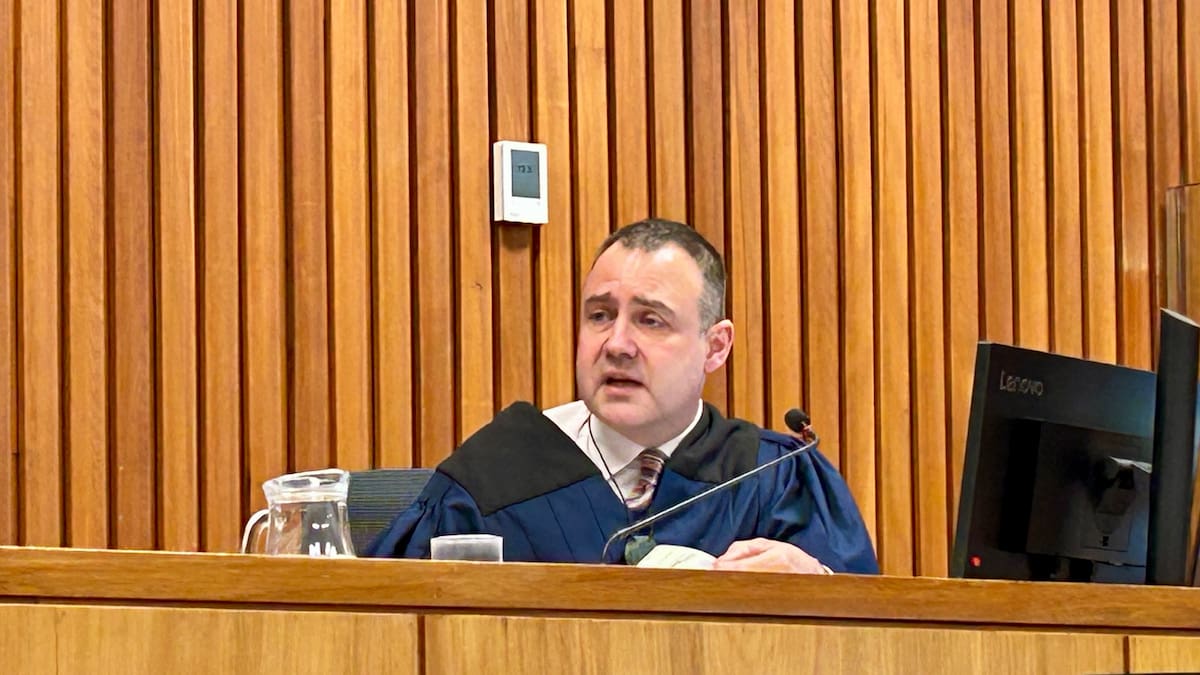
The inquest is being held at the Hamilton District Court. Photo / NZME
At that stage, a critical care paramedic was called for, and Neho’s partner came into the room, stating that she was having a seizure and had them previously.
However, Pirecki didn’t think Neho was having an epileptic seizure, but rather a “hypoxic seizure”.
That was because although she showed some signs of rigidity and slight shaking, she didn’t have a pulse, and to her that meant it was more likely hypoxic, where the brain isn’t getting enough oxygen.
Pirecki said the seizure lasted about 30 seconds to a minute, and the midwife put her into the recovery position.
Pirecki’s focus was on maintaining Neho’s airway, adjusting her head and ensuring there were no blockages in her throat, and checking her pulse.
She said it took her, her colleague, the midwife and Neho’s partner to lift her and put her in the chair and then wheel her outside, negotiating the tight hallway and corners to the nearest door.
The priority was getting her outside to the ambulance where they could treat her appropriately, and that was a decision she still stood by.
In an ideal situation, Pirecki said she would have an extra set of hands, no children around, a wider corridor and a bigger room to treat Neho in.
However, she believed they got Neho outside to the ambulance swiftly enough.
Becroft said the time from the call for back-up to the monitor being turned on in the ambulance was 16 minutes, and she put to her that perhaps she felt it went quicker than it did.
“I would be surprised if anyone else felt differently.
“I thought it was quite a quick extraction,” Pirecki said.
‘Only a pulse on her neck’
Outside, about 7.15am, Neho went from the seat to the stretcher, and her vitals were assessed again.
There, Neho had no wrist pulse, but Pirecki found one in her neck.
“That means she has probably arrested,” Pirecki said.
Given there were family members in the vicinity, that wasn’t something she would have said out loud but she would have “definitely” told her colleague.
Pirecki confirmed that the midwife was in charge of the situation until they got Neho to the ambulance.
She didn’t think there was any confusion about that, and instead “felt there was quite a flow”.
In the ambulance, the focus became about performing compressions on Neho because she wasn’t breathing.
Asked if it mattered whether Neho’s seizure was hypoxic or epileptic, Pirecki said it didn’t because the priority was giving CPR.
“Did you have that feeling that the situation was too big for you?” Becroft asked her.
“A cardiac arrest? No,” she replied.
Asked if she knew at that stage that Neho had suffered a ruptured uterus, Pirecki said she didn’t as there was no external bleeding.
Becroft asked her if there was anything that she would change or do differently, Pirecki said “no”, short of having a bigger room and being able to treat Neho inside.
“You were dealing with the realities of the situation?” Becroft asked.
“Yes,” she replied.
The inquest is set to conclude next week.
Belinda Feek is an Open Justice reporter based in Waikato. She has worked at NZME for 11 years and has been a journalist for 22.