
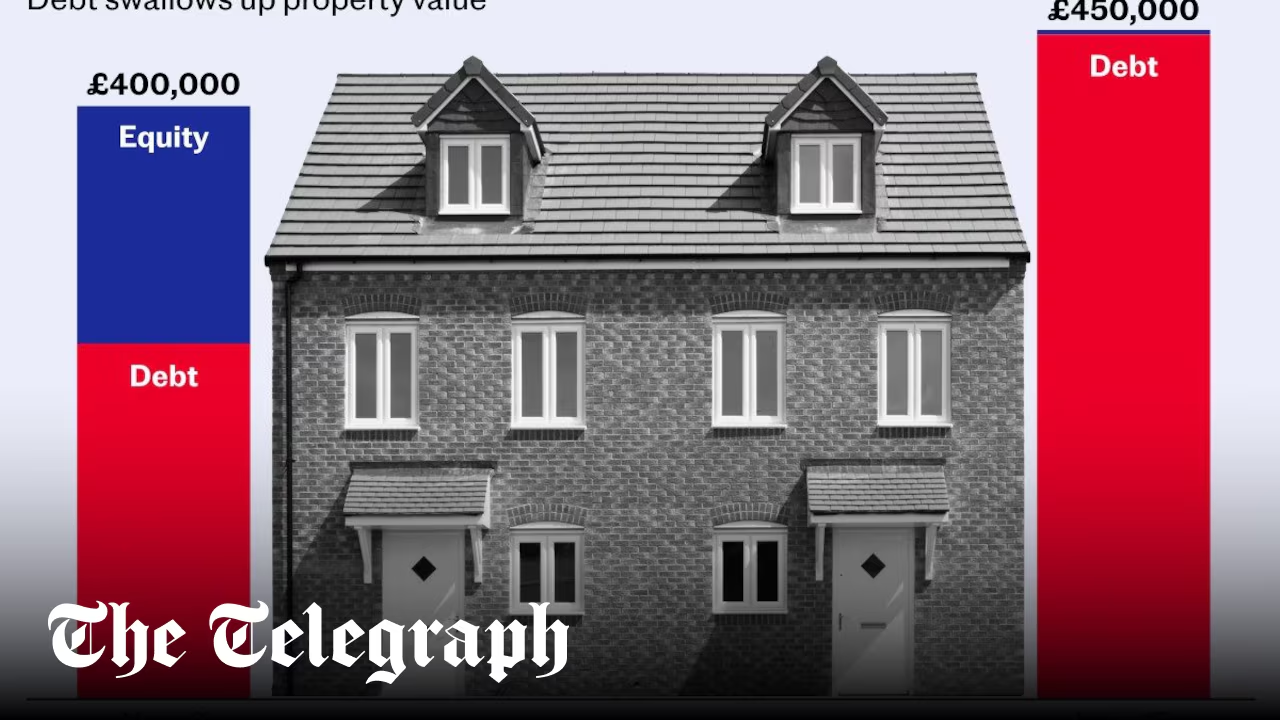
Since 1991, the No Negative Equity Guarantee has protected families from owing more than the property is worth. But Coles says the fact borrowers must pay “interest on interest” makes it easy for debts to quickly spiral.
“The real cost comes over time as the interest mounts,” she adds. “The compounding [effect] is working against you.”
Because loans become due as soon as the borrower dies or moves into long-term care, but interest continues to accumulate in the background, it can pile pressure on grieving families to pursue a cut-price sale to pay back what is owed.
On the other hand, if a lifetime mortgage lender believes a seller has undervalued a property on which it has a loan, it can potentially stall a transaction in the hope of achieving a higher sale – or the “best price reasonably obtainable”.
“For the lender, it’s a toss-up between accepting a very low offer and being shot of it and carrying on marketing it in the hope they get another 20 grand back,” says one probate property agent, adding that in most cases lenders will seek a quick sale where debts eclipse the value of the house to cut their losses.
Kelly Melville-Kelly, at the Equity Release Council, says that lenders are generally quite reasonable, but may start “having more conversations” with executors if they are concerned about how it could affect the property’s value if it doesn’t sell within a year.
“Where there is a worry is if the house is empty for over 12 months and you start getting into disrepair and dilapidations that actually make it harder to sell,” she adds.
Inheritance evaporating
Despite the risks, calls among policymakers and regulators to ramp up the use of equity release schemes have grown.
The Pensions Commission warned in May that 15 million people were under-saving for retirement, putting them at risk of a “severe” financial cliff-edge when they stopped working. It said the number could soon rise to 19 million without action.
In response, Emad Aladhal, at the Financial Conduct Authority (FCA), the UK’s regulatory body, gave a speech in which he urged Britons to start to view housing wealth as “the fourth pillar for retirement funding”.
“Later-life lending needs to be something consumers consider early, openly and with confidence as part of their long-term planning,” he said.