
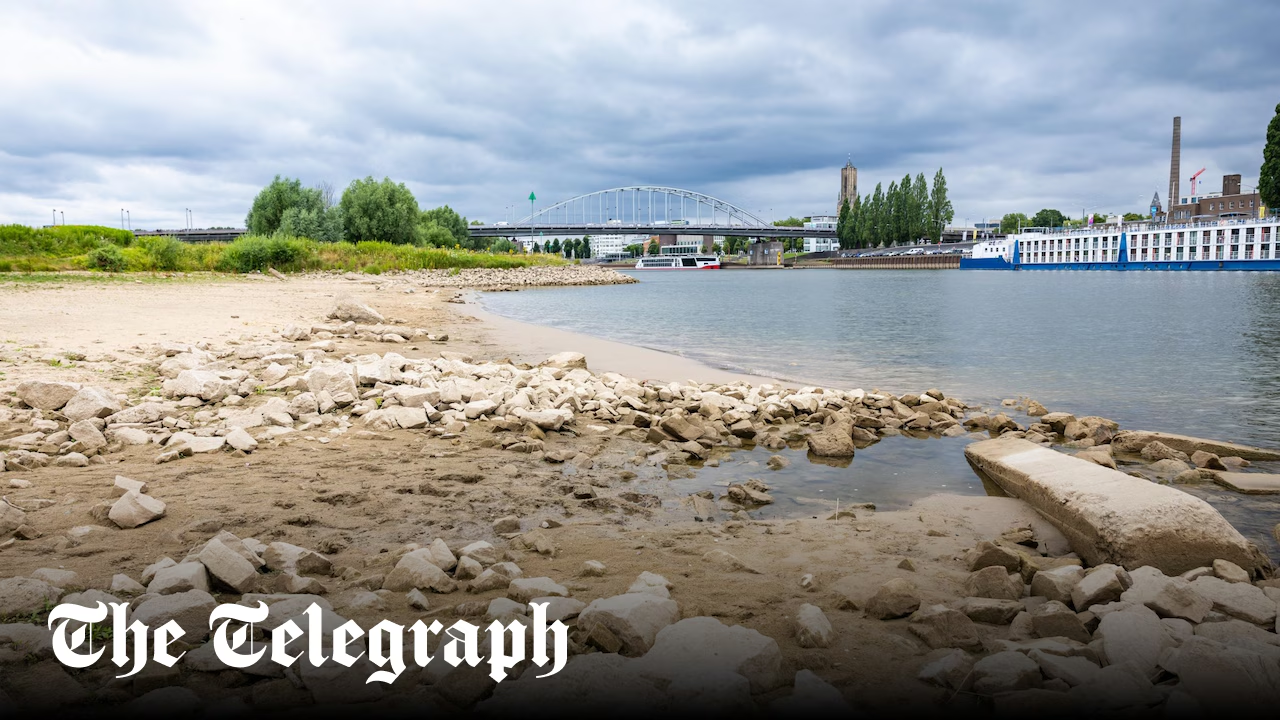
Heatwaves and drought have sent water levels on Germany’s Rhine river plunging to multi-year lows, driving up freight costs on the world’s busiest inland shipping route.
The Rhine’s depth dropped as low as 53cm on Monday at the critical Kaub chokepoint near Frankfurt, marking the lowest July reading in decades.
Any reading below around 80cm will prompt barge owners to start shrinking their loads and raising their prices.
Wouter van der Geest, a senior consultant at Rebel Ports & Logistics, said: “The levels are very low, and it’s unusual because it’s so early in the year.
“From this point, it all depends on rainfall. If rain falls in the right places, navigation will be OK. If it doesn’t – and the forecasts don’t look great – the situation will get worse and we could even see new record lows.”
The drought risks a fresh hit to the already beleaguered German economy. German factories, which depend on the Rhine to send and receive up to 200 million tonnes of goods and fuel a year, are already reeling from cut-price Chinese imports and soaring energy costs.
During the Rhine’s prolonged low-water spell in 2018, German industrial output shrank 1.5pc. That delivered a 0.4pc hit to the country’s gross domestic product, according to the Kiel Institute.
The water levels regularly reach seasonal lows at this time of year. But in the past decade the hotter, drier European summers have made these troughs more erratic and extreme.
After the record lows of 2018, there was a similar crisis in 2022. Levels also dropped sharply at this time last year.
The Rhine is fed by snow melting in the Alps and replenishing the river’s source at Lake Constance on the Swiss-German border. But snow coverage was patchy this past winter.