
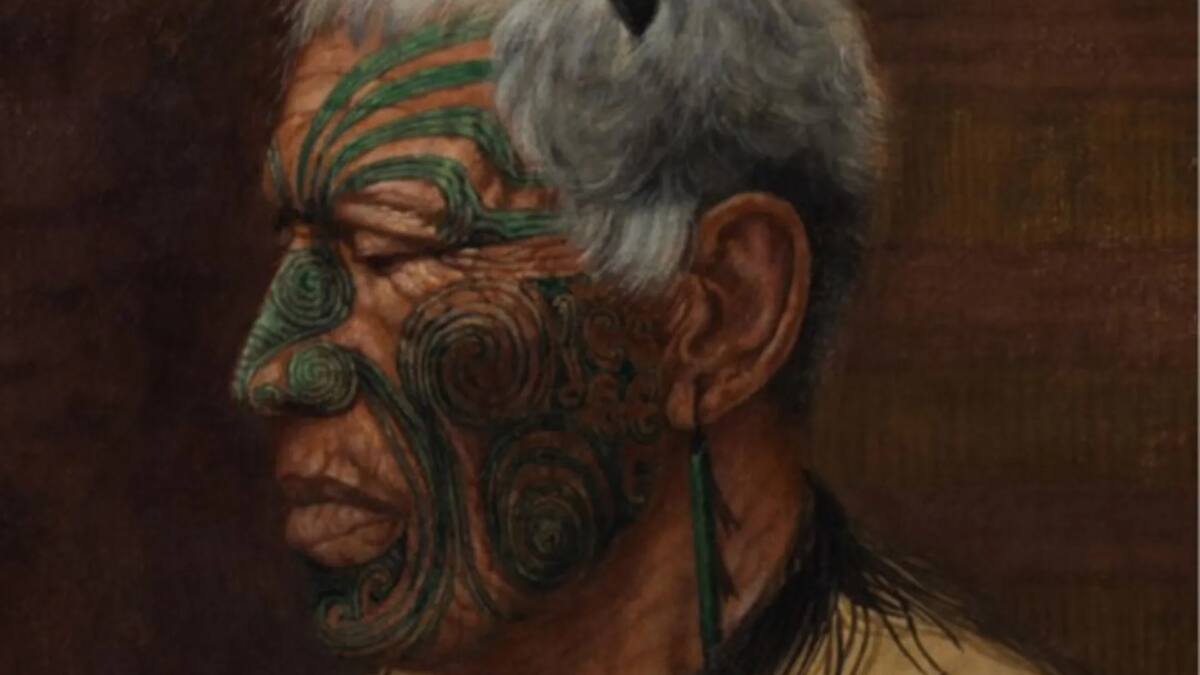
“He specialised in the mahi of hahunga, so a very tapu practice of recovering and preparing the bones of those who’d passed, preparing them for their final tangi and then their interment, and I understand he did a lot of that for our whānau and took them to their final resting places in Tarawera.”
His role involved scraping down human bones after exhumation to prepare them for reburial and Mikaere believes he was the last tohunga to hold that particular role of hahunga.
“He was really regarded with both awe and fear, I think, from our people, because of his intimate association, and that tribal responsibility for our whānau who had passed away, for our dead.”
Mikaere said he lived quite a long life and died in 1901.
He was a very special tohunga and the resurfacing of his portrait gives the iwi an opportunity to resurface the narrative of how special he is, she said.
“What I appreciate about this opportunity of, I guess, the resurfacing of his image in this beautiful portrait is it gives us the opportunity to reclaim some of the narrative about this particular tohunga.
Kirikowhai Mikaere. Photo / Te Kāhui Raraunga
“Because when he passed away, the newspapers referred to him as a cannibal and a bone scraper, because they misunderstood the nature of his mahi for us, and so I think they maybe coloured his image in terms of who he was and how special he was.”
Mikaere said the iwi were unaware the Goldie portrait existed until a few years ago when they were approached by a researcher investigating it.
Tūhourangi were able to provide a photograph of Patara Te Ngūngūkai to connect him, particularly his mataora (face tattoo), to the painting.
“We were not in a position then, and still not in a position now, to be able to auction and purchase it, but we weren’t aware it was going up for sale this week.”
Mikaere said when it comes to iwi buying back paintings or photographs of their tūpuna, she was in two minds.
On one hand she understood the value placed on artworks and the particular expertise of Goldie, on the other hand, that high cost meant iwi were effectively priced out of owning special taonga and bringing them home.
“It’s not a new dilemma for us, though, as a tribe, we have multiple taonga around the world. We have wharenui around the world and, you know, in the process of some of our iwi are trying to bring home a Hinemihi from London.
“If there is a kind-hearted philanthropist who does want to buy it for us, we would be more than happy to welcome that particular portrait home and that koroua and tohunga home, but whoever does end up purchasing this really special portrait, we hope they look after it and look after this particular koroua.”