
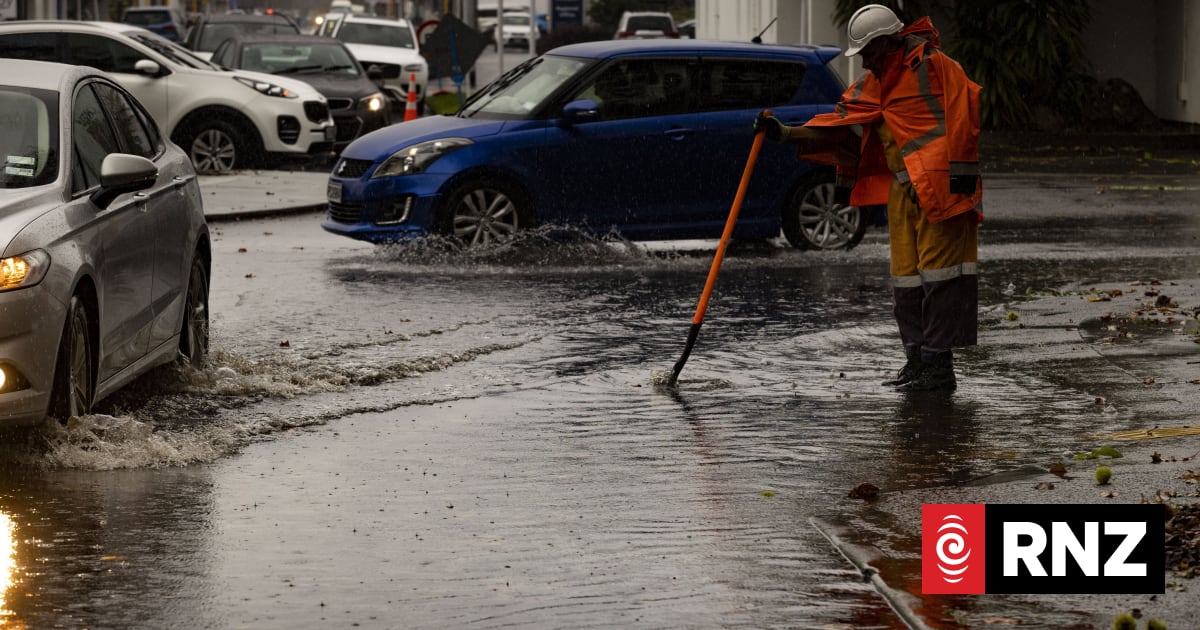
Hamilton’s got a reputation for being a city largely without floods, quakes or other natural disasters.
But growing weather uncertainty and a legacy that included the nation’s deadliest tornado prompted officials to teach residents how to prepare if the worst happened.
A presentation by Civil Defence and Hamilton Libraries would be held on Saturday at the Rototuna library, in which viewers would learn about the historical weather events that swept through the city.
The idea began from research librarian Shelley North, who was brainstorming events that happened in the wintertime.

The 1948 Frankton tornado instantly stood out, as it took three lives (including a distant relative of North’s) and injured 80, making it New Zealand’s deadliest.
The presentation then expanded looking at severe weather events that have swept the city, such as the 1953 Dinsdale flood.
“Hamilton I think recently has been getting a bit of a reputation of being a bit of a safe place, and I feel that’s happened before,” North said.
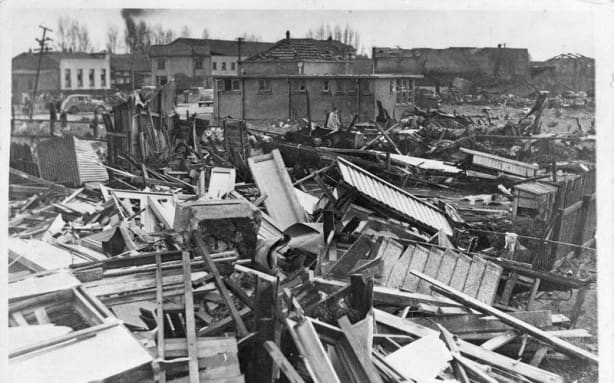
The 1948 Frankton tornado ripped through Hamilton, destroying 150 buildings.
HAMILTON CITY LIBRARIES / LDR
“We’re getting increasingly more and more extreme weather events around the world,” archives reference and special collections manager Rowan Miller added.
The involvement of Civil Defence was something the library had never done before, North said, with Miller adding the cross-council collaboration could help deliver key messaging.
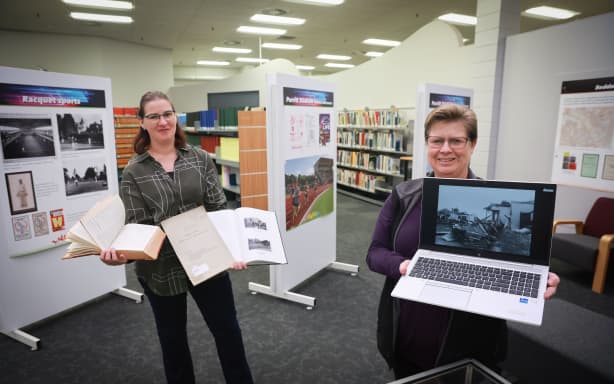
Research librarian Shelley North (right) and archives reference and special collections manager Rowan Miller (left) are passionate about teaching Hamiltonians good preparation habits.
MARK TAYLOR / WAIKATO TIMES / LDR
The sentiment was shared by Hamilton City Council’s response and resilience manager Robbie Hermann, who was on council’s civil defence team.
He said a destructive event doesn’t have to be the catalyst to spur preparation. Having supplies at home or a prepared ‘go bag’, could prevent venturing out into potentially dangerous situations.
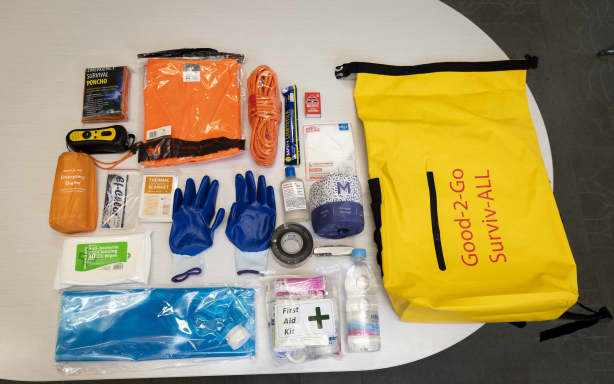
An insight into some essentials of a ‘go bag’.
Christel Yardley / WAIKATO TIMES / LDR
“If you’ve got enough water and food to see you through, you don’t have to jump in the car and race around to a supermarket and panic buy,” he said.
“[That] potentially creates more hazards, more people on the road in dangerous conditions so you want to think about those times as well.”
The importance of adhering to every emergency alert civil defence sends out was reinforced by Hermann, who said Civil Defence “can only be guided” by meteorologists and other experts trying to predict constantly changing weather systems.
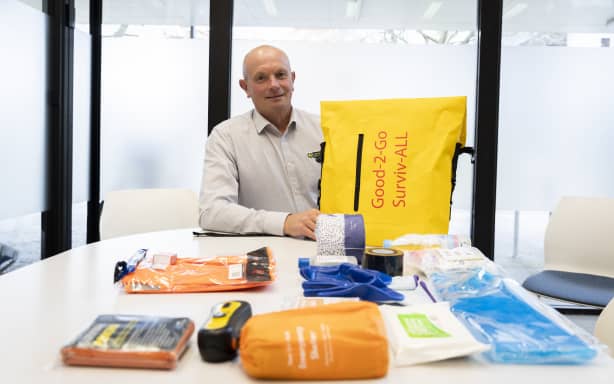
Civil Defence and Hamilton City Council Response And Resilience Manager spokesperson Robbie Hermann says every emergency alert should be heeded.
Christel Yardley / WAIKATO TIMES / LDR
He added while predictions could be wrong, the last thing people should do was dismiss the messaging entirely.
“People can die and people can be displaced. The recovery work from Cyclone Gabrielle is still ongoing so it can take years and years to recover from a significant event and the human toll is huge.
“It’s better to not raise the alarm and not need it rather than not and people are left wondering ‘why didn’t we get a message?’. We don’t want it to be every time the clouds are gathering so you go overboard… but you’ve got to take things seriously.”
Having a plan and keeping an eye on essential stock was key.
“Just making sure you’ve spoken to your family, your neighbours that you have an idea of ‘hey, if I can’t get home because the road’s blocked, where is a place that we can meet if communication lines are down?'”
The presentation would be held from 2-3pm this Saturday at Te Kete Aronui – Rototuna Library.
LDR is local body journalism co-funded by RNZ and NZ On Air.