
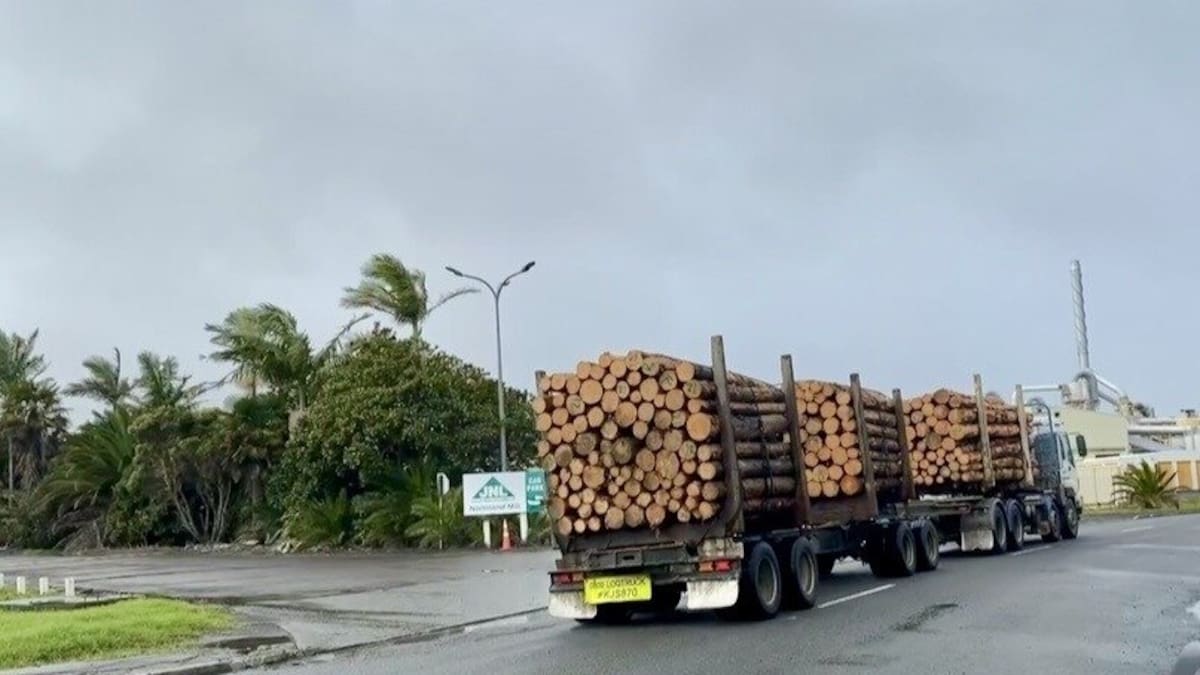
JNL’s Triboard Mill in Kaitāia is not affected.
While the closure directly affected employees, he believed the effects would spread far wider.
“It’s not just about the mill, you have companies in haulage and other businesses that rely on the mill. I think it will be a domino effect.”
He said there was a lot of frustration and anger among the employees, many of whom felt the process was taking too long.
“We knew from about March that the mill was closing down, because the orders just weren’t there.”
He said finding work locally may prove difficult and the closure would affect colleagues who have spent decades at the mill and nearing retirement and newer employees with young families to support.
“A lot of families are going to have to relocate. I think for a lot of people that is the only option apart from going on the benefit.”
Despite his concerns, he said staff had rallied around each other with some older employees discussing stepping aside from potential redeployment options, to allow the younger workers first access to available options.
JNL director Yasufumi Tsuchiya said they explored a range of options, including a sale process and other potential business arrangements.
“We recognise the significance of this announcement for our employees, their whānau and the wider Northland community. Many people have dedicated years of service to Northland Mill, and we acknowledge the impact this decision will have.”
Juken New Zealand’s Northland Mill closure may affect at least 60 workers. Photo / Yolisa Tswanya
Tsuchiya said while the decision had been made to close Northland Mill, they remain open to conversations with potential buyers and continue to explore opportunities relating to the land and assets.
“This decision relates only to the Northland Mill, which produces veneer.
“The Triboard and Strandboard produced at Triboard Mill and J-frame, J-ply and solid wood produced at Wairarapa Mill are not impacted by this announcement.”
He added the process to explore a potential sale of the Triboard Mill remained ongoing.
Regional Development Minister Shane Jones said while it was “an awful outcome”, Kānoa – MBIE’s regional development agency – was in early-stage discussions with parties interested in establishing a new enterprise on the mill site.
He said officials are still assessing the credibility of any proposals and whether there is any case for Government involvement.
“It’s early days. I have to reiterate at no time was I ever approached by the Japanese owners for financial input to secure the ongoing existence of the mill.
“The sense I have is that they were never looking for Crown input to bolster their investment. They obviously have a commercial plan that they’re working to and that did not involve any scenarios that required Crown input.”
Jones’ comments come after Northland NZ said in a statement that an expression of interest was received for the Northland Mill site, from an experienced operator.
Interest in the Northland Mill centres on site plans to upgrade equipment and modernise the operation.
The Northland Regional Council (NRC) and the Far North District Council are backing Northland NZ to facilitate discussions that firm up both deals, said NRC chair Pita Tipene.
“This includes working on a consortium of investors to back the commercial upgrade plans for the Northland Mill site. That model would require investment by the Government.”
The proposed redevelopment would make use of skilled staff, the existing site, site permissions and some existing infrastructure, turning the site into a modern timber processing operation alongside a biomass fuel plant, using existing infrastructure and employing some of the current workforce.
Workers First Union organiser Marcus Coverdale described the confirmation of the closure as “a sad day for Kaitāia”.
He said mill workers will attend individual consultations over the next week, where the company will offer support services before issuing letters of redundancy. A small number of people may also be able to be redeployed to the neighbouring Triboard Mill.
“We recognise the significance of this announcement for our employees, their whānau and the wider Northland community. Many people have dedicated years of service to Northland Mill, and we acknowledge the impact this decision will have.
“We’ll be supporting our members through these next steps and ensuring that Juken lives up to their promises of support and care through the redundancy process.”
Meanwhile, the Ministry of Social Development said they will ensure immediate relief for affected employees, with their Early Response and Employment teams working closely with JNL and local partners to offer support.
Assistance will focus on helping people transition into new opportunities while maintaining financial stability. Support will include help with CV preparation, job applications, interview skills, and understanding available financial assistance.
Regional Commissioner Rena Hona said MSD is committed to ensuring affected workers, and their whānau in Kaitāia and surrounding communities, have access to support.
“Our teams are actively connecting with employers across the Far North and identifying opportunities to help people transition into new roles or training pathways.
“We know the strength of the Far North lies in its people and its community networks. By working together with Juken, local employers, iwi, and community partners, we are focused on supporting people into new employment opportunities.”
Yolisa Tswanya is deputy news director at The Northland Age. An experienced journalist and newsroom leader, she holds a bachelor’s degree in journalism and reports on a broad range of issues across the Far North and Northland, with particular interest in health, education and community affairs.