
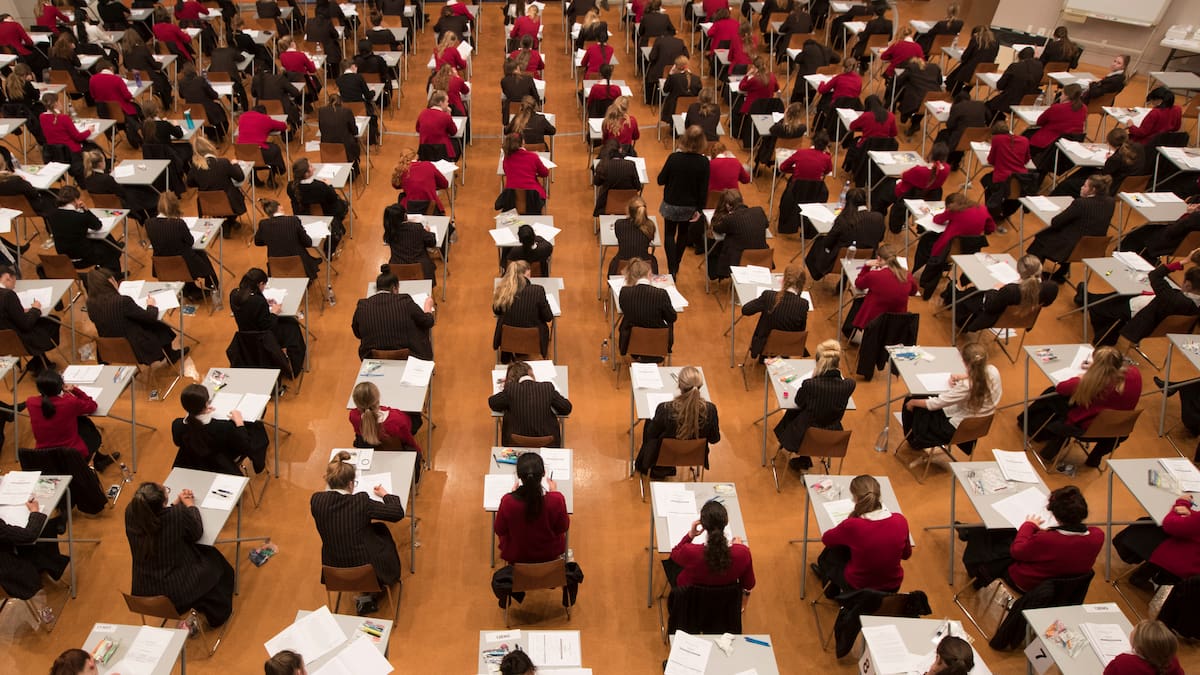
The largest category of breaches involved students failing to follow assessment instructions, accounting for 503 investigations.
Within that category, 75 students were caught for leaving an exam room without authorisation, 55 were found with unauthorised material, 42 had unauthorised notes, and 16 were caught navigating away from the approved digital assessment platform.
Authenticity and impersonation issues were the second most common category, with 330 breaches.
A further 145 breaches related to questions about whether the submitted work was genuinely a student’s own.
Inappropriate practices accounted for another 293 breaches.
These included 54 students caught using a cellphone during an assessment, 43 using notes, 36 having a “text increase in a short period of time”, which alludes to copying and pasting work, and 26 communicating with another candidate about the exam.
Another 101 violations involved students influencing, assisting or hindering others during assessments.
Most of those, 88 cases, involved candidates communicating with one another about matters unrelated to the exam.
The literacy and numeracy assessments accounted for 289 infringements, of which 274 were substantiated.
The remaining 938 investigations related to other external assessments, with 768 resulting in a confirmed breach.
The data comes as schools and assessment authorities continue to grapple with the rapid rise of generative artificial intelligence, which has prompted increasing scrutiny over how students complete assessments and demonstrate that submitted work is their own.
When the Herald reported on a high number of investigations in April, Secondary Principals’ Association vice-president Scott Haines said NZQA made it difficult for students to cheat during in-person digital exams, which were conducted in normal exam settings but using computers rather than pen and paper.
“They’re literally recording the screen and seeing every keystroke that a student enters.
“I guess they would need to be using a separate device to be cheating with AI, and of course, they’re sitting those exams in an exam centre with exam invigilators.”
READ MORE: Australia’s Prime Minister makes a big move on AI regulation. How does NZ compare?
Haines said AI was becoming an increasing threat to internal assessments, so much so that many schools were abandoning digital assessments completely.
A student in her final year of high school, who wished to remain anonymous, said it would be “incredibly hard” to cheat in digital exams, and just as difficult if students were sitting a typical pen-and-paper test.
She said traditional methods of cheating were still the norm, with students sometimes slipping notes into pockets and checking them in the bathroom.
The desktop computers were already set up when students arrived, and personal devices were not allowed into exam rooms, she said.
She had not heard of anyone attempting to access AI platforms during an exam. “You would get caught pretty easily.”
Deputy chief executive assessment Jann Marshall said examiners were checking for potential exam rule breaches before, after and throughout the exam.
She said teachers checked whether students were bringing notes or other unauthorised materials into exam rooms, such as phones or smart watches.
The marking process included checking for work that appeared plagiarised or contained changes in syntax or writing style, which was typically indicative of AI use.
Since the introduction of digital exams in 2016, NZQA had used digital detection tools to identify “anomalies”, Marshall said.
This included whether students were moving away from the digital platform to access other sites.
The exam breach figures come after a move from Massey University that forced students to return to in-person exams to counter the risk of online cheating and level the playing field among its scholars.
A Massey University spokesperson said a range of factors had led to the decision to resume in-person exams.
The move was to “ensure assessments are completed under consistent, invigilated conditions that demonstrate each student’s individual learning, supports academic integrity and provides a fair and level assessment environment for all learners”.
When asked if the move was in response to the rise in generative AI, the spokesperson said this had influenced the decision.
Last year, the Victoria University of Wellington law school also made students return to handwritten, in-person exams just four weeks before examinations were due to begin.
Bryony James, provost professor at the university, confirmed the decision was based on concerns about students using AI for cheating.
Rachel Maher is the education correspondent for the New Zealand Herald. She also covers a variety of other topics like Auckland issues, crime and local government. She started at the Herald as a breaking news journalist in 2022, before joining the Auckland team this year.
Sign up to The Daily H, a free newsletter curated by our editors and delivered straight to your inbox every weekday.