
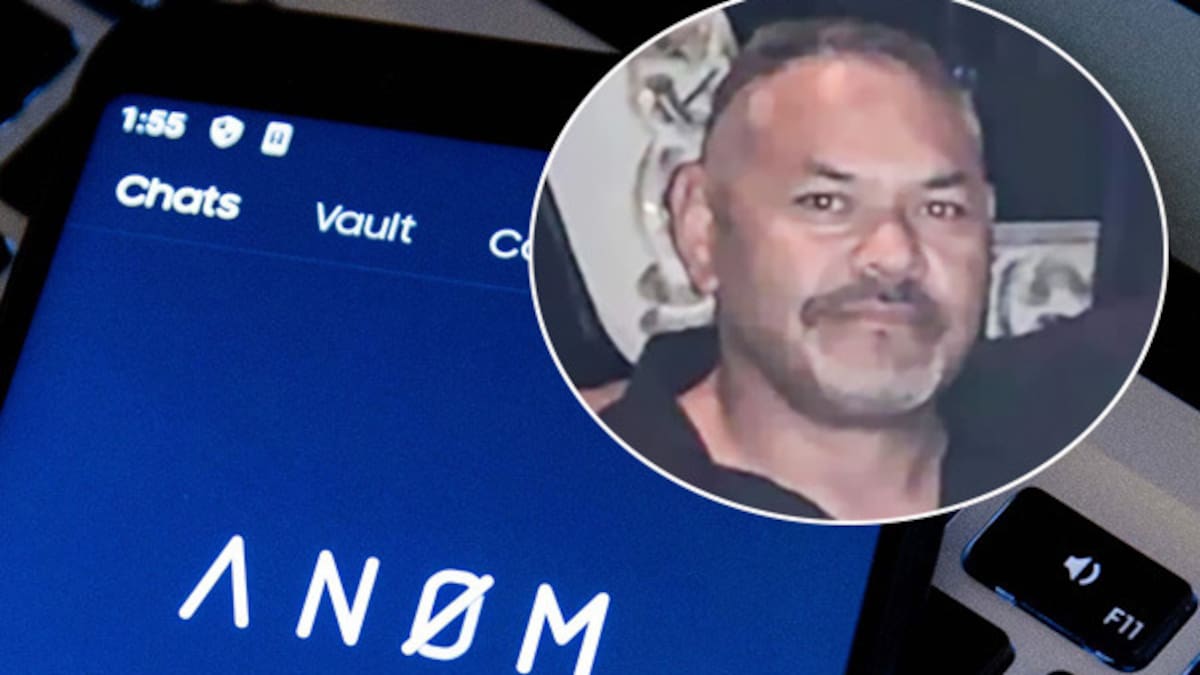
While it resulted in arrests, it was also the start of a four-year-long fight by the defendants to stop any evidence from Anom being used in a New Zealand court because of how it was gathered.
During Fatu’s sentencing in the High Court at Hamilton today, his counsel Stephen Lack sought a discount for “unlawful interception” after the Court of Appeal found the FBI “probably” breached the Crimes Act by intercepting communications of defendants without a warrant.
“When you boil it down to the context, a crime was committed in New Zealand by virtue of the fact that a surveillance device warrant wasn’t in operation when communications were being intercepted by New Zealand-based users, which is a breach of the Human Rights Act, in my submission.”
But Justice Mathew Downs wasn’t as convinced.
‘Preferred to chase higher prices outside the Waikato’
The joint police and customs investigation, Operation Equinox, began in 2019 and concluded in 2021.
At the time, Fatu, 55, was the Sergeant at Arms of the Waikato chapter of the Comancheros.
Using the Anom device, between March 28 and August 1, 2020, Fatu was found to have supplied at least 1kg of methamphetamine and on-sold it to his own customers.
“Your ‘trade craft’ was careful,” Justice Downs said today. “You were vigilant; you were not surveilled.”
In his offending, Fatu made it clear he was going to focus on supplying methamphetamine “outside the Waikato area, where prices for methamphetamine were higher”, Justice Downs said in explaining the facts.
Also, on May 11, 2021, Fatu took delivery of 20 litres of hypophosphorous acid and knew it was going to be used in the manufacture of methamphetamine.
Last month, Fatu pleaded guilty to charges of supplying 1kg of methamphetamine, possessing the precursor substance hypophosphorous acid, and participating in an organised criminal group.
‘Highly profit-focused’
Crown solicitor Jacinda Hamilton characterised Fatu’s offending as “sophisticated” and “the most savvy of the group”.
“He was extremely careful about the use of communications, even in circumstances where members of the group believed they were operating encrypted devices that law enforcement couldn’t intercept.
“He preferred to deal with individuals in person.”
However, she also accepted he wasn’t an avid user of the Anom technology because he didn’t know how to use it.
Fatu was “highly profit-focused” and spoke about wanting to deal with people outside of Waikato “where prices were higher”.
Hamilton labelled Fatu a “recidivist commercial drug dealer” and said his offending occurred while he was already serving a sentence.
“It’s the Crown contention that previous periods of imprisonment have only acted as a pause on his drug offending and I suggest it is fair to characterise his history as rinse and repeat, serious drug offending.”
Dwight Fatu has been sent to prison and labelled a “recidivist commercial drug dealer”.
She said there should be no discount for an undue delay in proceedings, nor for any suggested impropriety by police, as requested by the defence.
“He has not been prejudiced for a delay in any real way.”
She cited an earlier decision by Justice Michele Wilkinson-Smith, who said there was no evidence to establish any impropriety by the Crown or police, as the evidence was ruled admissible.
Hamilton urged Justice Downs to issue a minimum non-parole period of 60%.
‘He’s handed in his Comancheros membership’
Lack said he wasn’t intending to minimise the commerciality aspect of the offending, nor his client’s membership with the gang at the time, but he did take issue with the Crown labelling Fatu as “the most savvy” of the group.
“It’s apparent from the communications …that Mr Fatu had difficulty in operating the Anom phone at first instance when they were in use, and that was the reason that there weren’t messages sent by him during that period of time, and that is the reason that the charge period for the methamphetamine is now limited to only a four-month period, rather than a far broader period that the communications were being intercepted for.”
Fatu accepted he played a significant role in sourcing methamphetamine to on-sell to his own network of buyers.
He also pushed for a discount of 20% for “undue delay” given the five years and one month since he was first charged.
Lack said while some of the delay had been because of the challenge from defendants over the Anom communications, the Crown also caused delays in seeking admissibility of the communications.
The High Court decision on the admissibility of the Anom evidence wasn’t delivered until 2024, before it was challenged again in the Court of Appeal, but that was dismissed in September of the same year.
The Supreme Court declined the defendants’ leave to apply in November last year and since then negotiations had been taking place.
“Not all of the delays were attributable to Mr Fatu or the other defendants,” Lack said.
“But even if they were attributable solely to Mr Fatu … this does not prevent him from seeking a reduction for undue delay.”
Lack said Fatu had “distanced himself” and “handed in his membership” from the Comancheros and had been segregated in prison for the past 12 months.
Exceptional demands on the courts
Justice Downs said that, looking at Fatu’s criminal history, it wasn’t “an exaggeration” to say most of his adult life had been spent in prison for commercial drug dealing.
As for undue delay, Justice Downs said much of it had been because of the admissibility challenge of the Anom evidence, which continued through to November last year.
“This period is long by any measure.
“I do not know of a case in which an admissibility determination has affected so many charges and defendants … there are, or were, almost 800 charges.
“Nor do I know of any other case that has involved this technology, or technology quite like it.”
It also involved the FBI and, altogether, produced a case that was “exceptional in its demands upon the courts, and the delay is justified accordingly”.
As for the FBI’s involvement, he found the case involved “unfairly obtained – but nonetheless admissible – evidence”.
Anom devices were also different from cellphones as they cannot make or receive phone calls.
“They are not mobile phones. Consequently, Anom devices are not used by countless billions of people the world over, for everything that modern life entails.
“Instead, Anom devices were used by small groups of people, including the syndicate of which you were part, to co-ordinate serious criminal activity.”
After taking an overall starting point of 12 years’ prison, Justice Downs gave credit for Fatu’s pleas and history before landing on an end sentence of nine years and five months.
He declined to impose a minimum period of imprisonment.
Belinda Feek is an Open Justice reporter based in Waikato. She has worked at NZME for 11 years and has been a journalist for 22.