
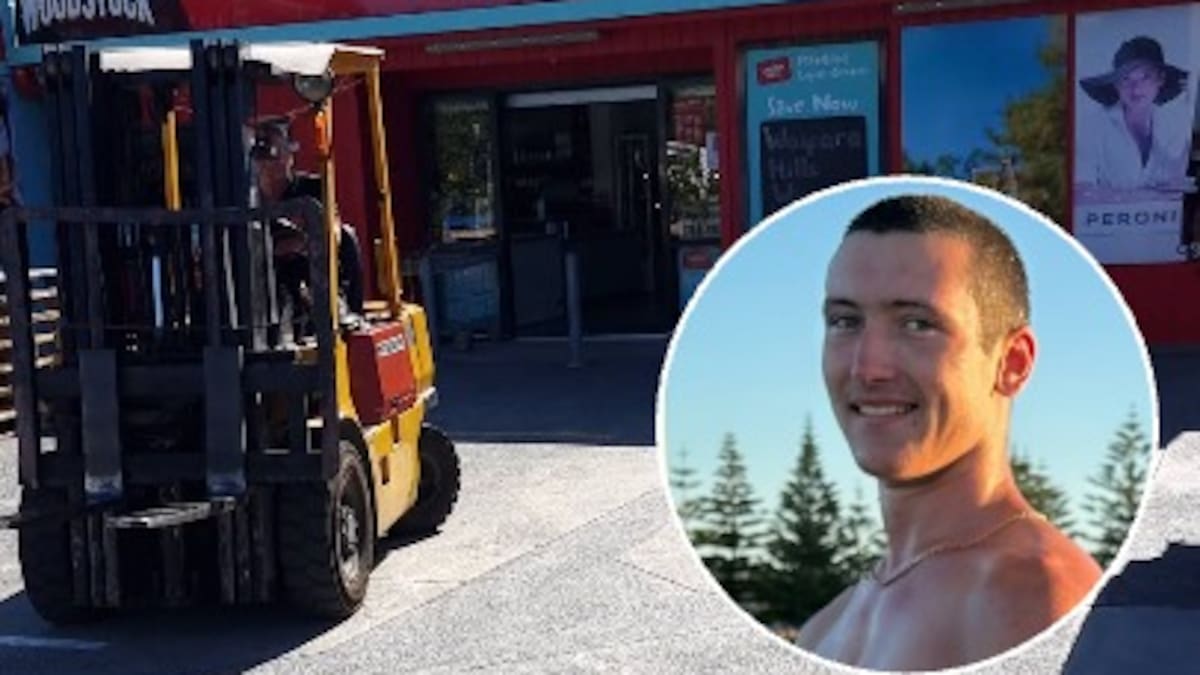
Lawyer for Micmat, Andrew Braggins, argued that his client met the requirements to enforce the safe sale of alcohol at the store.
Adequate signage reminding that alcohol would not be sold to minors was in the shop and managers were frequently trained on the applicable regulations, he told the court.
“Those are not the hallmarks of a business that is lackadaisical when it comes to a compliance culture.”
Since Sims’ death, the business had introduced further measures, including secret shoppers who visit the store weekly to ensure staff are checking IDs and not selling to minors, he said.
The Matakana Liquor Centre has had its licence cancelled for selling alcohol to minors on three occasions in July 19, 2025.
In its 18 years of operation, no complaints were made against the store for the irresponsible sale of alcohol.
He argued the cancellation was “overly punitive” and took into account the harm caused, rather than focusing on what happened on the premises.
Braggins said the cancellation of Micmat’s licence, while other involved parties were handed suspensions, was unfair.
He cited other ARLA cases where traders were allowed to show they made improvements, saying that opportunity was not given to Micmat.
In some of the cases mentioned, businesses sold to minors on multiple occasions over a prolonged period.
“The conclusion is that Micmat is so terrible, is irredeemable and can’t be allowed to clean its house.”
Police lawyer Elena Mok told the court that three different duty managers selling alcohol to the boys that afternoon reflected a culture of complacency regarding the rules.
The duty managers were aware of needing to check for ID if customers appeared under 25 years old but did not do so, she said.
The events of the afternoon and evening of Sims’ death provided a snapshot of how the premises were operating, she said.
Silas Sims, 16, was killed when his car hit a power pole in July last year.
The alcohol being sold by different staff members was indicative of a systems issue rather than a one-off mistake by a manager.
Mok said the implementation of further safety policies after the incident showed the licensee could have taken further actions beforehand.
Reminders to check IDs by co-owner John Walsh made to staff were “ad hoc” and done on an irregular basis, she submitted.
Braggins disputed the characterisation of training as ad hoc, saying it was provided during monthly meetings.
Although the other cases mentioned involved several instances of selling to minors over time, none displayed the systemic issues the ARLA found for Micmat, Mok said.
The outcome was serious but it was not out of proportion with the nature and circumstances of Micmat’s breaches, she said.
Justice James Alexander MacGillivray reserved his decision.
Day-drinking in Matakana
On the day he died, Silas had made plans to meet up with two friends, whose names are suppressed, in Matakana, north of Auckland, to drink and smoke cannabis.
He first entered the Matakana Liquor Centre alone after 2pm and purchased a bottle of Jägermeister. He was not asked for ID.
An hour and a half later, he and a friend arrived at popular music venue the Leigh Sawmill Cafe, 15 minutes northeast of Matakana.
Silas ordered two beers and was not asked to prove his age after saying he was 18.
He failed at buying a second round, however, and was told he’d “had enough”.
Then the pair met up with a third friend and again entered the liquor store.
Silas bought a four-pack of rum and colas, while his friend bought an 18-pack.
They were served by two staff members and neither was asked for ID.
At 5.45pm the friends went to the Matakana Village Pub, where they bought a rum and cola and a Guinness.
Silas’ two friends tried to dissuade him from driving home and tried to take his keys.
But he persisted and, while driving along Leigh Rd, on a left-hand bend, he crossed the centre line, left the road and crashed into a concrete power pole in a paddock.
He was pronounced dead after being removed from his car by paramedics.
‘There was never a personal apology’
During today’s hearing, Braggins said John Walsh had apologised to Sims’ parents and that he and Louise were extremely sorry for the tragedy.
That prompted the teen’s mother, Sarah Sims, to speak out from the public gallery.
“Excuse me, I’m the parent. There was never a personal apology.”
She added that the mentioned apology was given in front of a judge.
The Walshes were also in the gallery.
Justice MacGillivary asked Sims to speak through counsel, adding that he understood the appeal brought up strong emotions.
Speaking to the Herald after proceedings, Sims said she felt she needed to speak up because she believed there was a lack of acceptance by the Walshes that they caused harm.
However, she said hearing that they had employed secret shoppers was “a great thing”.
Reflecting on the year that had passed since her son’s death, Sims said it felt like it happened yesterday.
Sims would like to see changes at the higher level to prevent anything similar from happening, she said.