
Stephen A’Court
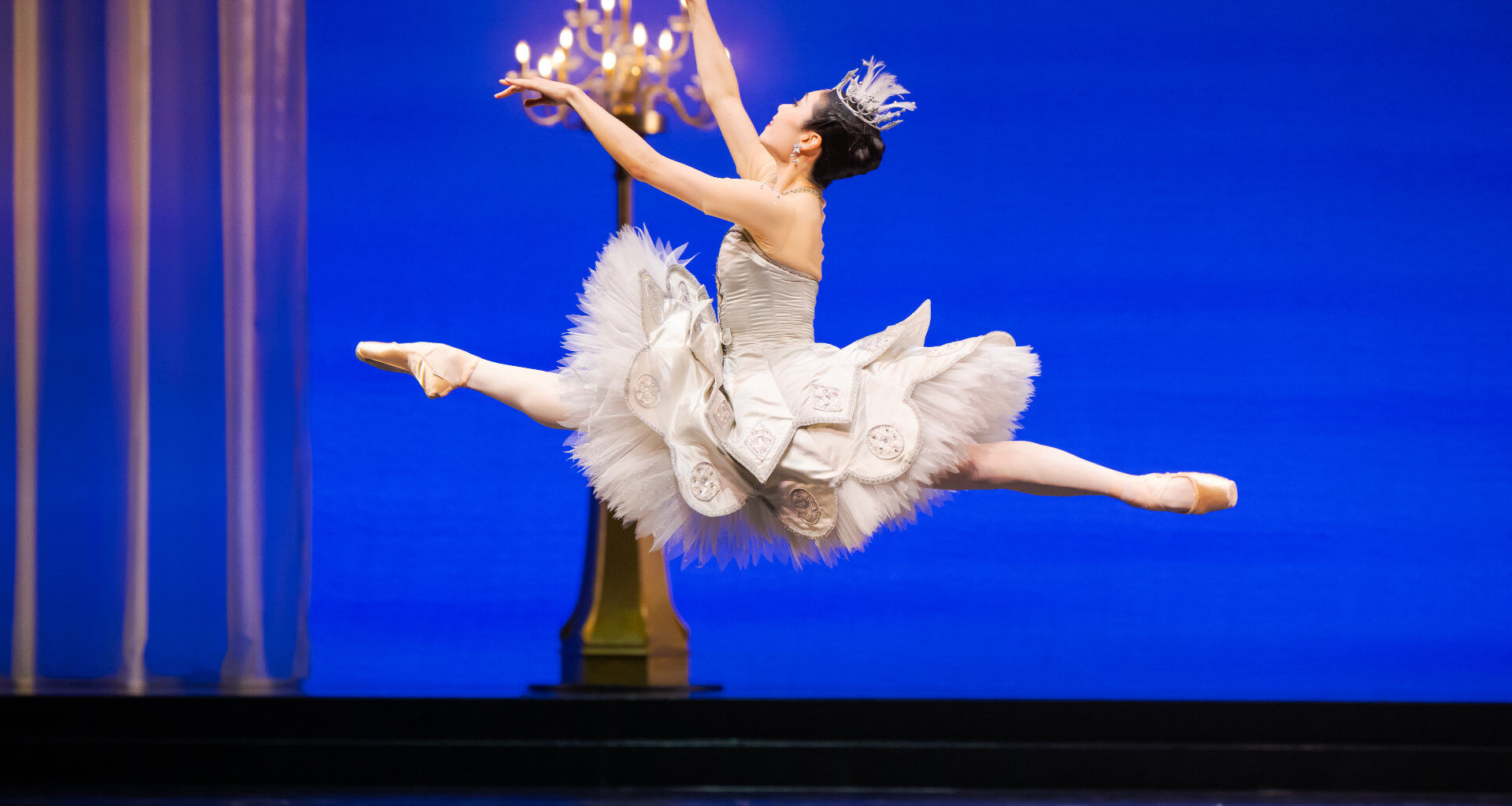
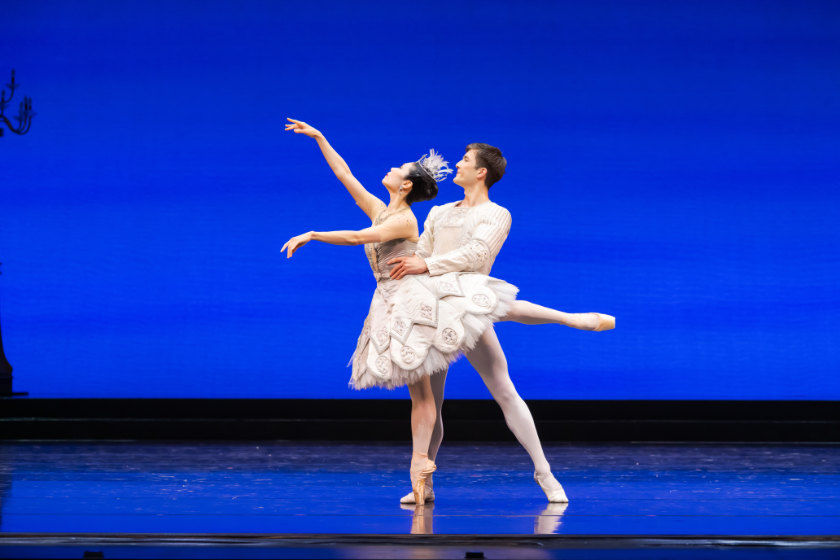
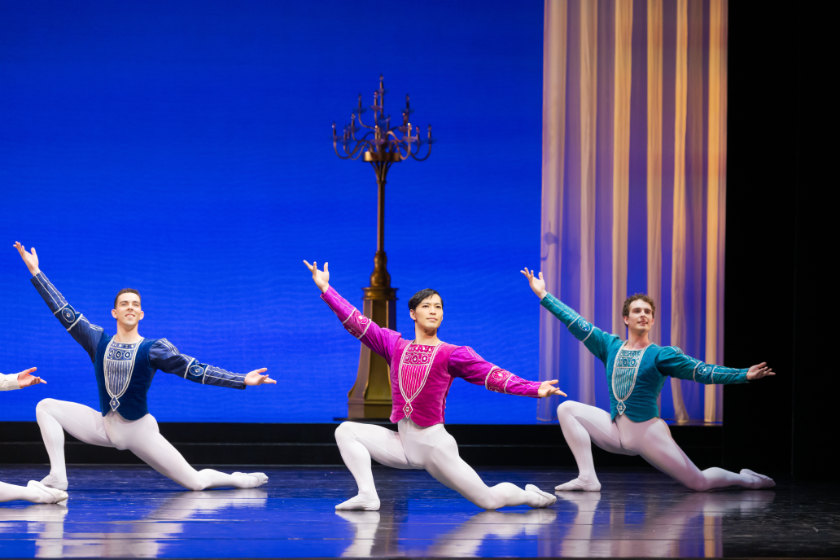
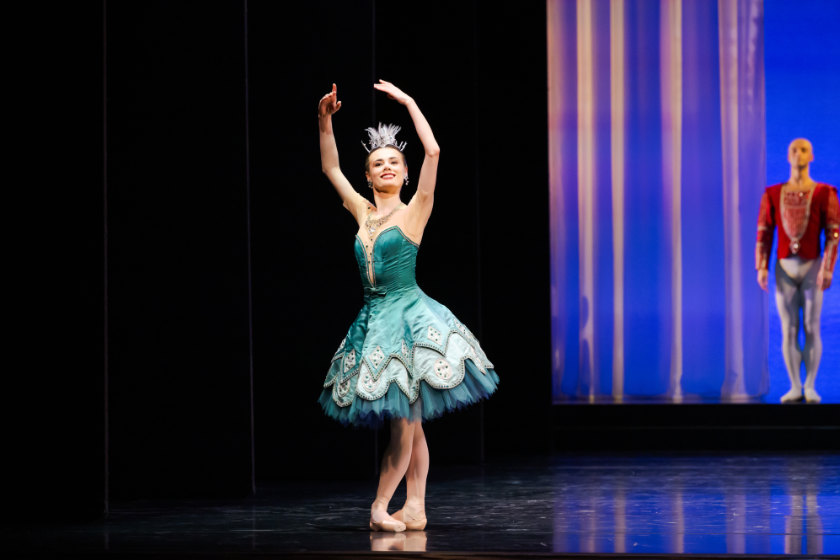
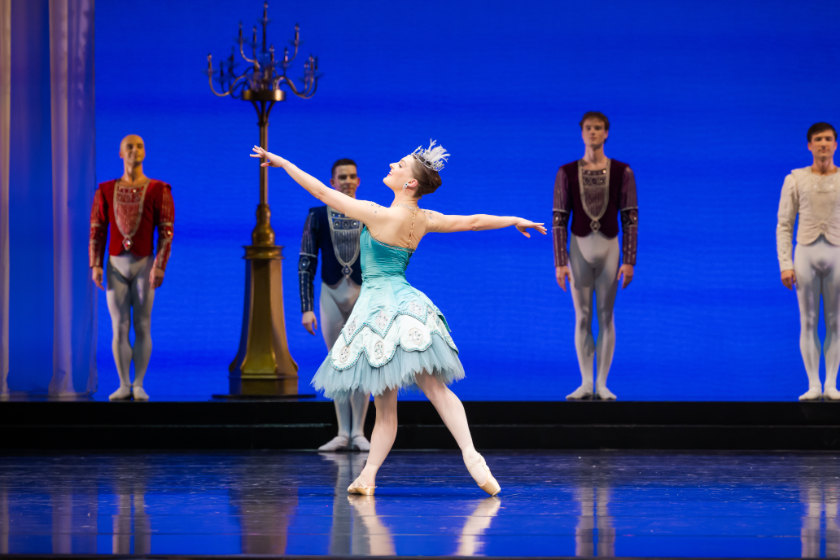
Header image: RNZB principal Mayu Tanigaito in Birthday Offering. Above, from top: RNZB principals Mayu Tanigaito and Laurynas Vėjalis in Birthday Offering. RNZB soloist Zacharie Dun, principal Kihiro Kusukami, and NBOC corps de ballet Aiden Tully in Birthday Offering. RNZB first artist Cadence Barrack and soloist Dane Head. RNZB first artist Cadence Barrack and soloist Dane Head in Birthday Offering.
The Royal New Zealand Ballet’s winter season, in association with Viking, started with impact: the triple-bill of Birthday Offering, Ultra Folly, and Stand to Reason.
Sir Frederick Ashton’s Birthday Offering alone would have been a major draw but for its brief, 30-minute length: this seldom performed ballet, an exemplar of the English style, shows off complexity, skill, and beauty.
With music by Alexander Glazunov (from several different ballets), arranged by Robert Irving, the RNZB’s staging of Birthday Offering stayed true to its 1956 roots when it was first performed by Sadler’s Wells; the company received a Royal Charter months after its première and became the Royal Ballet. The costumes followed Kenneth Rowell’s later designs for the Australian Ballet, though the headdresses follow André Levasseur’s originals and have been especially made for the season.
This grand divertissement begins with seven couples coming on to the stage, each pair in a different colour, followed by solos from each of the women. This was followed by a pas de deux from the senior pair, in tonight’s case Mayu Tanigaito (who showed remarkable control and precision) and Laurynas Vėjalis, who has proven he has the strength to support one of the company’s most senior dancers. It concludes with all the couples returning.
We spotted Kihiro Kusukami and Dane Head among the men, dancers more than capable of equalling Ashton’s illustrious original cast; each of the women carried off complex solos, including the second dancer who had to do her turns while conveying she was windblown. We saw Ashton’s favouring of the épaulement (angling the head and shoulders, performed by turning the body from the waist up), the complex footwork, and the rapid changes of direction, which demonstrated the female dancers’ skills. History records the original as a triumph with the top Sadler’s Wells talent: Margot Fonteyn, Beryl Grey, Svetlana Beriosova, Nadia Nerina, Violetta Elvin, Elaine Fifield, Rowena Jackson, Philip Chatfield, Bryan Ashbridge and Alexander Grant among them. Ashton created the ballet specifically for each dancer, so it is a compliment to their modern counterparts here that they carried out the moves so well.
Birthday Offering, because of its customized nature, might not be everyone’s favourite Ashton ballet, but it is still a treat, moves quickly with intricacy so that the audience is transfixed, and remains faithful to the creator’s intention. Mark Kay and Laura Morera served as choreologists, with Kay working from a Benesh-notated score owned by the Royal Ballet.
Stephen A’Court
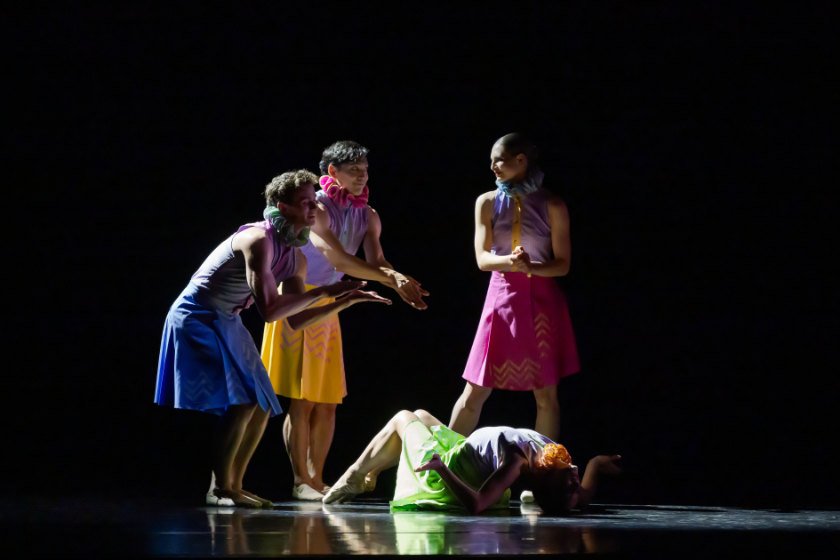
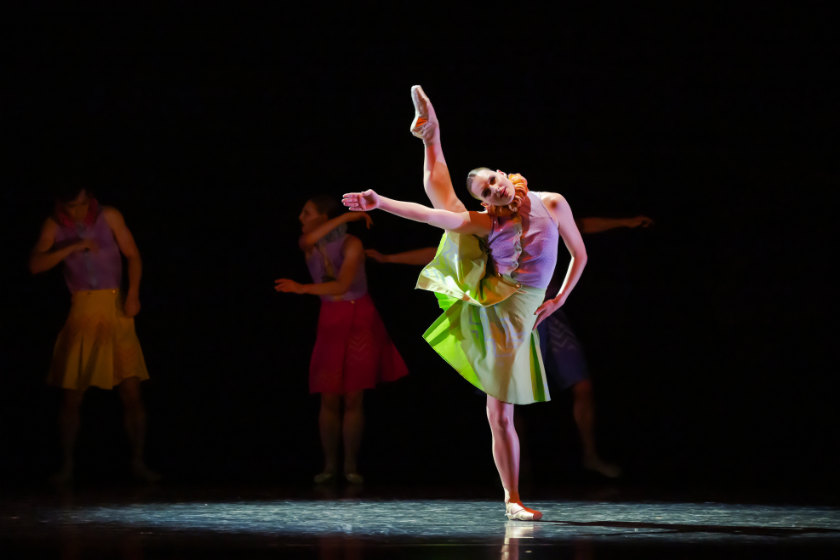
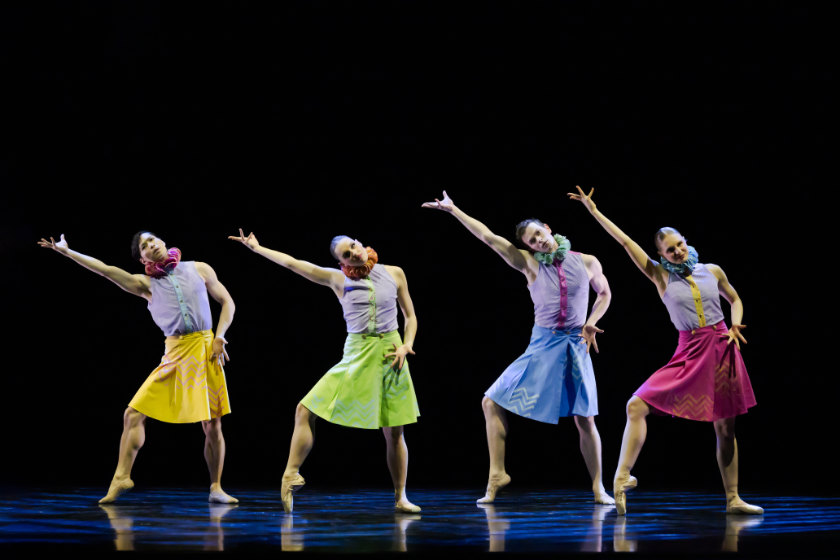
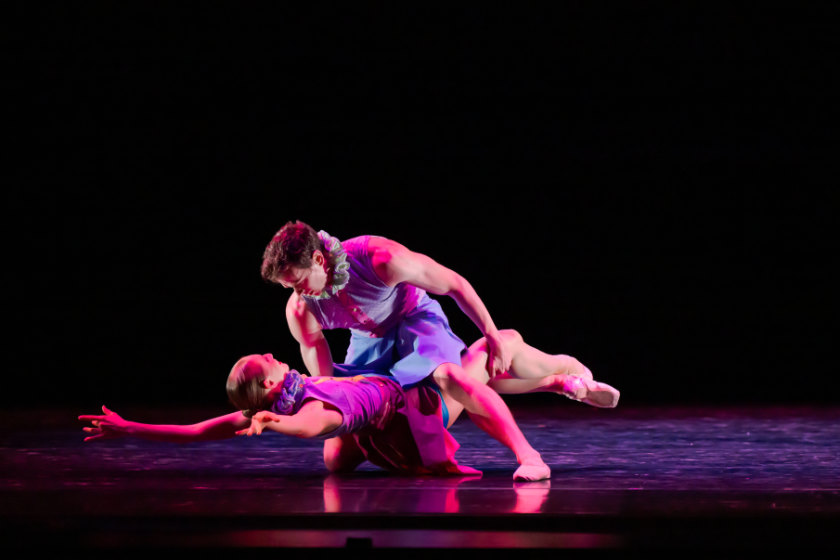
Above, from top: RNZB soloist Jemima Scott and Principal Joshua Guillemot-Rodgerson in Ultra Folly. Principal Kirby Selchow. RNZB principal Kihiro Kusukami, soloist Kirby Selchow, principal Joshua Guillemot-Rodgerson and soloist Jemima Scott in Ultra Folly.
After the intermission, Ultra Folly was a more light-hearted but still meaningful ballet, dealing with the complexity of human relationships: desirous of intimacy at some moments, restrained in others, even full withdrawal on occasion. Humans connect—and distance, disconnect and pressure others—all of which was on display in Sarah Foster-Sproull’s creation. The musical theme of la Folía, dating back to the 15th century, came across as Latinate to our ears (which makes sense considering its geographical origin on the Iberian peninsula), which suited the pace of the choreography, as well as the moments when the dancers themselves applauded. The dancers, meanwhile, were dressed in similar colourful attire regardless of gender, including ruffled collars channelling the Renaissance, based on designs by Donna Jefferis and re-created for 2026.
Foster-Sproull noted that the ballet is a collaboration: while as choreographer she provides the overall structure and content, the dancers generate movement material, making Ultra Folly a living ballet with different iterations.
Ultra Folly proved an entertaining commentary on relationships, and its themes should remain current in decades to come.
You have to applaud the RNZB in how it structured the programme because ending on Andrea Schermoly’s Stand to Reason was the perfect coda.
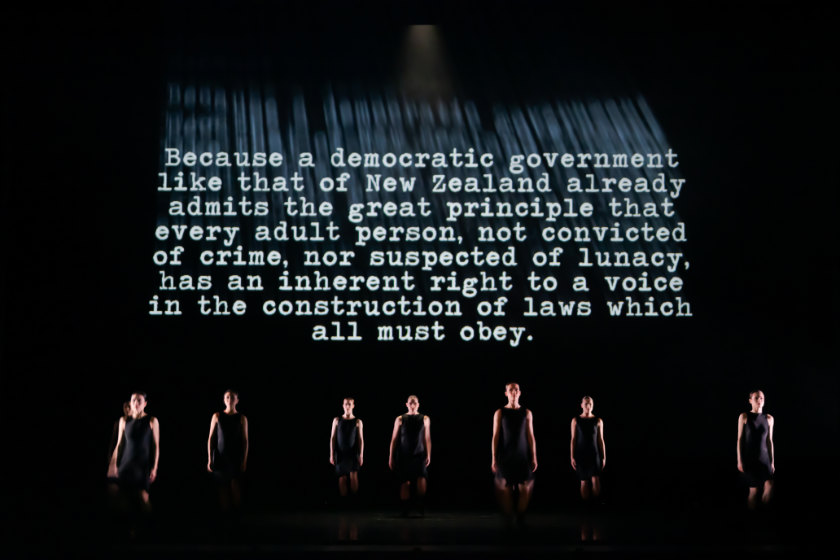
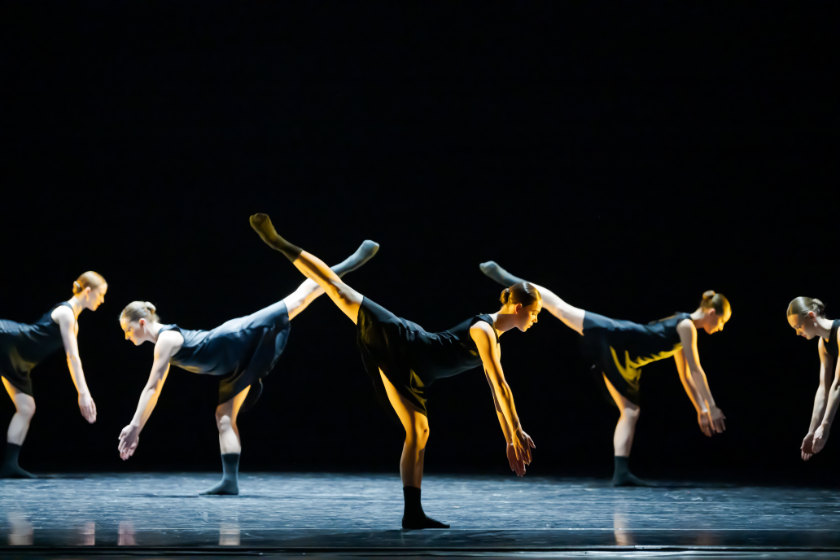
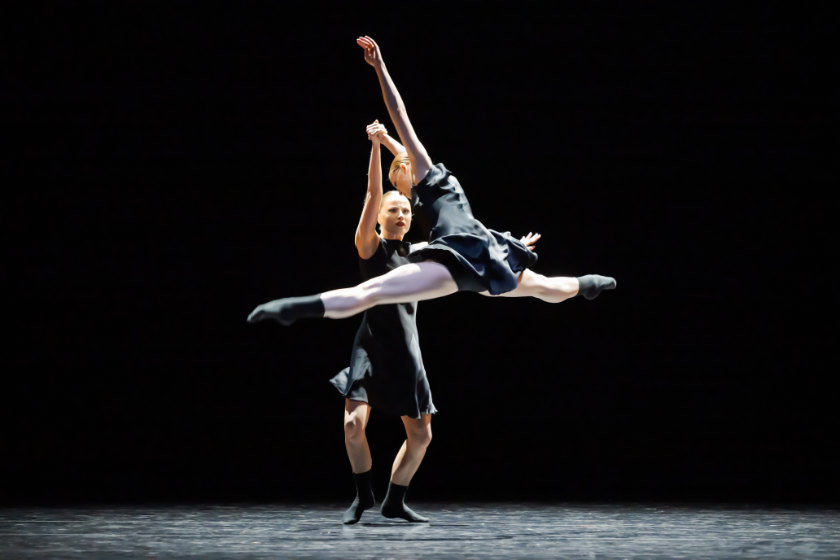
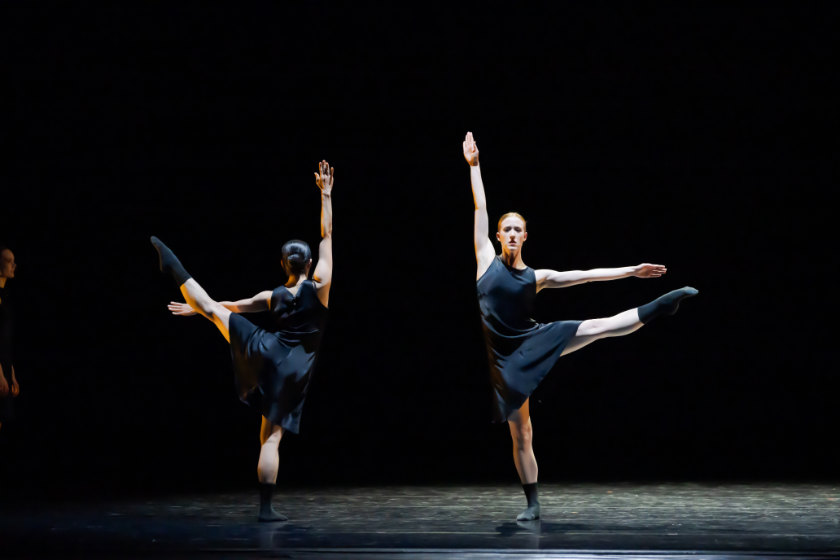
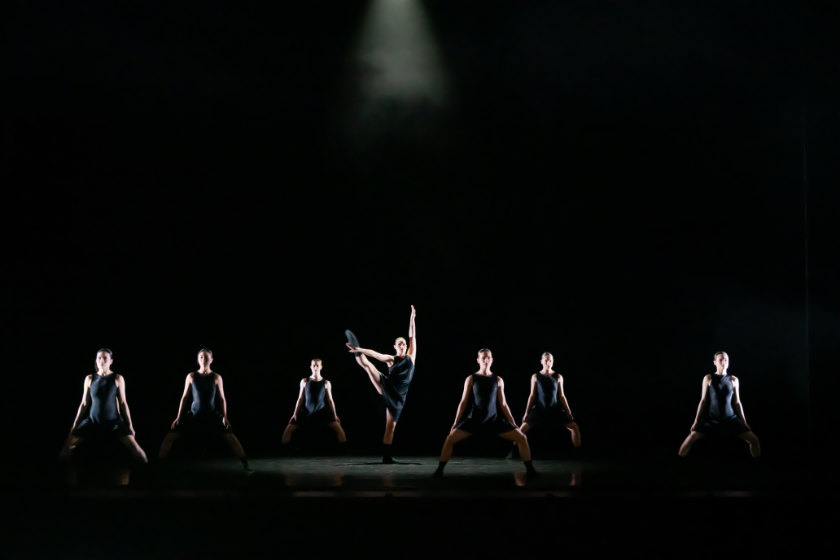
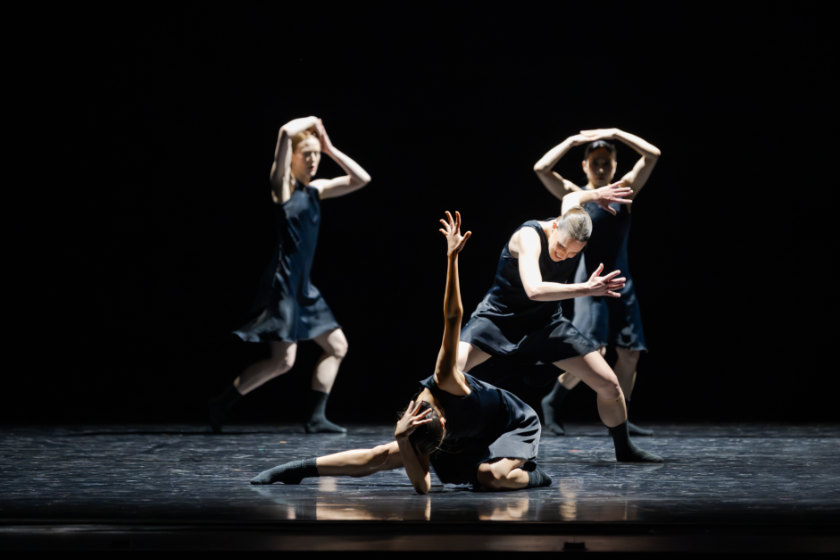
Starting in darkness with eight dancers all in black, projections of typewritten words began appearing behind them on the wall, beginning with excerpts from suffragette Kate Sheppard’s 1888 Ten Reasons Why a Woman Should Vote pamphlet. The ballet commemorates, this year, the 125th anniversary of women’s suffrage in Aotearoa New Zealand. Schermoly has created a ballet about feminine power: while some of the reasons appear on the backdrop, the dancers themselves show their power through controlled, strong movement. One dancer posing with her arms tied is freed by her sisters. One lifts another dancer: women uplifting women. Music from Marin Marais, Johann Paul von Westhoff, and the instantly recognizable ‘Moonlight Sonata’ (‘Quasi una fantasia’) by Beethoven feature.
This is not only a tribute to the women of the late 19th century, but a call to action for today. One of the final animations listed the countries where women still do not have the right to vote, and follows that up with how the withholding of that right is extended to other aspects of life that subjugate women. It was a stark reminder than despite women winning the right to vote in Aotearoa in 1893, the injustice continues elsewhere—a powerful, impactful note that Schermoly successfully gets us to take away.
One female audience member sitting in front of us commented to a friend at the end, ‘What’s changed?’ It was an appropriate sentiment with women still expected in some quarters to bend to male demands, or be both the domestic caregiver and have a career, even in the occident. One only hopes that other men understand that a modern woman has agency: she is not there to fulfil a pre-existing agenda, or satisfy the habits of a past that should have ended long ago. We are sure Schermoly wants both sides to take up her call for action.
The première of the RNZB winter season took place at the St James Theatre, Wellington on July 16, with performances running through the 18th, before travelling to Auckland for July 23–5 at the Kiri Te Kanawa Theatre at the Aotea Centre, then July 31–August 1 at the Isaac Theatre Royal in Christchurch. Further information and bookings can be found at the RNZB website.
Stephen A’Court
Above: Stand to Reason, part of RNZB winter season 2026.
Jack Yan is founder and publisher of Lucire.
You may also likeRelated postsAlessandra Ambrósio and daughter Anja front Jordache’s…
Cass Bird
Alessandra Ambrósio and her nine-year-old daughter, Anja Ambrósio Mazur,…
Sponsored video: Bambi Northwood-Blyth and Dan Single…
A Lucire special promotion
‘If a man suddenly gives you flowers,…
A positive feeling for this year’s Miss…
Miss Universe
Above Katie Taylor, Miss Universe New Zealand 2009. The…
Alicia Aylies, Miss Guyane, wins Miss France…
TF1/SIPA Press/Bertrand Noël
Via Alicia Aylies/Twitter
Alicia Aylies, Miss Guyane, has been…
Elsa Hosk appears on Victoria’s Secret’s first…
Swedish-born model Elsa Hosk appears on the cover of Victoria’s…
Sarah Jessica Parker is the new face…
Jordache has announced that actress Sarah Jessica Parker is the…
Many of you will know Paula Sweet’s photography in the…
Claudia Schiffer to front YSLs spring 09…
We’re hearing that Claudia Schiffer will replace Naomi Campbell for…