
For the social supermarket, they partnered with Foodstuffs North Island.
Wainui said they would initially serve about 80 families a week, or just over 4000 a year, with capacity to expand as demand and food supplies grew.
Unlike a traditional food bank, families will be able to browse shelves and select the groceries that best suit their household.
For the first three to six months, it will be a free service, and there won’t be a limit to what kind or how many items families can choose, while the organisation learns how much food is needed.
Wainui said it might introduce a small contribution at a later stage to encourage conversations around budgeting and financial wellbeing.
The supermarket will initially accept referrals only from within Kirikiriroa Family Services, before gradually opening to external referrals as staff refine the model.
Alongside food support, clients will have access to financial mentoring, social workers and other wraparound services designed to tackle the underlying causes of hardship.
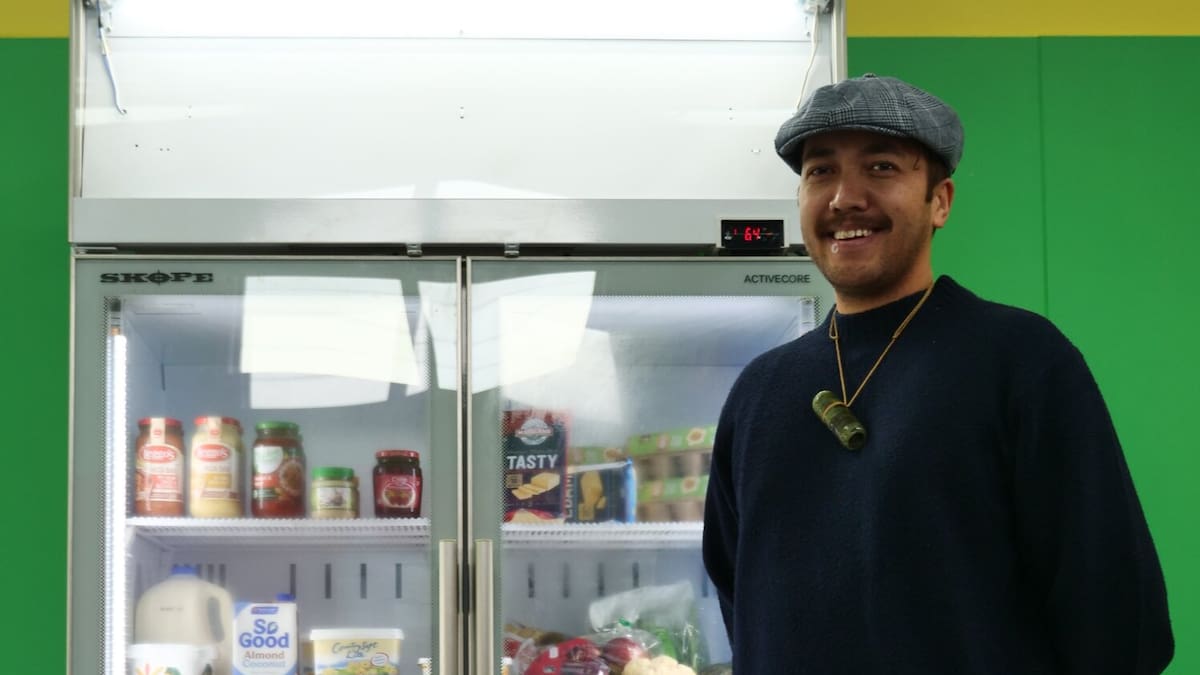
Kirikiriroa Family Services chief executive Jaye Wainui. Photo / Tom Eley
Wainui said the supermarket was intended to be more than an emergency food service.
“This is really just a hook. For one need, there are usually multiple ones sitting there.”
He said the organisation’s priority was to support families with children and to ensure assistance reached those who needed it most.
Food insecurity remained a significant issue across the region, with many families reluctant to seek help because they felt others were worse off.
Giving people the ability to choose their own groceries could help reduce the stigma often associated with food assistance.
“Being able to choose what you can take home … for me, it’s just seeing the kids’ faces.
“To see these kids walk up to a shelf and go, ‘Wow’. That to me is giving them that choice.”
One of the biggest changes the organisation had seen was the kind of households needing support.
“The people who are asking for food support – we’re seeing large numbers of working families, and that’s the real shocker,” Wainui said.
Budgeting advice alone was often not enough when familiesdid not have enough money to cover essential costs.
Wainui said the social supermarket would initially serve about 80 families a week. Photo / Tom Eley
The social supermarket will be largely volunteer-run, supported by one full-time staff member funded for the first year by the DV Bryant Trust.
Wainui said that, for him, success would ultimately mean fewer families needing food support.
“But it’s a reality that food insecurity is going to be here for a long time.”
Kirikiriroa Family Services’ supermarket is Foodstuffs North Island’s 15th social supermarket partnership across the North Island, Foodstuffs North Island Head of Social Supermarkets, Willa Hand, said.
“Social supermarkets are about much more than food,” Foodstuffs North Island head of social supermarkets Willa Hand said. “They offer people choice and mana while connecting them with services that can help address challenges they may be facing.
“Every community is different, which is why we work with local partners that understand the needs of the people they support.
“We’re delighted to be partnering with Kirikiriroa Family Services Trust to bring this model to [Hamilton] for the first time.
“Our local buddy store, Pak’nSave Mill St, will play an important role in supporting the social supermarket, providing ongoing training, guidance and practical support to ensure its success.”
Kirikiriroa Family Services chief of partnerships Aroha Te Kanawa said the project supported whānau beyond immediate food needs.
“We want this to be a place where people feel welcomed, supported and connected.
“The social supermarket is one part of a wider vision that includes access to services, opportunities to learn new skills and community gardens.
The social supermarket is expected to open on August 18.
Tom Eley is a multimedia journalist at the Waikato Herald. Before he joined the Hamilton-based team, he worked for the Weekend Sun and Sunlive. He previously worked as a journalist at Black Press Media in Canada and won a fellowship with the Vancouver Sun.