
The situation is expected to result in slower response times for emergencies in some communities.
Earlier this month the Herald reported some volunteer firefighters in Auckland are no longer willing to be the “back-up” during strike action by their professional counterparts.
An Auckland volunteer senior firefighter, who responds to emergencies in his spare time and sometimes while working his fulltime job, said his brigade has now made themselves “unavailable” to respond to calls outside their “normal response area”.
“Having to often drop tools in the middle of the day to respond to calls which are well outside of our community, while we’re of course willing to help, it’s not why we signed up to do this,” the firefighter, who wished to remain anonymous, said.
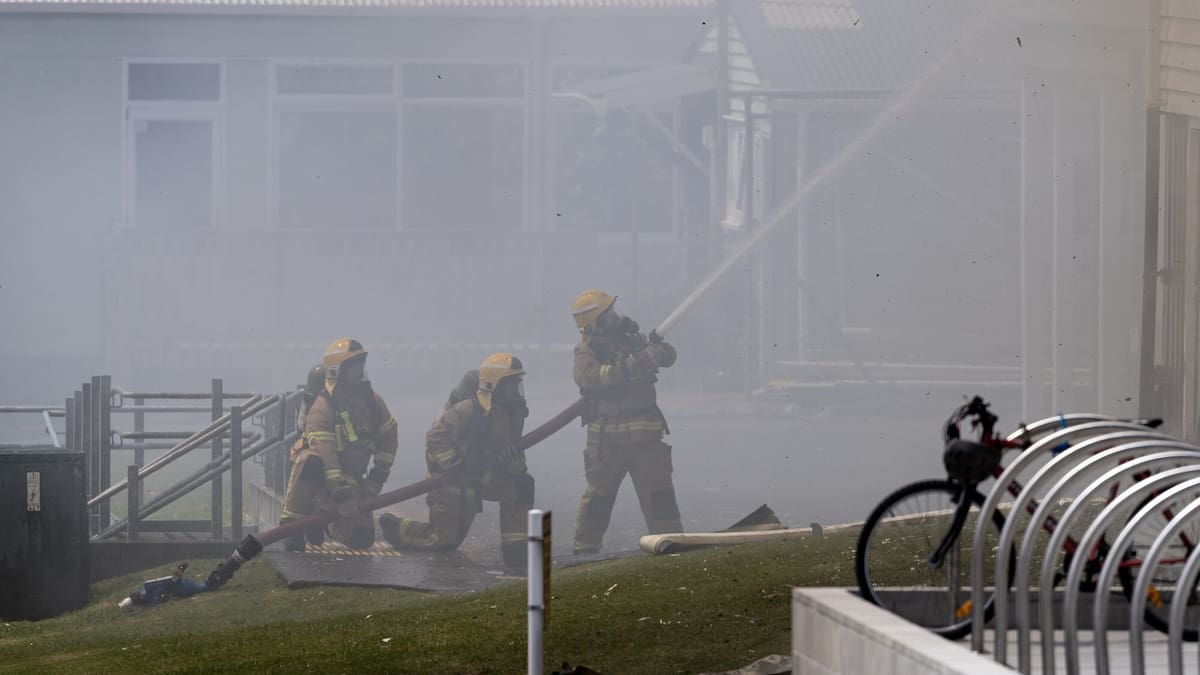
The sports pavilion at Northcote College was destroyed while firefighters were on strike, which meant volunteer firefighters were needed causing a delay in crews attending. Photo / Dean Purcell
Fire and Emergency is urging the public to take extra care during the strike period.
Fire and Emergency will prioritise urgent incidents during the hour-long stoppage and may not attend lower-priority callouts, including private fire alarms where there are no signs of a fire, small rubbish fires, traffic-management requests and animal rescues.
Arrangements have been put in place with Hato Hone St John and Wellington Free Ambulance to help ensure medical emergencies continue to be covered in areas affected by the strike.
“We remain focused on achieving a fair and sustainable settlement with the NZPFU so we can continue working to keep communities safe,” Stiffler said.