
The first option was expected to cost $3.5m to $4.5m, the second $7m to $9m, and the third $23m to $25m.
New planting, upgraded street lighting and prioritisation of events and markets were proposed to improve the city centre.
Option 1 was the most popular with submitters, with nine respondents in favour, followed by seven positive responses for Option 3.
Respondents welcomed the proposed lighting and potential for a vibrant eatery precinct.
“Lighting is super-important, so lots of fairy lights and uplighting on trees please for that evening ambience,” respondent Sophie wrote.
Those in favour of Option 3 praised the opportunity for tamariki to play near the river.
“Option 3 looks sweet, absolutely love the idea of a kids’ play area along the riverbank,” an anonymous respondent said.
Respondents also stressed the importance of including planting and connecting bike routes in the plans.
However, opposition was equally strong, with 35 respondents criticising aspects of the plans.
Respondents Sarah and Kevin suggested the city centre needed cleaning up first to encourage businesses into existing empty shops.
Other critics called for roading and stormwater infrastructure upgrades elsewhere before actioning the proposed plans.
Six submissions compared the proposal to the controversial Streets for People trial on Grey St.
The co-owners of No 8 Lowe Street Butchery, Daniella and Trent Lillis, told Local Democracy Reporting that they wanted to see positive change in the city centre, but still planned to sell their shop this year because of rising rent and customers struggling with the cost of living.
While the proposals looked appealing, Daniella Lillis was not convinced they would deliver the desired results.
“They can make everything pretty, but if the shops are empty, nothing’s going to happen. We’re not bringing tourists to Gisborne because everything is dirty.“
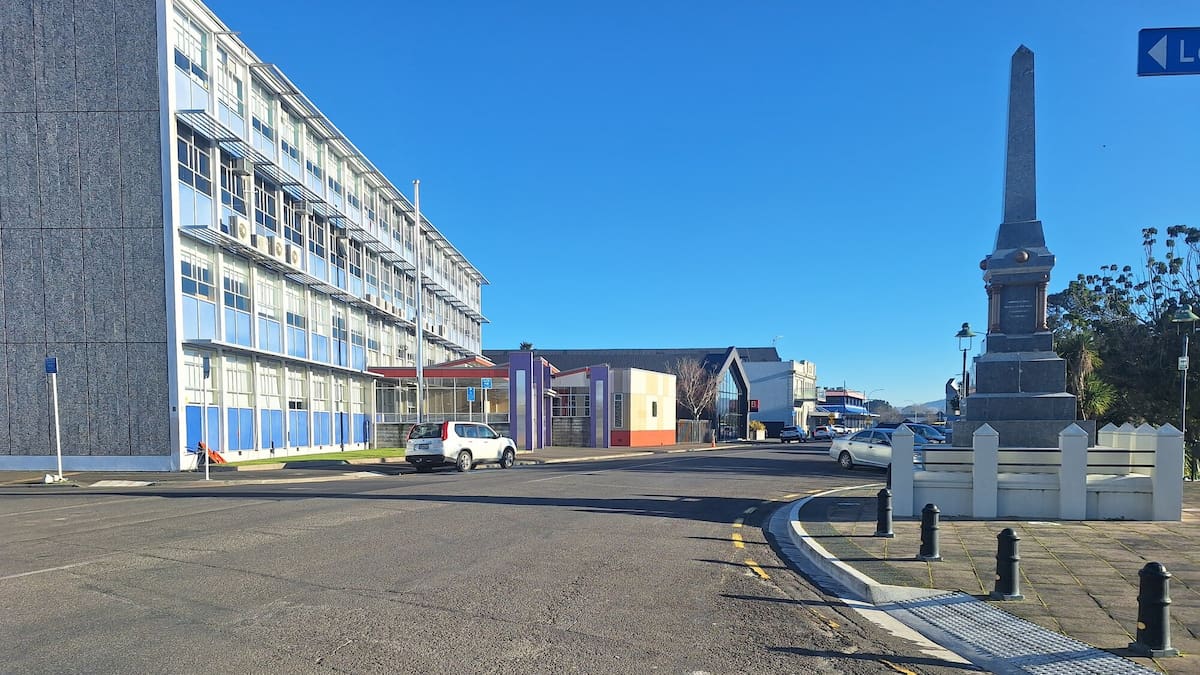
Gisborne District Council expects to present feedback findings to its environment and communities committee on October 1. Photo / Imogen Brophy
Cleaner streets and more rubbish bins would do more to improve the CBD’s appeal, she said.
She took particular issue with making Reads Quay one-way in option 3, believing it would have a negative impact on the community.
“We have the fire brigade and we have the ambulance; they’re all based over there, so I don’t think this road being closed would be any good for the community.”
Local Democracy Reporting asked Gisborne pedestrians about the proposals.
Aimee Cameron said having more eateries in a pedestrian-friendly area would be a good idea.
“That would be cool. I see they park those food carts along there sometimes, so maybe having something like that.”
However, a playground beside the river would need careful consideration because of its proximity to the water and limited space, she said.
Shelly Pokai questioned how the upgrades would be funded and said the council should focus on more pressing priorities.
“You can pump it up, and you can build a new building with the same building, or you can use the same building. It serves its purpose if it’s old or new, right?”
Priority should be given to filling empty shops and supporting people struggling with the cost of living, she said.
The council expects to present the feedback findings to its environment and communities committee on October 1.
LDR is local body journalism funded by RNZ and NZ on Air.