
The Ministry for Primary Industries (MPI) issued detailed guidance online of the disease symptoms in birds and how to manage it.
“MPI, the Department of Conservation (DoC), the Ministry of Health, and Health New Zealand have been working together with industry and local councils to get ready.
“Our response is designed to manage the risks of H5 bird flu, to protect poultry production, and reduce impacts on wildlife and communities,” Hoggard said.
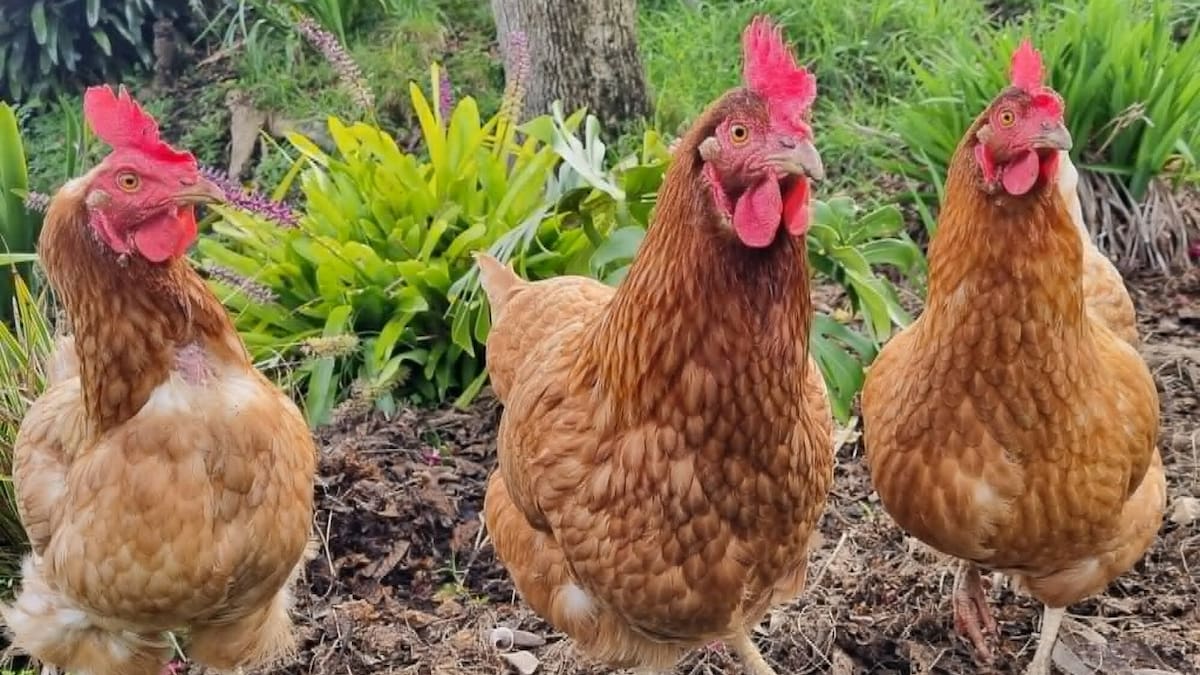
Gregory has six laying hens.
“They’re quite young hens, they’re about 2-years-old at the moment and so they still mostly lay an egg each a day, except it slows down over winter a bit.”
Gregory has lived at Whataupoko for about nine years. She previously lived at Makauri where she also had chickens, and her family had chickens while she was growing up.
She is extremely concerned at the threat the disease poses to chickens, as well as native birds.
“If it gets in – they’re gone. I’ve had a look to see what can be done as a domestic chicken owner … symptoms to look for and all that and also what I could do.
“One of the things is you can lock down your coop to prevent contact between the chickens and wild birds. That’s a hard call because my chickens are free range. They have a coop but they’re out most of the day and I put them back in the afternoon.
“I don’t know if I’d want to have chickens if I had to lock them up in a cage all day. It’s hard because I supply my kids with eggs. Three of my children live in Gisborne and so those six chickens [provide] eggs for four families every week, so it’s a cost-saving thing.
“It’s also nice to have eggs and … I know what they’ve eaten, I know what I’ve fed them.”
In a press release, the Department of Conservation said it was working with the MPI, Ministry of Health and Health New Zealand/Te Whatu Ora as part of the “One Health approach to prepare for the arrival and spread of the H5 strain in New Zealand”.
“Last week we began vaccinating core breeding populations of five of our most threatened birds – kākāpō, takahē, tchūriwat’/tūturuatu/shore plover, kakī/black stilt and kākāriki karaka/orange-fronted parakeet,” DoC deputy director-general Cat Wilson said.
Department of Conservation senior science adviser and wildlife vet Kate McInnes vaccinates a takahē for avian influenza at Willowbank in Christchurch. Photo / Department of Conservation
Three hundred birds were receiving their first vaccines, with booster shots to be completed a month later.
“If H5 spreads here we may consider vaccinating other threatened species. It won’t be possible to vaccinate all endangered birds, but we can focus on those species where the full two doses of the vaccine can be safely given to achieve protection,” Wilson said.
Gisborne District Council said it was “sharing consistent information, helping raise awareness and directing people to the latest MPI guidance”.
“If bird flu becomes a local threat, we’ll continue working alongside MPI, Health New Zealand, DoC and other partner agencies as part of the One Health response,” a council spokeswoman said.
“Any additional response measures or regulatory actions would be led by MPI.”
MPI said: “If you see three or more sick or dead wild birds in a group, report it immediately to the exotic pest and disease hotline on 0800809966 from anywhere in New Zealand.
“Don’t handle or move the birds.”
More information is available on the agency’s website.