
It’s a clear winner for New Zealand, but that doesn’t mean there aren’t questions. New Zealanders need clarity around the points of contention and, despite the deal’s huge benefits, an understanding of what its costs may be.
The FTA has had strident critics, including, most prominently, one of the National Party’s coalition partners, New Zealand First, whose leader Winston Peters has called it “a bad deal for New Zealand”.
It’s one of the clearest policy divisions within the National-NZ First-Act coalition, at a time the trio will need to show unity to see off the left bloc’s challenge at this year’s election.
NZ First’s criticisms primarily focus on the agreement’s immigration settings and investment clause.
That investment provision, which refers to a US$20b ($34b) investment goal over 15 years, has also been targeted by the Labour Party, whose leader Chris Hipkins warned exporters could have their market access revoked if New Zealand can’t fulfil its commitment.
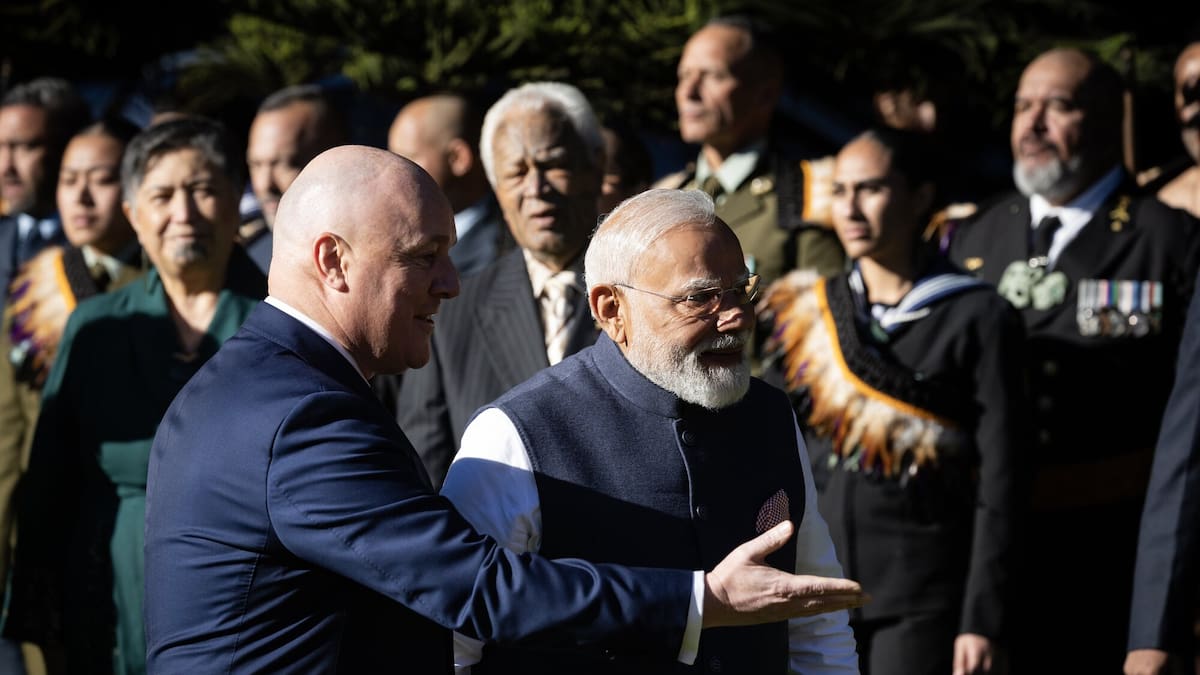
As the Herald reported this week, the Indian side of the argument says this figure is a promise by New Zealand – but the New Zealand side argues the Government is only obliged to “promote” investment in India to hopefully reach the goal. After Indian Prime Minister Narendra Modi said three times during his visit to Auckland last weekend the figure was a “firm commitment” from New Zealand, Peters told the Herald it was “breathtaking stuff” that Modi could come to New Zealand and there was still confusion.
McClay reiterated to Jamie Mackay on The Country radio show on Wednesday the contested provision’s $US20b was an “aspirational target” to promote investment. He said it was “very clear in the legislation” and New Zealand’s responsibility was to promote, not invest.
While, on current polling, National will need NZ First’s support if it wants a chance of forming the next Government, it doesn’t need it to get the FTA across the line.
Labour has said it will support the free trade agreement. That in itself speaks volumes about the value of the deal.
Then former Prime Minister Sir John Key weighed in this week, saying anyone opposed to the FTA is a “clown”.
The descent into name-calling, and it’s clear who the clown barb was aimed at, does risk this becoming something of a circus and will do nothing for the coalition partners’ relationship.
That said, Key’s arguments in support of the deal are sound. Over time, the importance of a strong relationship with India will become more and more obvious.
And while NZ First may well be playing to its base ahead of the election, it may also be turning off a sector of the population at the same time.
The Rotorua Daily Post reported this week that a prominent local politician who had been considering a candidate role with the party backed away after Jones described concerns about migration linked to the FTA using the phrase “butter chicken tsunami”.
First-term Bay of Plenty regional councillor Raj Kumar described Jones’ comments as “cheap and low-level propaganda” fuelling misconceptions that everyone from India moving to New Zealand was a butter chicken cook or chef.
Despite Jones’ protestations that he was using hyperbole to get “cut-through” on political debates, the comment, which was widely reported, fell well short of the standards we expect from our representatives.
Yes, there is debate to be had over a major undertaking like the FTA. Kiwis need to know what it means for us and what the potential ramifications are.
If that can be achieved without the slings and arrows of outrageous metaphors, all the better.