
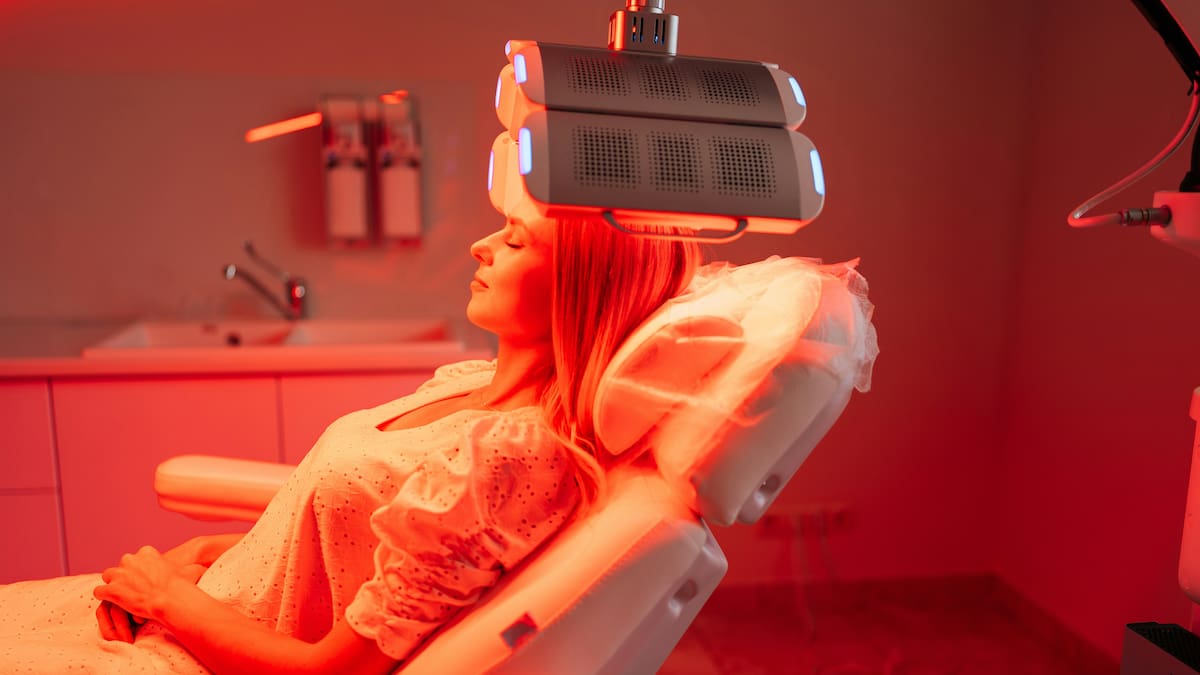
“As much as you might be tuning into the biohackers who are all in their IV drips and out there on $157,000 a day of supplements and on their NAD+ infusions and all the rest of it, there’s no evidence for any of that crap, that any of it works,” Mansberg says.
People not knowing what’s good and bad for them isn’t the problem, according to Mansberg. She believes the real challenge lies in the ideal version of healthy living feeling incompatible with real life.
Long days at work, running kids to activities, caring for ageing parents – the regular responsibilities of everyday life can make even preparing a healthy dinner feel ambitious.
“If you think at the end of the day you’re going to come home and open your fridge to a vibrant array of colourful, fresh vegetables waiting to be effortlessly chopped and put into a lovely raw salad, I mean, good for you,” she says.
Dr Ginni Mansberg is a bestselling author and women’s health expert.
Mansberg’s advice is to stop treating health as an all-or-nothing project.
“Don’t choose the thing that you hate the most, that is going to be the biggest punish, because that’s a guaranteed fail,” Mansberg says.
“Go for the low-hanging fruit. Go for the things that are actually achievable in your life.”
That might mean making one healthier choice within an otherwise imperfect day.
“Have your pizza, but have a cucumber and have an apple,” she says.
“Everything that you do for your body that’s good is good. And everything that you don’t do for your body that’s bad, that’s also good.”
The aim is not perfection.
“We’re just moving in a generally good direction, as opposed to doing a life transplant, which is not really that feasible.”
Listen to the full episode of The Little Things for more with Dr Ginni Mansberg on:
Why full-body scans may create more problems than they solve.The wider health benefits emerging around GLP-1 drugs.What your diet could be doing to your gut microbiome.
The Little Things is available on iHeartRadio, Apple Podcasts, Spotify or wherever you get your podcasts. The series is hosted by broadcaster Francesca Rudkin and health researcher Louise Ayrey. New episodes are available every second Saturday.