
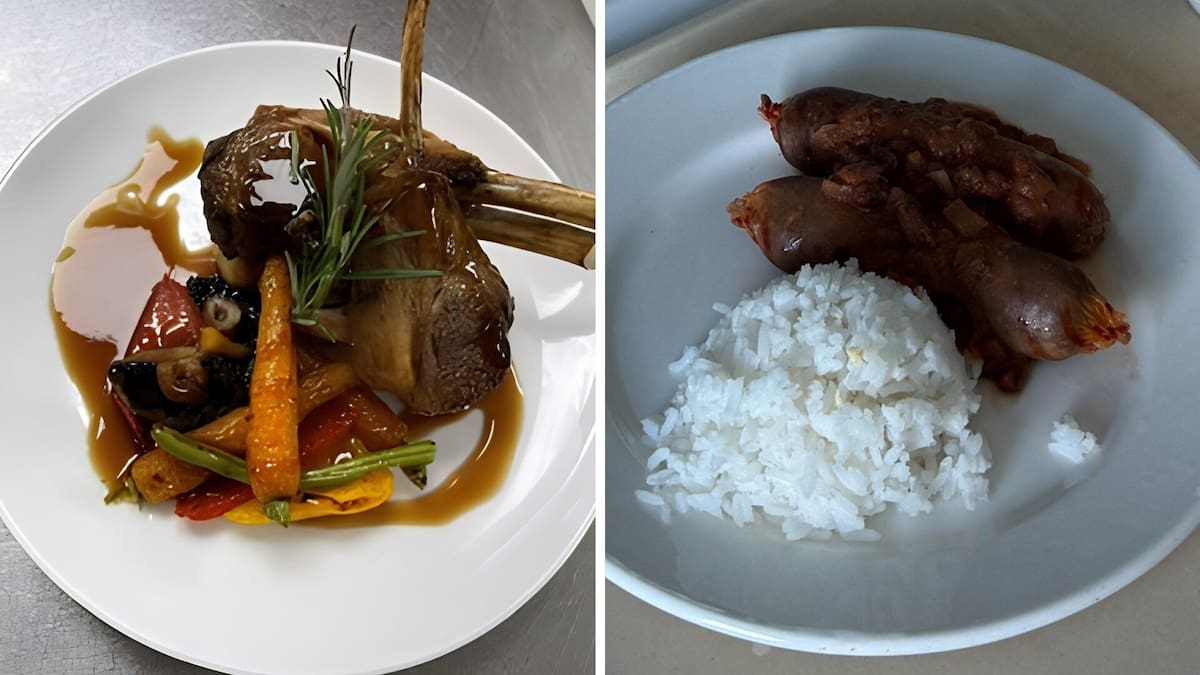
Most large public hospitals in New Zealand, such as North Shore Hospital and Auckland City Hospital, hold contracts with food service provider Compass Group NZ; however, a few major hospitals have their own in-house kitchens or opt for other contract food providers, including Waikato and Christchurch Hospitals.
All public hospitals adhere to standardised nutrition standards and menu guideline.
But tight food budgets make delivering palatable hospital food that caters for all patients’ preferences a difficult task, University of Auckland’s Andrea Braakhuis says.
Adele Blake, 20, is an AUT nursing student who was hospitalised after a stroke. She has coeliac disease and found the hospital food did not cater for her condition. Photo / Dean Purcell
This month, the Herald reported on coeliac patient Adele Blake who was consistently offered gluten sandwiches in Waitākere Hospital and served inedible “slop”.
Adrienne Robertson, who was recently discharged from North Shore Hospital, says the meals were “really unappealing” and many patients in her ward were leaving meals to turn cold on their plates.
“Sometimes because I was waiting for surgery and then it would get pushed back, they would just forget me, or I’d get food that someone else had rejected. So then it would be sort of a cold, congealed mess,” she says.
Other patients spoken to by the Herald described public hospital food as “really yummy”, saying it came in large portion sizes and included options such as roast chicken, mash and broccoli.
Auckland University associate professor and registered dietitian Andrea Braakhuis says getting back into eating food and following the correct diet after surgery is important for recovery.
Braakhuis, an associate professor who teaches dietetics at Auckland University, says part of her role involves supporting students who carry out placements within hospital food services.
“We kind of see it all.”
Hospitals with in-house catering, like Waikato and Christchurch, tend to get good patient reviews, she says.
“You see a really big difference when you go to private hospitals and even a step up when you go to some of these retirement facilities, like aged care assisted living arrangements.
“I mean some of their food is like restaurant quality – it’s amazing. But that comes at a cost.”
Does Braakhuis think the move away from in-house kitchens to mass-scale food providers was a mistake?
“Yes, I do, well … it’s hard to know for sure. What I will say is that the move to the national contract has meant less dietitians at each of the sites … that maybe had an oversight on the quality and nutritional value of the food,” she says.
“It’s a really difficult situation to deliver healthy, tasty, quality food with the budgetary constraints across Health NZ.”
A gluten-free breakfast nursing student Adele Blake was served at Waitākere Hospital.
Dean Talavera has been staying at Middlemore Hospital with his mum, Belle Talavera, to support her while she undergoes chemotherapy treatment.
The “bland, strange tasting” food, small portion sizes and little variation in meals served to Belle has meant Talavera is often having to buy extra food from the downstairs café.
He has been spending upwards of $100 on takeout food over the course of a week for his mother. He’s also having to buy his own meals because he wants to stay by her side in hospital.
“I was speaking with a nurse recently who raised concerns about the food now being made outside the hospital,” Talavera says.
“They used to have their own on-site kitchen, but the food is now prepared, delivered and distributed off-site, which she felt put these patients at greater risk.
“Food safety matters far more for patients like Mum because their immunity and blood counts are lower than usual.”
Health New Zealand provided a written response from Dr Vanessa Thornton, Group Director of Operations Counties Manukau, who said the contracted food service provider at Counties Manukau incorporated comprehensive food safety procedures and was independently verified to ensure ongoing compliance.
Meals chemotherapy patient Belle Talavera was served at Middlemore Hospital in her recent stay.
Meals are served under strict food safety controls, and if a patient’s nutritional intake is a concern, the ward could refer them to a dietitian for assessment and support, Thornton says.
Chemotherapy affects Belle’s taste buds so that food can make her nauseous and she often has less of an appetite, but the meals on offer make it difficult for her to find the enthusiasm to eat well in hospital.
Talavera worries about this outcome because maintaining good nutrition and balance in his mum’s diet is vital for helping build up her strength and immunity in her fight against cancer.
Dietitian Helen Gibbs said families based rurally might not be able to afford the fuel to deliver regular food supplies to whānau in hospital and it wasn’t fair that they were being put in this position by the public hospital environment.
Gibbs, who currently owns a private practice based in Dunedin, has worked extensively across a range of dietetic roles for almost 30 years, and throughout her career, hospital food has been a prevalent concern.
In 1988, Gibbs began working as a dishwasher in the hospital kitchen at Princess Margaret Hospital in Christchurch before working her way up to becoming a diet cook: “In those days the dietitians were actually the ones running the kitchen.”
She says the food was far better back then as there was a six-week cycle menu that was changed twice a year, and individual patient needs could be taken into account across the hospital.
Patients who are staying longer in hospital, for over five days or above the five-10 day average for acute admissions, could be at risk of becoming malnourished from hospital food, she says.
“The meals are going to meet the short-term needs of the average person, but who is average? That’s really one of the biggest challenges we face.
“It’s that on the one hand you might have a rugby player-sized person with a very high nutritional need, and then there’s perhaps an older person with a poor appetite, who’s got no extended family. Are they going to be adequately nourished?”
Malnourishment seriously increases the risk of falls in older patients or slows down patients’ recovery from an injury or surgery, she says.
Robertson says during her visit to hospital a lot of the food was high in carbs, salt and sugar, with foods like margarine, bread, ice cream and jelly.
Thornton says menus are developed by qualified dietitians in consultation with HNZ.
She says the perception of meals is “highly subjective” and they recognise individual preferences for taste, flavour, and portion sizes vary, so HNZ provides a choice of four portion sizes and food service associates work directly with patients to support menu selection.
If a patient’s nutritional intake is a concern, the ward could refer them to a dietitian for assessment, and provide them with additional food or oral nutrition supplements, HNZ says.
Meanwhile, in private hospitals such as Southern Cross Healthcare, patients can opt for smoked salmon and scrambled eggs for breakfast or scotch fillet for dinner, choosing from a menu that appears similar in appearance to hotel room service.
At Southern Cross Healthcare private hospitals, patients can choose between lamb with roast vegetables or salmon with cous-cous.
Each Southern Cross private hospital has a slightly different offering on the menu as they use seasonal and locally sourced ingredients, and the menu caters for a broad range of dietary requirements such as halal, high-protein diets and puréed meals.
Paediatrician Dr Renee Liang performs locum work across multiple hospitals and says chronic understaffing and workforce shortages could also impact meal outcomes for patients.
“If, for example, there is an emergency or really sick patients on the ward, then staff will need to prioritise their time,” Liang says.
Current health-funding issues have caused a reduction in the budget for hospital services, she says, as well as a reduction in “back end” staff who oversee essential systems planning.
Often in a hospital environment, patients might be changing wards and beds throughout the day, and complex meal delivery systems require food to be correctly delivered, and patients with special diets need to be supplied the correct menu.
“If there are complaints about incorrect food delivery, that is a symptom of understaffing and under-resourcing at hospitals, in both clinical and non-clinical roles,” Liang says.
A nurse at Middlemore Hospital, who the Herald agreed not to name, says there are constant staffing shortages, and her ward is usually down one nurse every shift with patients regularly being placed in the corridors.
Gibbs says if there are multiple older patients on a ward who require feeding assistance, low staffing levels will mean these patients aren’t able to properly eat the meals they are served.
Hospital food can also be politically risky. The move in 2024 to cut toast and spreads from the menu at Wellington Regional Hospital for mums who had just given birth prompted fierce public backlash.
The proposal was quickly scrapped, with then-Health Minister Shane Reti saying it was “disappointing and unacceptable”.
In Gibbs’ view, this is because food is not just purely about nutrition and plays a role in increasing our feelings of wellbeing and safety in a hospital environment.
A 2020 Massey University study that examined experiences of 44 Māori, Pacific and Chinese patients in hospital found the menu for New Zealand’s public hospitals was not considered culturally appropriate by the majority of participants.
For Belle Talavera, who is of Southeast Asian descent, the Westernised palate of meals has been an added difficulty in trying to sustain her nutrition.
Talavera would typically eat more high-protein or fibre options for breakfast, but in hospital her options are cereal or porridge.
In Massey University’s study, the most disliked meal across ethnic groups in public hospitals was breakfast. It was reported that hardly any of the participants finished their hospital meals at any point in time, and most were supplied with family-made meals.
Liang says hospital meals often follow a one-size-fits-all model and for those patients who don’t typically eat Western food, there are limited options.
“You’ll find that often the ethnic families are familiar with the system and will provide food because they know their parents or children are going to be given food that they’re not used to eating.”
However, she also says that catering across all preferences and dietary needs is a tricky task.
“I would love the system to be more responsive to needs, but we are already talking about a resource-limited system.”
Braakhuis says for patients recovering from surgery, there is now very strong evidence that enhanced recovery protocols, which include good nutrition, reduce secondary complications and time spent in hospital.
That means getting back into eating food as soon as possible after surgery and consuming enough high-energy, high-protein foods, she says.
Thornton says Health NZ encourages patients and whānau to raise any concerns during a hospital stay and the food services team will review feedback promptly and adjust where appropriate.
Health NZ was approached for further comment for this story but did not respond in time for publication.
Sign up to The Daily H, a free newsletter curated by our editors and delivered straight to your inbox every weekday.