
Stapleton describes the book as a love letter to the industry, a collection of some of his best blogs – and a way that creatives could arm themselves, metaphorically speaking.
“I love creatives. I think they’re the most magical, unicorn-like people, and they often get a rough deal. No one really appreciates them until they’re in trouble – then they get the phone call.”
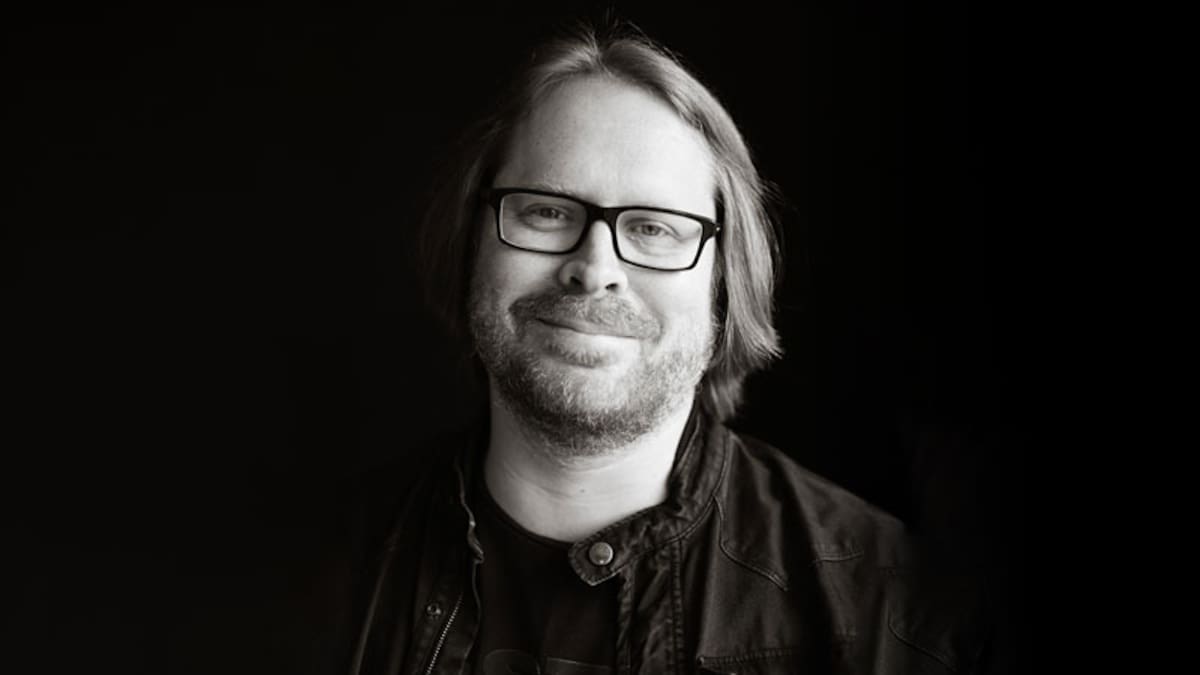
Damon Stapleton is one of New Zealand’s most respected advertising creatives, whose work extends across the globe. Photo / Jason Oxenham
Stapleton, the Australia-New Zealand chief creative officer of Accenture-owned Droga5, has worked across multiple countries and agencies in a decorated career, collecting dozens of awards and an honour board of some of the globe’s top brands, including BMW, Toyota, Nissan, Heineken, Visa, Cadbury, McDonald’s and Adidas.
Last month, he was at the Cannes Lions International Festival of Creativity in France.
“There’s an acceleration happening,” Stapleton told Media Insider of seismic changes in the advertising industry. “The next five years will probably see more change than there has been in the last 50.”
Stapleton has been attending Cannes for some 20 years, and this year he served as a judge. He says while change has been underway for some years, this year’s festival felt markedly different.
“It’s almost like the Palais is where it’s still creative,” he says, referring to Cannes’ famous awards venue.
“But I would say the rest of Cannes is now technology.
“When I was a young man, you could actually go onto the beaches, but now every single beach is either Spotify or LinkedIn or Facebook or Google.
“I would say there’s a definite shift in terms of what is advertising, what’s advertising going to become? And how do these two forces of technology and creativity work together?”
The Spotify Beach zone during this year’s Cannes Lions festival in France. Photo / Getty
The festival has increasingly become the venue for technology companies, data platforms, ad agencies, clients – “there are definitely more clients” – consultants and others, many of whom have competing visions of the future.
“There are literally hundreds of people saying they’ve got the answer,” Stapleton said. “Maybe five are snake-oil salesmen, and five do have the answer, but it’s hard to tell who’s who.
“Everybody’s got things that they’re trying, and then I think there’s also a lot of conversations about how these things all join up. There are a lot more conversations now about platforms and creating stuff to be put across multiple touch points – it’s not necessarily about creativity; it’s more about organisation.”
AI’s influence on advertising
Unsurprisingly, artificial intelligence was a hot topic.
Stapleton’s own view is clear: AI will become another tool rather than a replacement for creativity.
A Snapchat installation during the Cannes Lions Festival in Cannes in 2025. Big brands are increasingly courting social media stars, who descended on a major annual festival in France to pitch themselves to advertisers. Photo / The New York Times
He draws a parallel with Photoshop’s arrival in the 1990s. “When Photoshop came out, staff members lined up outside the director’s office to say Photoshop was cheating,” he said. “Now every single person in the world uses it.”
Stapleton believes AI’s biggest effect will be on the value of judgment. If everyone can generate images, videos and copy instantly, competitive advantage shifts from production to selecting the right ideas.
“I think the real question becomes about how it becomes people-centred, and what I mean by that is, you’re going to have to have taste.
“If you’ve got a million Picassos, then they don’t have that much value. Being discerning and having taste when everybody can make these things is going to be important.
“There is a certain amount of AI dread in the industry, but I think creatives just naturally start using new tools … and figure out what works.
“Everyone’s going to have AI, so it’s not going to be this sort of wonder drug. Everyone’s going to have it, so then it’s ‘what else do you do – what other magic tricks have you got?’”
There was plenty of magic at Cannes.
Stapleton, who was judging the craft category, awarded the Grand Prix award to De’Longhi for its campaign in which it transformed five of its fully functional coffee machines into handcrafted miniature cafés – to educate people that they could get the quality of coffee-shop coffee at home. A set designer from the Wes Anderson movies – including The Grand Budapest Hotel – helped create the mini coffee shops.
The five De’Longhi coffee machines that were transformed into handcrafted miniature cafés for its award-winning advertising campaign.
Another big winner was a campaign for Wisła Kraków, a struggling Polish football club, which came up with a unique campaign to get fans back through their gates.
Its ‘Lucky Fan Index’ analysed more than 220,000 fan profiles against 63 home matches. “Each fan received their own personal ‘luck’ score via a web application,” reports agency WPP.
“If they attended a match with a last-minute winning goal, their index went up. If they were present for a string of missed opportunities, it went down.
“This data was then activated commercially. The luckiest fans were rewarded with VIP box upgrades, while the unluckiest received discounts on ‘luckier’ merchandise.”
The Lucky Fan Index campaign at a Polish football club saw crowd attendances increase dramatically.
Stapleton says: “They actually monetised luck. That’s a great example of how creativity and technology or data can come together to create something fresh and new.”
While there were now some specific AI categories at Cannes, not many of the entries were awarded, says Stapleton. Judges had to determine whether they created something genuinely new or significantly better than what already existed.
Stapleton acknowledges that some tasks within agencies will inevitably become automated. But he argues we have to zoom out from that.
“What is an advertising agency going to be in five years?” he asked. “That’s a much bigger question.”
In New Zealand in recent years – and especially as global holding companies have retrenched – we have witnessed the rise of independent agencies.
Experienced talent has left larger holding companies to help launch or be a part of smaller, more agile businesses.
“Scale is an interesting conversation. For example, if content is now infinite – you can make infinite amounts of content – I think being nimble has real value. Being able to plug into, for example, in-house capability … there’s a lot of value in being smaller.”
The trend has also been fuelled by significant job losses across major global advertising networks. While some creatives have successfully launched new ventures, Stapleton believes the human cost shouldn’t be ignored.
“When you talk about a holding company getting rid of 12,000 people, that’s pretty extreme at a human level,” he said.
At the same time, he sees another major force emerging: the rise of creators. Accenture, for example, has just acquired Whalor in the US.
“The rise of creators is going to be one of the big trends going forward,” he says.
Damon Stapleton’s book title has its origins in what his grandfather, a Battle of Britain pilot, used to say to him.
Yet despite all the technological disruption, Stapleton’s central focus remains firmly rooted in creativity. Inspired by leaders such as David Droga, he believes the industry’s future lies in making creativity more influential, not less.
“Creativity needs a seat at the board table,” he says.
That means moving beyond advertising campaigns into product development, customer experience and business strategy itself.
For New Zealand, Stapleton remains optimistic. He says the country still possesses exceptional creative talent and continues to produce work that competes on the world stage.
The Australian Lamb advertising campaign.
That’s certainly illustrated in his own portfolio of work, from across the globe – including a campaign for the exiled The Zimbabwean newspaper, using real and practically useless over-inflated trillion-dollar notes under the Robert Mugabe regime; an Australian lamb campaign to drive up the country’s ‘Happiness List’; and, in New Zealand, the Benee Bagels campaign for ASB and Youthline.
ASB and Youthline’s Benee Bagels campaign involved a song to help relieve anxiety symptoms.
Back to Stapleton’s book, and that love letter to creatives.
“It takes some pretty thick skin and a large amount of perseverance to be a creative in a world of critics, who never make mistakes because they never make anything,” Stapleton wrote in his introduction.
“Where curators simply take other people’s ideas and package them and expect to be adored.
“Let’s remember these are very low-risk endeavours. All they did was comment or explain. They wait for the blank piece of paper to be filled.
“So here is to the explorers, the risk takers and the originators.”
Editor-at-Large Shayne Currie is one of New Zealand’s most experienced senior journalists and media leaders. He has held executive and senior editorial roles at NZME including Managing Editor, NZ Herald Editor and Herald on Sunday Editor and has a small shareholding in NZME.