
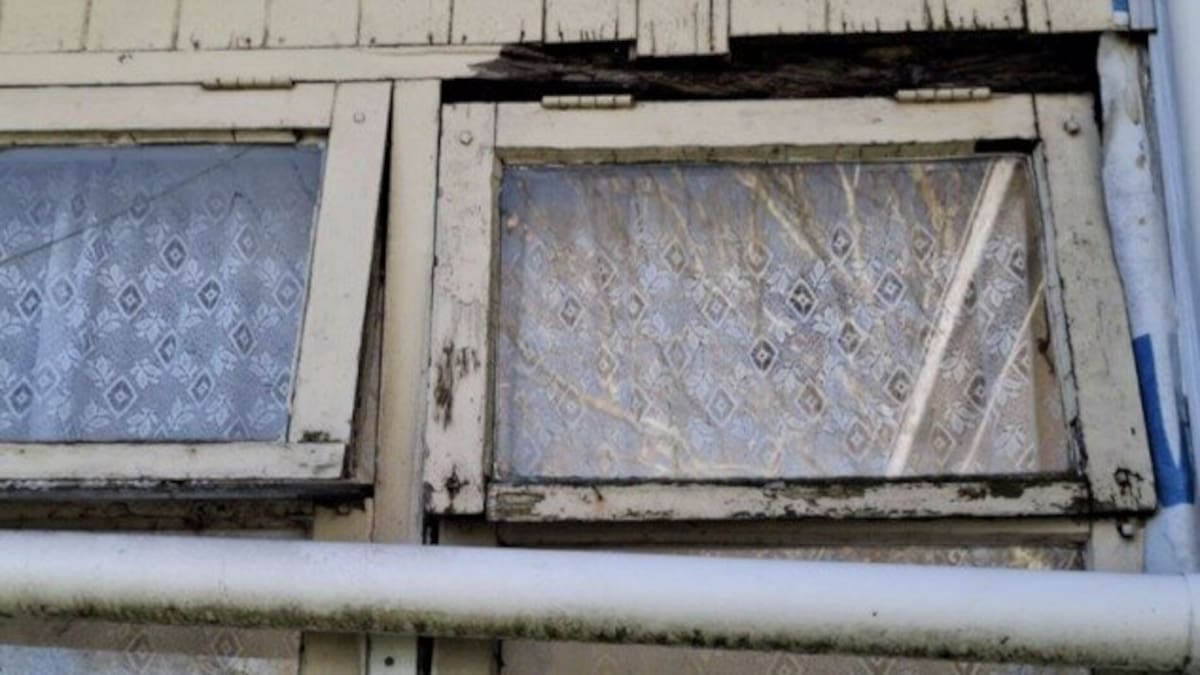
“The landlord’s failure to provide and maintain this tenancy is extreme,” Woodhouse said.
Prakash told the tribunal he had not kept up with the building regulations in New Zealand as he was often living in India.
“This house was not in a good condition to live in and my wife had already moved out. On my return to New Zealand, I could see that this house should be demolished so I decided to sell it,” he told the tribunal.
“During the process some people approached me saying that they were homeless and suggested that they could stay here on rent until such time the house was sold.
“I thought that I was being kind to homeless people and allowed them to stay.”
On August 4, 2025, the Palmerston North City Council issued a dangerous and insanitary building notice to the landlord.
The notice required that the landlord immediately take action to fence the property so that unauthorised persons could not gain access to the building.
On October 24, 2025, MBIE filed an application with the tribunal for the three separate tenancies.
The property was a single building that had been separated into two units.
One tenant occupied the first unit, while two tenants rented the second unit.
Regarding the tenancy of the first unit, the chief executive sought exemplary damages regarding the landlord’s failure to produce a required statement, not lodging the bond, failure to provide the property in a reasonable state of cleanliness, failure to provide and maintain in reasonable repair, comply with Healthy Homes Standards and install working smoke alarms.
The floorboards on the Palmerston North property were rotten so badly that the floor was unstable. Photo / Tenancy Tribunal
For the first tenancy in the second unit it sought exemplary damages for the same reasons, as well as unlawful termination of tenancy and failure to comply with building standards.
Regarding the second tenancy in the second unit it sought the same, apart from the termination of tenancy.
MBIE provided the tribunal an extensive list of property defects. It included gaps in the brick chimney, holes and cracks to weatherboards, visible waste around drains, rotting window frames and duct tape or pieces of clothing used to fill gaps between the floor and skirting.
There was also a large hole in front of a shower and significant movement in the living room floor.
Woodhouse said the photos of the property provided to the tribunal “speak for themselves”.
“I have no reservation in concluding that the Landlord has not maintained the premises in a reasonable state of repair.”
Duct tape and pieces of clothing were used to fill gaps between the floor and skirting. Photo / Tenancy Tribunal
Regarding the unlawful termination of the second tenant’s tenancy, Prakash had given the tenant one month’s notice to end the tenancy for alleged “unacceptable behaviour”, which Woodhouse ruled unlawful.
Woodhouse accepted all of MBIE’s evidence.
He ordered Prakash to pay $17,658 in exemplary damages, with $5070 awarded to the first tenant, $7580 to the second tenant and $4980 to the third tenant.
The house had since been demolished and the section is now empty.
Brianna McIlraith is a Queenstown-based reporter for Open Justice covering courts in the lower South Island. She has been a journalist since 2018 and has had a strong interest in business and financial journalism.
Join NZ Herald’s Open Justice team for Case by Case, a video and podcast series examining the disputes and decisions making headlines across New Zealand.