
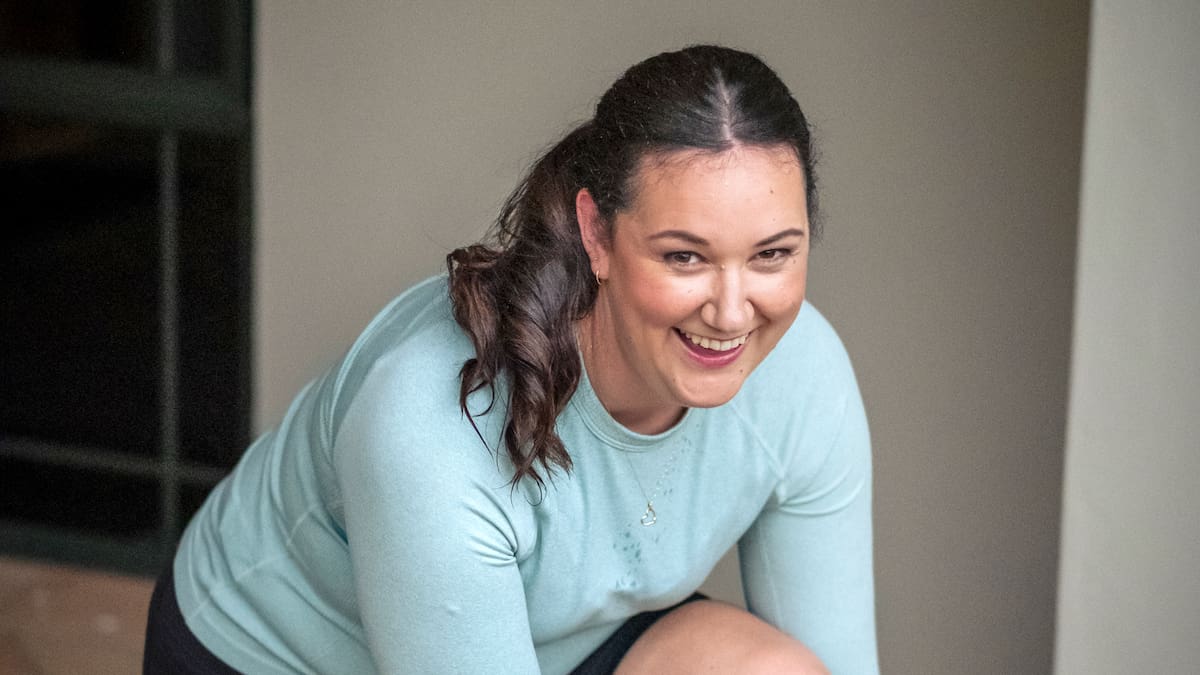
“The red flag for my mum was that I went to Disney On Ice and didn’t take any photos as usually I’d post it on social media.”
Candra and Jonathan with their daughters, Alivia and Emmelia. Photo / Sacha Kahaki
Eerily, the Pullons ended up in A&E during their trip after their daughter hit her head while at the mall. Yet Candra wasn’t worried enough to ask the doctor to check her out.
“I wondered if I should mention my weird day, but I said nothing and off we went!”
With his wife choosing to sleep the whole drive home, it was so out of character that Jonathan, an IT worker, became concerned.
The next day, Candra showed him a draft email she’d written to a senior colleague, and it made so little sense that he told her not to send it and call in sick.
But it was during Alivia’s ballet exam on the Monday that alarm bells went off.
“Jonathan noticed I couldn’t do the pins very well when attaching her ballet number, so he plugged my behaviour into ChatGPT.
“Even though I had none of the common symptoms, like slurring or paralysis on one side, it came back that most likely I’d suffered a stroke or had a low electrolyte balance.”
By the time Candra got herself to Waikato Hospital, it had been two and a half days. While not initially worried because she wasn’t presenting as they’d expect a stroke patient to, a doctor’s reaction to a CT scan told the couple all they needed to know.
Candra with her kids in the hospital. Photo / Woman’s Day
“We saw this doctor charge down towards us, then whip the curtain closed behind him,” Candra recalls. “He said, ‘I’m very sorry to let you know you’ve had a stroke,’ and I was stunned.”
The scan showed a huge portion of her language centre had been affected. Further testing revealed Candra had a patent foramen ovale (PFO), a hole between the heart’s upper chambers. While around 25% of adults have a PFO, so it’s not uncommon, it’s rare for a blood clot to pass through and travel to the brain, causing a stroke.
“In my case, the hole was only visible under pressure. When I coughed or sneezed, it would open. It was somewhat of a miracle for that to occur when a clot was in that area, but that’s what they suspect happened to me.”
Following her diagnosis, Candra was prescribed heavy blood thinners, lots of tests and six weeks off work. In November last year, she had a heart operation to close the hole.
Candra admits, “I’m a brain worker – I spend my day on emails, phone calls and in meetings – so I had dark days wondering what my quality of life was going to be like. A neurologist helped by saying the brain can do more than we think. At times, it will feel like I’m relapsing, but the brain is just repatterning. It gave me the trust in myself to keep going and rebuild.”
That’s included setting new goals to achieve, such as learning to knit, doing a new nature walk each month and signing up for Stroke NZ’s 100km fundraising trek along the Camino de Santiago in northwest Spain this September.
Candra with her two daughters. Photo / Woman’s Day
Candra enthuses, “I can’t wait – it will be a big bucket-list tick! Since my stroke, I’m intentional about my time and what I prioritise. I used to be so busy with kids, their activities, work and being active, but I think the cortisol and adrenaline probably contributed to what happened.
“I don’t do obligations now and I’ve learnt no is a complete sentence. I don’t need to burn the candle at both ends.”
To donate to Candra’s Camino walk, go to stroke-aotearoa-new-zealand.grassrootz.com.