
When 2026 kicked off back in January, the flow of oil and gas around the globe was much the same as it has been since the global economy began to revive in the wake of the height of the pandemic.
China was importing an average of over 11.3 million barrels of oil each day and Russia was playing the same role as it had been previously, that of the third largest exporter of refined petroleum products in the world (last official figures unimpacted by data issues due to sanctions).
Fast forward to July and that has all changed dramatically.
RELATED
In June, Chinese oil imports came to 6.4 million barrels according to some estimates, far below the 12.14 million barrels per day imported during the same month of 2025.
According to a recent report from the International Monetary Fund (IMF), the effective shortfall in oil supplies through the Strait of Hormuz after accounting for the impact of Saudi and Emirati efforts to reroute supplies through pipelines around the Strait is 13.8 million barrels per day.
 IMF oil analysis · Source: IMF
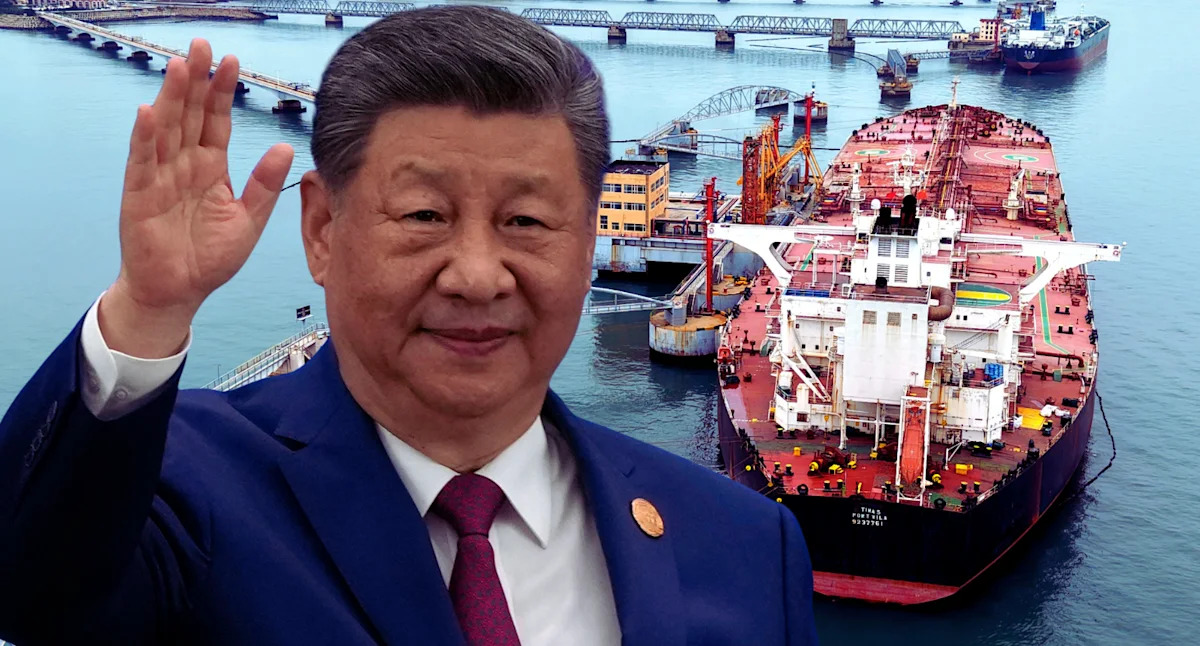
Of that total, the single largest contribution is being made by China reducing its oil imports, with as much as 5.5 million barrels per day of the shortfall being met by the Middle Kingdom.
While the exact underlying numbers of how this reduction is being facilitated remain a mystery, energy analysts believe it has been driven by a combination of factors, which include but are not limited to:
Consuming strategic and commercial reserves, with China holding an estimated 1.3 billion barrels of oil in its strategic reserves prior to the war.
Ceasing to build its oil reserves. It is estimated that during 2025, 1 million barrels per day of global oil demand or more stemmed from China adding to its reserves.
Shifting its production of chemicals and historically petroleum-based products to its coal to chemicals industry, allowing it to produce everything from naphtha for plastics to urea for fertiliser without using oil or gas.
The ongoing rise of electric vehicles driving down overall petrol consumption. One estimate to Bloomberg prior to the war in the Persian Gulf suggested that overall petrol consumption would fall by 5.2 per cent during the 2026 calendar year.
For whatever reason, China is effectively acting as Atlas, holding up global energy supplies and preventing dramatically higher oil prices.
Commodity Context Founder and oil market researcher Rory Johnston described it as an oil import cut “by the grace of Xi”.
Story continues
Without the dramatic reduction in Chinese oil imports, the shortfall in oil supply would be more than twice the magnitude of the one that sent oil prices soaring during the height of the impact of the Russia-Ukraine war in 2022.
On the downside of global energy supplies is the recent developments in Russia, which have seen up to 43 per cent of its oil refining capacity damaged to the point of being taken off line or flat out destroyed in recent months.
As the chart below from the Centre for Research on Energy and Clean Air illustrates, the world has continued to rely on Russian refined products despite the impact of various rounds of sanctions.
 Russian refined product exports · Source: CREA
According to recent reports from Reuters, the once powerhouse of refined petroleum products exports is turning to imports, most notably from India, in order to provide the petrol to keep its cars on the road.
Statements from within the Kremlin confirmed earlier this month that Moscow was in contact with other nations and discussing imports of fuel at acceptable prices, as Russia attempts to come to grips with a fuel shortage.
An analysis from Commodity Compass author Alexander Stahel reveals some of the underlying numbers behind Moscow’s growing issue.
In 2022, Russia’s oil refinery complex consumed 5.1 million barrels of oil per day, compared with 2.8 million barrels per day in the latest available data.
Of the top five largest refinery complexes in Russia, two have reduced levels of production, two are offline entirely, and one has been severely damaged.
In the words of Stahel on social media:
“Gasoline, diesel and jet shortages are now emerging simultaneously. With multiple crude distillation units (CDUs) knocked out across the refinery system, there is no quick path to restoring refining capacity. Sustained product imports are becoming Russia’s only viable medium-term solution.”
Since Stahel’s analysis was published, the Russian oil refinery system has been hit multiple additional times, further degrading Moscow’s ability to provide fuel and other refined petroleum products domestically.
The takeaway
On one hand, the world has been able to get through the still ongoing crisis in the Middle East through what oil market researcher Rory Johnston quite aptly termed “the grace of Xi”.
Whatever their reasoning may be, Beijing has done the world an enormous favour and arguably prevented a much greater economic downside from being experienced.
The potential issue on the road ahead is how long China will be both willing and able to continue to act to hold up the global economy by burning through its reserves of fuel and oil.
On the other hand, Ukrainian strikes on Russia and the decimation of Russian oil refinery capacity are set to significantly decrease supply coming to market and force Moscow into an already highly competitive market to secure enough fuel for domestic consumption.
Ultimately, the crisis is not over until it’s over and an ending with finality appears to still be quite a long way off.
Get the latest Yahoo Finance news – follow us on Facebook, LinkedIn and Instagram.