
Quick Read
Apple spent just $12.7B on capex in 2025 while Amazon, Alphabet, Meta, and Microsoft collectively burned through $416B on AI infrastructure.
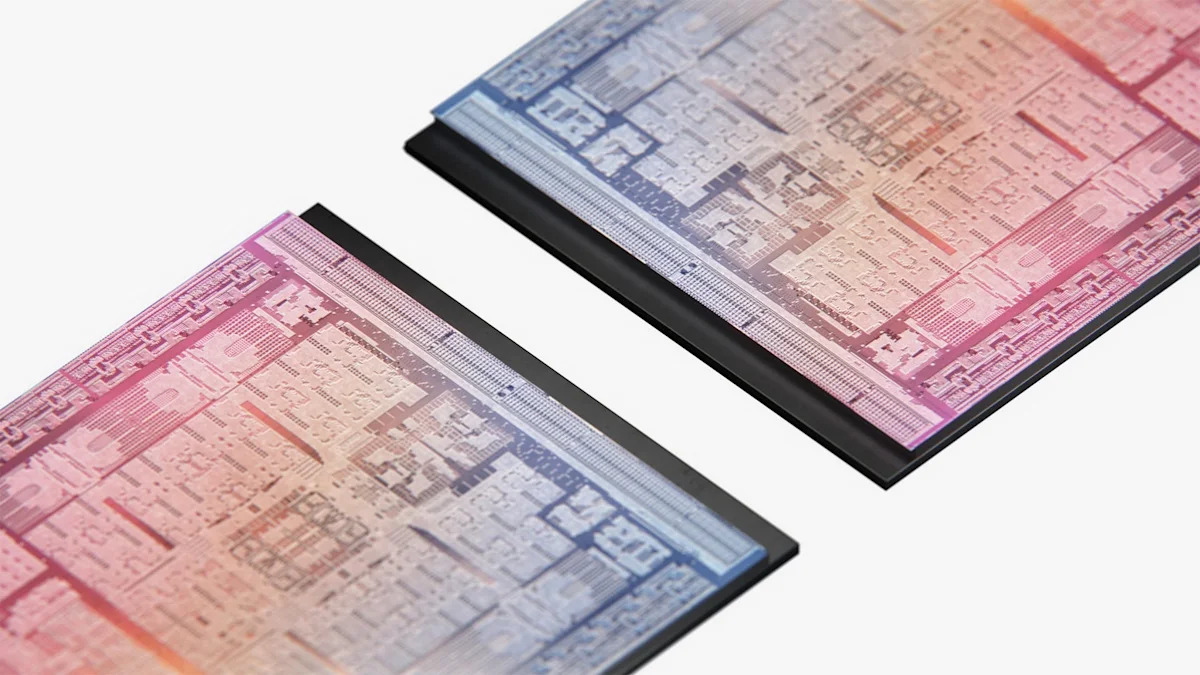
Apple’s M2 Ultra chips have fallen short for advanced AI workloads, forcing the company to use Nvidia accelerators and pursue AI chip acquisitions.
Swapping massive data center capex for targeted M&A keeps Apple far cheaper than rivals committing $180B to $200B annually on AI infrastructure.
Act now: the analyst who called NVIDIA in 2010 just named his top 10 AI stocks — and Apple didn’t make the cut. Grab the names FREE today.
The artificial intelligence boom has divided Big Tech into two camps. One group is spending at a pace rarely seen in corporate history, pouring hundreds of billions of dollars into data centers, custom chips, and power infrastructure. The other has largely stayed on the sidelines.
 Apple
Apple
Apple (NASDAQ:AAPL) has avoided the AI spending arms race by choosing not to build frontier AI models that compete directly with OpenAI, Google, or Anthropic. That decision has protected its balance sheet while rivals load up on debt to fund ever-larger AI ambitions. Yet new reports suggest there is no free lunch in AI, and Apple’s lower-cost strategy may now be running into its own limits.
A Different Kind of AI Bet
The AI capex spending spree numbers are stark:
Company
Fiscal 2025 CapEx
Fiscal 2026 CapEx Est.
Amazon (NASDAQ:AMZN)
$131.8 billion
$180 billion to $200 billion
Alphabet (NASDAQ:GOOG)
$91.4 billion
$180 billion to $190 billion
Meta Platforms (NASDAQ:META)
$72.2 billion
$125 billion to $145 billion
Microsoft (NASDAQ:MSFT)
$64.6 billion
$190 billion
Apple
$12.7 billion
$14 billion
Amazon, Alphabet, Meta Platforms, and Microsoft collectively spent $360 billion on capital expenditures in 2025, with Wall Street expecting another wave of spending through 2027 as each races to build larger AI infrastructure.
Act now: the analyst who called NVIDIA in 2010 just named his top 10 AI stocks — and Apple didn’t make the cut. Grab the names FREE today.
Apple took the opposite approach. Rather than chasing the most powerful foundation models, it focused on integrating AI features into its hardware ecosystem while relying on partners for many cloud-based capabilities. The strategy preserved Apple’s financial flexibility and helped it avoid the debt financing increasingly appearing across Big Tech as AI investments accelerate.
From a shareholder perspective, that restraint has been refreshing. Apple’s balance sheet remains one of the strongest in technology, and it hasn’t needed to match competitors dollar for dollar simply to stay in the AI race.
Story Continues
24/7 Wall St.
While rivals pour $360 billion into an AI arms race, Apple’s frugal strategy just hit a technical limit—forcing a high-stakes pivot to catch up. © 24/7 Wall St.
The Cheap Path Isn’t Free
That said, avoiding massive capital expenditures doesn’t eliminate the need for AI infrastructure.
According to The Information, Apple’s internally developed M2 Ultra chips have fallen short for the most demanding AI workloads. Instead of relying exclusively on its own silicon, the company has reportedly turned to Nvidia (NASDAQ:NVDA) accelerators hosted by Google to run portions of its AI computing needs. Reuters separately reported that Apple is now exploring acquisitions of AI chip startups to strengthen its in-house capabilities.
So, Apple saved billions by avoiding a data-center construction spree, but if its existing chips cannot efficiently support next-generation AI models, the company still has to spend somewhere. Rather than building thousands of AI servers, it may instead acquire the technology and engineering talent needed to close the performance gap.
Ironically, Apple may simply be replacing capital expenditures with mergers and acquisitions. Yet investors shouldn’t assume Apple’s acquisition strategy will become as expensive as the infrastructure race underway at Amazon, Microsoft, Alphabet, and Meta. Buying specialized semiconductor startups is unlikely to approach the hundreds of billions those companies are investing in AI data centers, networking equipment, and custom silicon.
Still, the reports highlight an important reality: there is no inexpensive shortcut to competing in modern AI.
Key Takeaway
In short, Apple’s conservative AI strategy has protected its financial position while competitors are committing to spending hundreds of billions of dollars annually. That discipline deserves credit.
Yet reports that Apple’s M2 Ultra chips have struggled with today’s most advanced AI workloads — and that the company is now pursuing AI chip acquisitions — suggest the cost of remaining competitive may simply shift from capital expenditures to M&A. For long-term investors, that’s still a preferable position to funding an open-ended infrastructure arms race. But it also confirms that even Apple cannot escape the enormous investment required to compete in artificial intelligence.
Act now: the analyst who called NVIDIA in 2010 just named his top 10 AI stocks — and Apple didn’t make the cut. Grab the names FREE today.
Contact editorial@247wallst.com for any questions or corrections.