
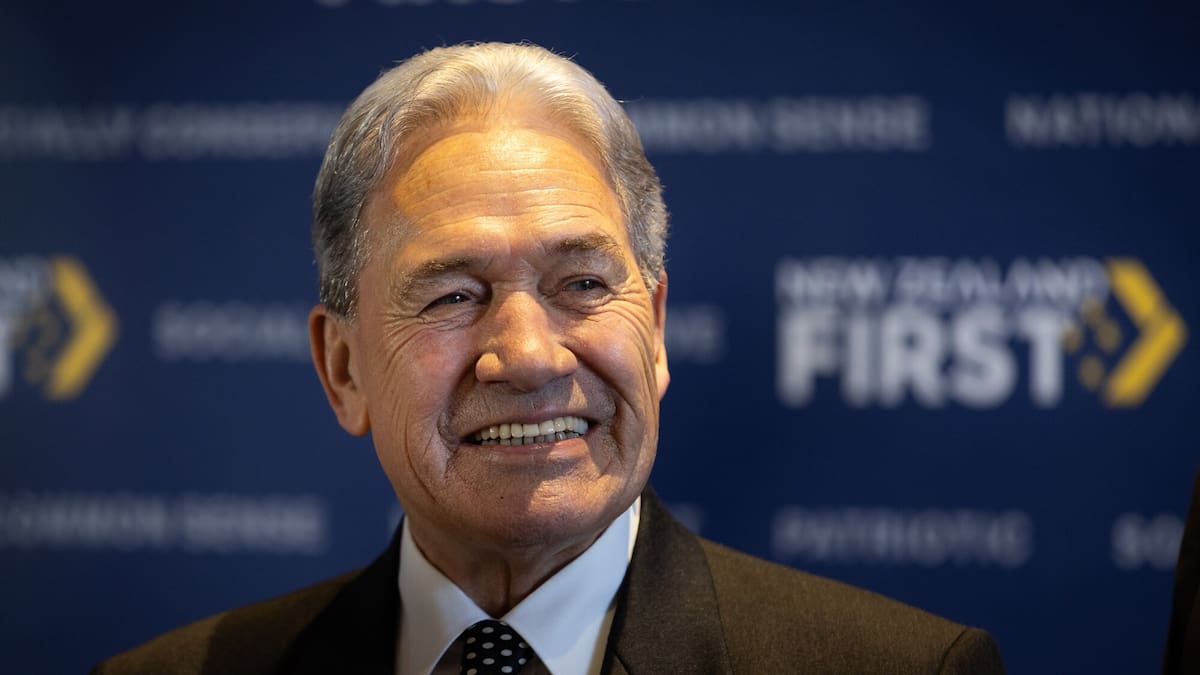
In a glitzy public meeting, which didn’t draw the crowd the party would have hoped for, Winston Peters pledged NZ First would campaign on carrying out a survey of the oil and gas reserves New Zealand can tap into.
These kinds of surveys don’t come cheap, estimated at $1b over the next term of government.
An ambitious timeline follows. Results that satisfy wealthy investors from across the globe are expected within a year, wells will be identified within two and six years, a “pathway” is established for New Zealand to “control our own supply of energy” for domestic use and export.
Securing the funding for the survey is the party’s first challenge and will be fought in negotiations from November 8 if polls remain as they are. There are more than a few eyes on the $1b attributed to the Government’s proposed LNG import terminal, which is yet to be signed off.
One consideration is whether the policy has any hope of resulting in the final product NZ First is promoting. Unless Labour performs quite a spectacular U-turn, it’s tools down the moment they take the reins.
NZ First leader Winston Peters celebrates on stage at his campaign launch. Photo / Sylvie Whinray
Perhaps NZ First’s best hope is to secure a survey, even if it isn’t as fulsome as originally envisioned, and use whatever data it returns to brandish at other parties and demand why we aren’t tapping into available resources (presuming they do indeed exist).
But another consideration, which appears just as important, concerns Paul Henry’s new favourite word: vibes.
News of a resumption of military action in the Middle East may not have come as a surprise to those who closely follow the months-long conflict. But in every depressing extension, it chips away at whatever hope was reserved for a return to normality.
You’d be forgiven for assuming this is the “new normal”, a term Kiwis became familiar with in the Covid years; geopolitical conflict constantly causing havoc with global supply chains and hiking prices.
This feeling increases the appeal of NZ First’s policy, something that promises a country more resilient to those shocks, even if the policy’s future is questionable at best.
Peters called these voters the “hard-working blue-collar Kiwi battler”; a theme (a vibe, if you will) that pervaded the party’s annual convention in Auckland.
His speech, a 45-minute address that could almost be described as brief compared to recent public meetings, was also intended to target two problems NZ First will face in this campaign; whether it will work with Labour and why it doesn’t support the India FTA.
The first, much to the frustration of the party, is primarily informed by their own coalition partners in National and Act, who are all too happy to feign a loss of sight and hearing to ignore Peters’ repeated insistence he has ruled out working with Labour, which he felt necessary to establish again today.
Winston Peters insists he will not work with Chris Hipkins. Photo / Mark Mitchell
The second requires balancing the party’s hard-line stance on immigration, which Shane Jones added to on Saturday by saying he would be calling out New Zealand’s growing Indian population “every day”, with an awareness of the benefits that can be derived, particularly in the primary sector, from trade deals with global giants like India.
Fortunately for Peters, Indian PM Narendra Modi gave him all he needed to pivot from a messy, technical debate on the deal’s immigration implications to a cleaner concern about the investment obligations placed on New Zealand.
With Modi characterising the $33b of investment from New Zealand into India in 15 years as a commitment instead of an aim as the deal states, he legitimised concern expressed by Peters about the potential for Kiwi exporters to be punished.
Despite their prominence, those topics weren’t what drew the greatest reaction from the crowd. That was reserved for the party’s efforts to call for an inquiry into vaccine injuries and its positions on transgender women in female sports.
As he emerged to sparklers and flashy lights, Peters might have been irked by an unfamiliar sight: rows of empty seats.
The party takes pride in its “standing room only” proclamations following packed public meetings. This time around, about 500 seats weren’t filled as almost 400 party delegates and an equal number of members of the public came to the Manukau Due Drop Events Centre. Insufficient parking was being blamed with reports of people being turned away.
This year’s convention, in the party’s 33rd, was less about policy and more about introducing its new political recruits to members.
Former All Black Taine Randell gave a speech to members at the convention. Photo / Sylvie Whinray
As such, guest speaking slots usually reserved for those outside the party were given to five of NZ First’s recent converts: Stuart Nash, Alfred Ngaro, Harete Hipango-Brownlie, Taine Randell and Michael Laws.
Despite the political profile of the first three names on that list, it was Randell and Laws that the members appeared most energised by.
There is no doubt the value former ministers in Nash and Ngaro bring to the party, particularly as it eyes greater influence in a future government.
However, in Randell the party has someone whose discomfort in front of a microphone lends itself to a genuine reflection of NZ First ideals.
While he struggles to clearly articulate his points at times and does pose a risk should he come under heavy scrutiny, Randell is distinct from the likes of Nash and Ngaro insofar as his comments don’t appear as simply repetition of the party political lines.
Laws, a broadcaster who seems destined to be beset by comparisons to Henry, gave the most engaging address and leaned on his political strategist experience to reinforce the party’s focus on “ordinary” people.
Laws could end up being quite the asset to NZ First in that he’s no stranger to the more fringe issues held dearly by some party factions but can also deliver a convincing argument for NZ First’s central pitch at this election.
Former broadcaster Michael Laws gave an engaging address. Photo / Sylvie Whinray
It’s not often an NZ First convention goes by with Shane Jones making headlines and this year was no exception.
In what is becoming a habit, the deputy leader took not-so-subtle aim at Christopher Luxon, this time for his hugging and hand-holding with Modi last weekend, suggesting political leaders take off their “kneepads” when meeting foreign leaders.
He also poked fun at the party’s new candidates, likening Laws to Gandalf and highlighting Nash’s reputation in the gym and his former practice of dyeing his hair.
It might have come across as friendly banter to the members, but it certainly had an air of marking one’s territory in an election becoming congested with big personalities.
The polls are promising a bright future for NZ First come November 7. What comes after is another question entirely.
Adam Pearse is the Deputy Political Editor and part of the NZ Herald’s Press Gallery team based at Parliament in Wellington. He has worked for NZME since 2018, reporting for the Northern Advocate in Whangārei and the Herald in Auckland.