
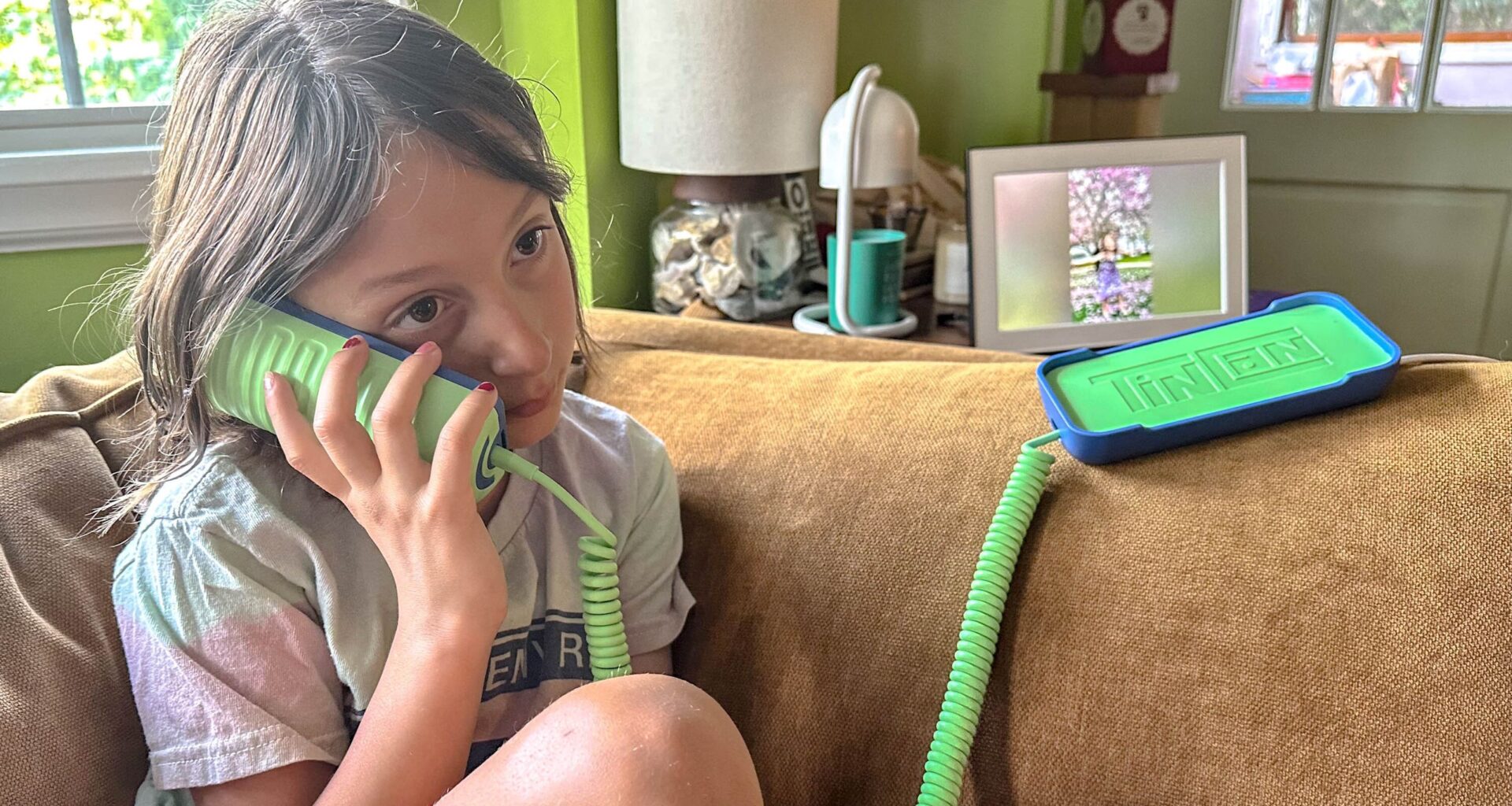
Even though I test and cover tech for a living, I’m very careful how much I let my daughter use it. Saturday mornings, she can become a zombie, endlessly scrolling through Netflix and Disney looking for something to watch.
We limit screen time a lot, and we’ve also decided that she’s not getting a smartphone until she hits high school. However, we were intrigued when several of her friends’ parents raved about the Tin Can phone, which lets kids talk to each other — supervised, of course.
So, we bought a Tin Can phone to see what all the fuss was about.
Latest Videos From How it works and how much it costs
(Image credit: Future)
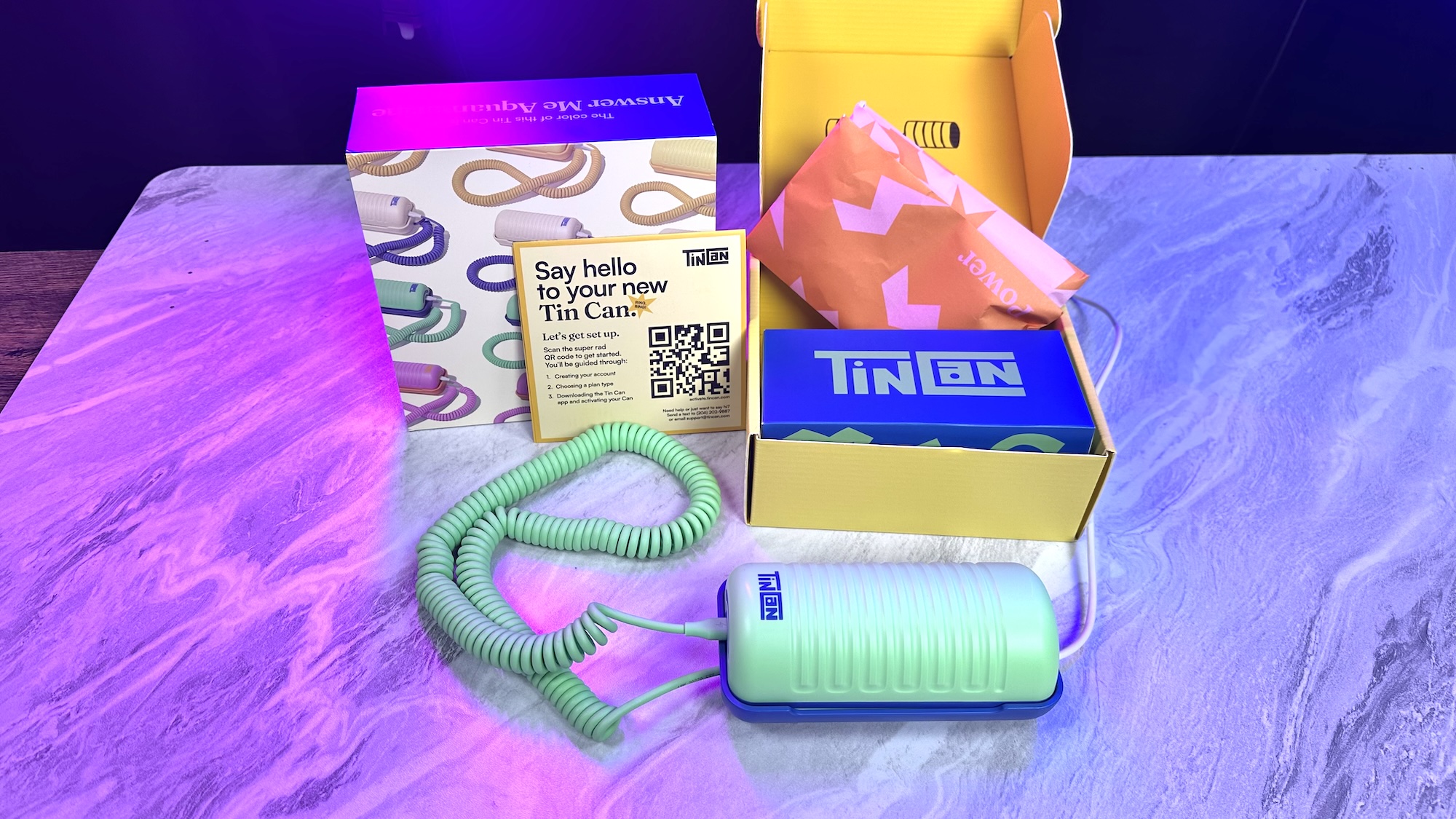
The Tin Can phone is only available through the company’s web site. The device itself, which looks like a child’s version of an old-school phone you’d hang on your wall, costs $100, and comes in one of four colors: blue/green, white/blue, yellow, and pink/orange.
Because of its popularity, there’s about a month or so delay in getting the actual device; I ordered mine in May, and it didn’t arrive until mid-June.
You may like
Apart from the device, you can also sign up for a $10/month subscription, which lets you use the Tin Can to dial and receive calls from real phone numbers, rather than just from other Tin Can phones. Tin Can gives you a free month trial, which is a welcome feature, as you’ll see.
At its core, the Tin Can uses VoIP (Voice over IP) technology to make phone calls. Those of a certain age may remember a company called MagicJack, which sold a little dongle you plugged into your computer, which worked the same way.
To add a contact, you can connect the app to your contacts list, or type in a Tin Can number into the app. With the latter, a notification is sent to that person, who must approve you before you can call them. I recommend you make your name as clear as possible; I received a contact request with just a kid’s first name, and I had no idea who they were. Fortunately, you can edit a person’s contact info to something recognizable.
The app also lets you set quiet times, when the phone is operable. I like that you can set a different schedule for each day, so you can set specific hours for weekends versus weekdays. And, you can create a voicemail message, so your child’s friends can leave messages if you’re not around. Annoyingly, you can only listen to voicemails on the phone itself, and not the app.
(Image credit: Future)
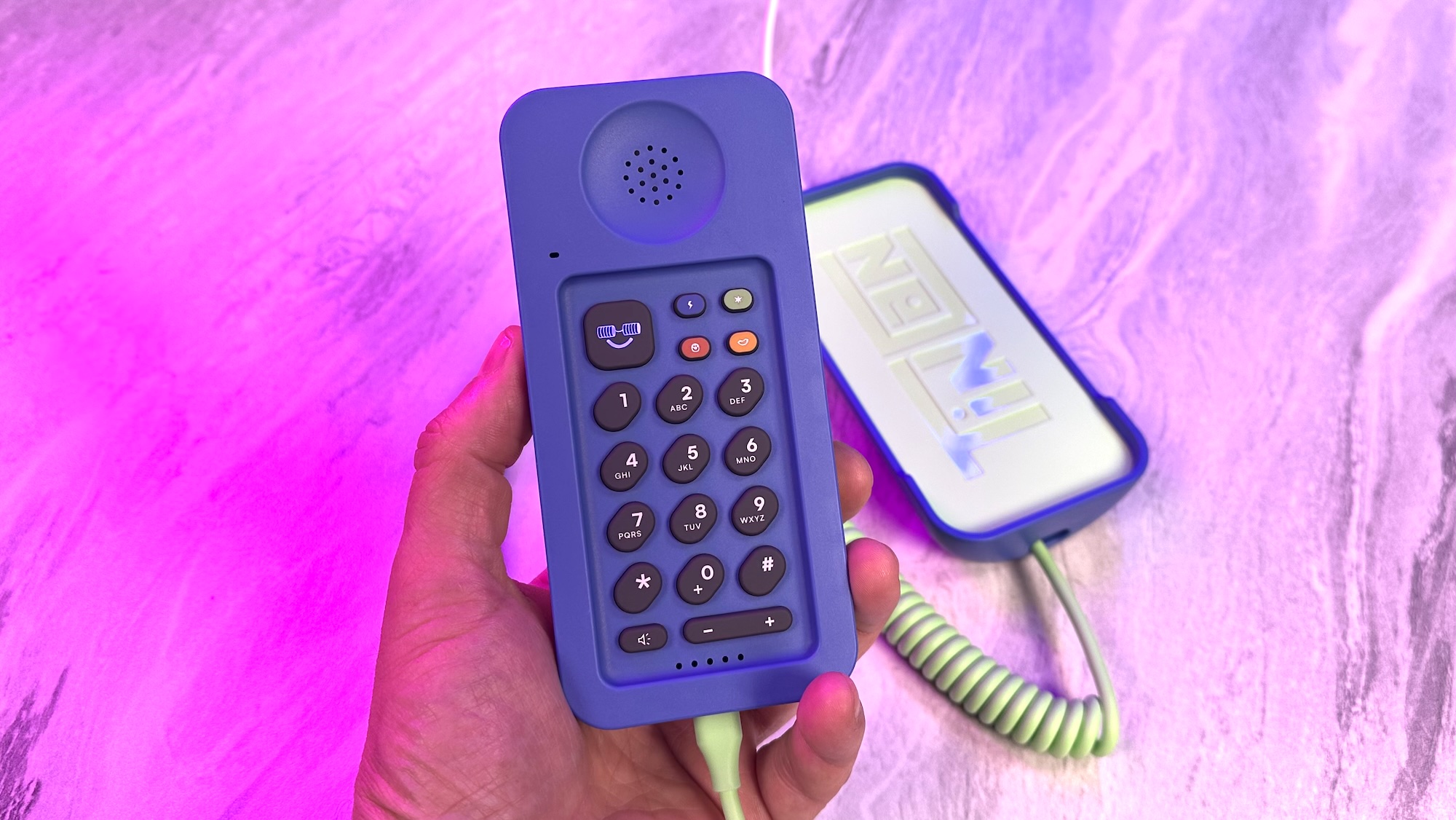
It’s amusing to see children brought up in an age of smartphones use a type of phone that’s much, much older. When my kid first used the Tin Can, she held it in front of her face, like she was expecting a FaceTime call. I told her she’d hear her grandma better if she held the phone to her ear.
What to read next
Kids aren’t used to the lack of visual cues, either, which leads to a lot of awkward pauses as they wait to hear each other speak.
Call quality was good, but not great. For the most part, calls were clear, both when holding the phone to her head and in speakerphone mode. However, several voicemails left for my kid were crackly, which made them hard to understand.
(Image credit: Future)
It also proved to be a good incentive for her to get her chores done — I told her she needed to practice piano before she could make any calls, and whaddya know, she ran right over to the ivories and tore through her lesson.
I also asked the parents of my kid’s friends what they thought about the phone, and the reactions were largely positive.
“Despite the cords, it’s really nice to have a way to get in touch with the kids when I’m at work. It’s also cute to see them initiating calls to my family,” one parent said.
“I can already see how it’s building [my child’s] conversation skills,” said another. “It encourages them to think about questions they might want to ask, or talk about things that they will do together later in a way that in-person play doesn’t necessitate.”
I can already see how it’s building conversation skills
A third parent also noted the generational divide. “I love how little my child understands phone etiquette when there’s no screen involved to see the other person. Lots of awkward pauses.”
Finally “[our kid] told me this morning that he ‘feels so grown up not that he can talk to his friends whenever he wants.”
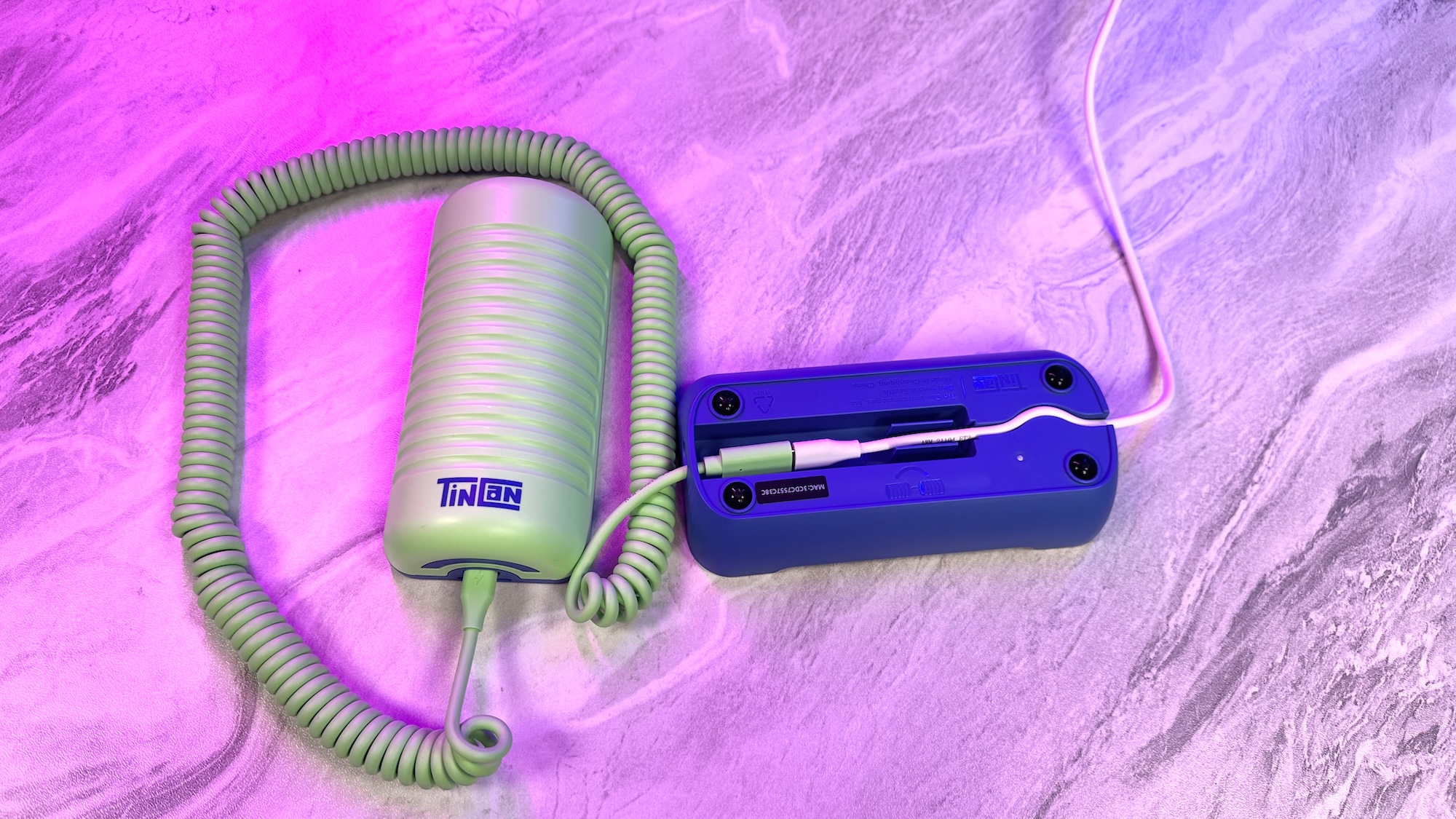
However, there were a few critiques. “The cords are waaaaay too easy to unplug,” said one parent. “Just ask my 2.5-year-old who does it every time we get a call.”
Another parent suggested that the phone’s ringer could be louder, or there be an option for it to ring the parent’s phone when there’s a call.
Tin Can is far from the only company to offer child-focused phones.
The Ring Ring, for example, works much the same way; it sells five handsets for $69 each, and also sells a bridge for $49 that lets you connect any old phone and use it. It also has a cheaper monthly plan ($8.95/month) if you want to use it as a real phone, as well as e911 services.
There’s also Pinwheel, which sells two types of phones (the Spark for $59 and the Classic for $79). It offers two plans: a $6.99/month plan lets you call up to five external contacts, while the $9.99/month plan lets you call unlimited numbers.
Swipe to scroll horizontallyRow 0 – Cell 0
Tin Can
Ring Ring
Pinwheel
Starting price
$100
$69
$59
Model colors
4
5
7
Monthly plan
$9.99
$8.95
$6.99/$9.99
External calls
Unlimited
Unlimited
Up to 5/Unlimited
E911 calling
Free
Plan req’d
Free
Parental controls
Free
Plan req’d
Free
Voicemail
Free
Plan req’d
Free
Of the three, the Tin Can phones are definitely the most colorful, but they are the most expensive. Ring Ring offers the least expensive unlimited plan, but I don’t like the fact that you don’t get features such as 911 calling and parental controls if you don’t sign up for a plan.
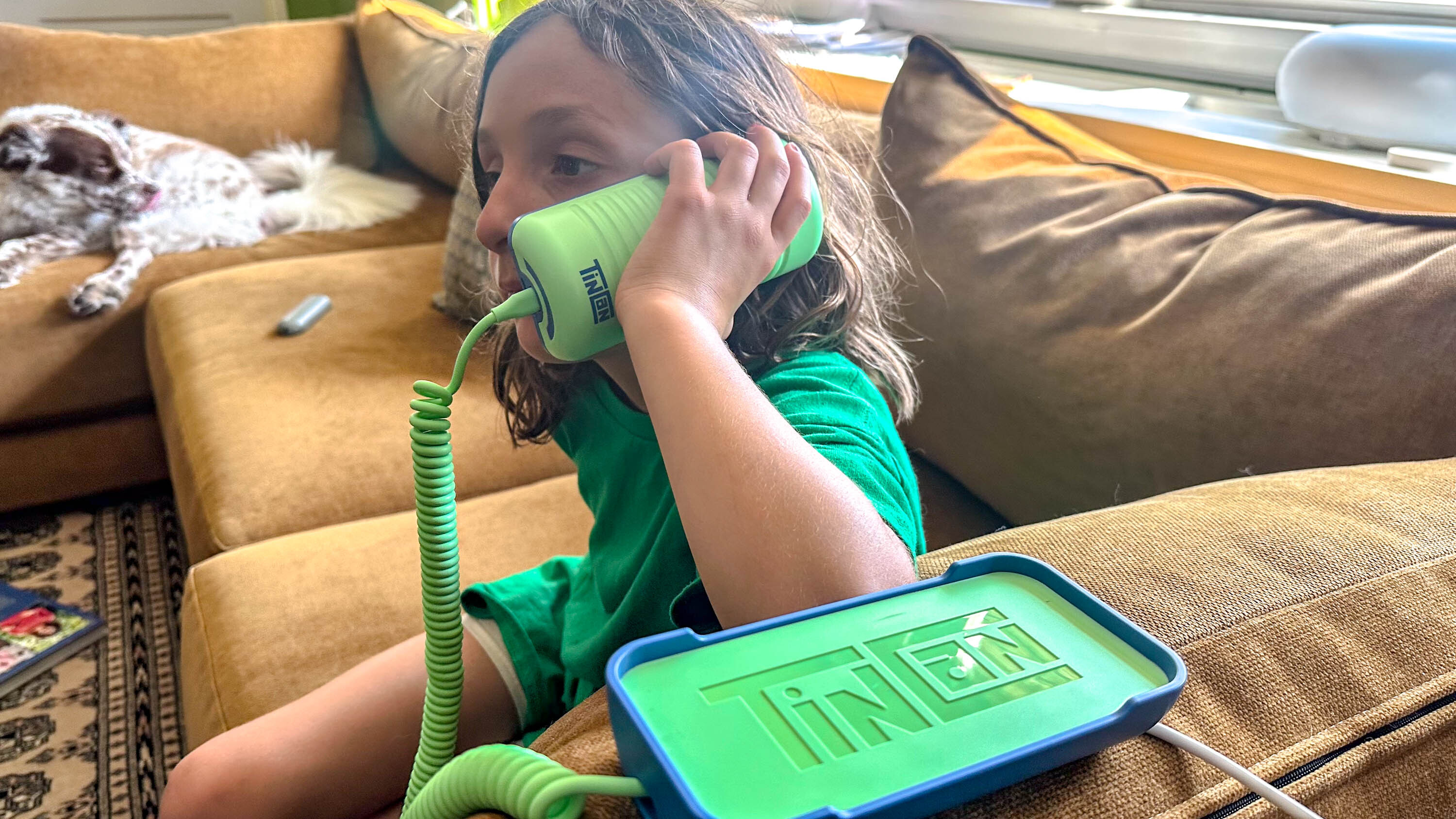
(Image credit: Future)
Like many of my kid’s toys, the novelty of the Tin Can wore off pretty quickly. After a few weeks, she had only made a couple of calls to her grandparents, and barely any to her friends, so I cancelled the monthly plan. I also noticed that she also stopped receiving calls from her friends after the initial flurry of activity, so it seems like interest in general has died down.
When we first got the phone, I signed up for a monthly plan, but after seeing her lack of interest, I cancelled it. Fortunately, we were still on the free trial, so it didn’t end up costing me anything.
It would be great if kids who have, say, a Tin Can could call someone who has a Pinwheel or Ring Ring phone. Otherwise, you’re locked into buying a phone on the particular service that’s most popular among your child’s parents. It’s like a more exclusive version of the blue bubble.
Ultimately — and this is a good thing — is that there are far more interesting things to my 7-year-old than a phone. Maybe it’s because it’s the middle of the summer and no one’s around, but even when I suggested she call one of her friends, she sort of just shrugs. Then she ran off to play outside.
Have you picked up one of these phones for your kids? What’s the right age to get a kid a phone? Let me know in the comments.

Follow Tom’s Guide on Google News and add us as a preferred source to get our up-to-date news, analysis, and reviews in your feeds.